Review Summary: A worthy capstone to the Sagebrush Trilogy
Cormac McCarthy is a name immediately familiar to most. The iconic writer penned a strong contender for the Great American Novel with “Blood Meridian” but found true mainstream success with his Border Trilogy which rolled out over the course of the 90s. The first two installations are both extremely strong while the third – “Cities of the Plain” – is generally considered to be somewhat less compelling than the previous works. Of course, we’re talking about McCarthy here, which means it’s still better than what most writers could ever hope to write.
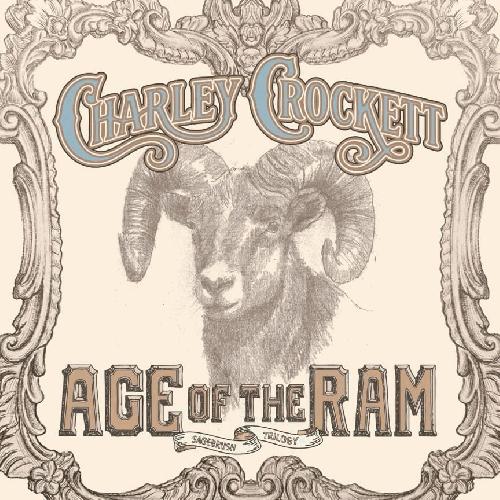
The symmetry here is nearly perfect considering “Age of the Ram,” Charley Crockett’s capstone to the Sagebrush Trilogy which itself was initially inspired by the Border Trilogy, follows a similar arc. While showcasing a strong outing from one of modern country music’s brightest lights, it falters a bit in its quest to reach the same heights as “Dollar A Day” or “Lonesome Drifter.”
However, that doesn’t mean this is a bad album. Far from it, “Age of the Ram” slots nicely into the trilogy. It’s clear from the intro skit that this album was designed to exemplify storytelling in its purest form. The ensuing 45 minutes of this record play out like a refined and dreamy trip weaving in and out of its central storyline ('Billy McLane,' 'Cover My Trail Tonight,' 'Fastest Gun Alive'), one-off tracks that could be on any of Crockett’s records ('Me & Shooter') and historical detours ('I Shot Jesse James'). But much of the record traces the story of the main character, Billy McLane. Crockett himself has said this album explores the main character as an outlaw, contrasted with his earlier journeys sketched out in the previous two albums. It’s an ambitious concept project, even for a country artist as thoroughly steeped in the long American musical tradition of character building as Crockett.
The music on this album is more refined and focused than the exploration found on “Dollar A Day” whereas the overall album structure is much more experimental. There’s a whopping 20 songs packed into “Age of the Ram” but only about half of which are true songs. The other half are mixed between skits, audio interludes and short tracks that set the mood or advance the overarching story. Take for instance the interesting and short ‘Sweet Mother Texas’ which showcases what appears to be a song in 15/8 time. While this is a snappy story-mover, it slides into ‘Kentucky Too Long’ which is one of the strongest songs on the album (and of Crockett’s career) with its western bounce and slick grooves. This song in particular is instructive because the whole album leans heavily into both country and western music traditions. It’s a familiar combination for Crockett fans as he’s been infusing his records with a rich array of American roots, country, blues and western music since the beginning. There’s no shortage of slide guitars, thumping standup bass or rollicking old-timey piano on this record which lay the foundation for Crockett to croon over.
Speaking of instrumentation, the more spins I give this album the more the quality of its production continues to impress me. That’s not terribly surprising considering the legendary Shooter Jennings has been the man behind the soundboards for the entirety of the Sagebrush Trilogy. Everything on this album sounds clear, warm and sublimely balanced. It’s a collaboration between two true-blue country veterans that pays off in spades and one that I hope continues on future albums.
This brings me to my main criticism of this album, which is actually what sets it apart so much from the previous two records. The structural experimentation is certainly interesting on “Age of the Ram,” but at times it feels a bit aimless. For example, ‘The Life & Times of Billy McLane (Theme III)’ takes up a mere 42 seconds before handing off the baton to ‘Powder River’ which similarly clocks in under a minute. While it certainly makes the album feel more ethereal and cinematic, it also breaks up the momentum. On first listen, this album felt strangely cohesive in intent but disjointed in flow, and while the edges have smoothed with repeated listens, the issue is still present for me. It feels like some of the interludes and skits could have been swapped out for another complete song or two considering the full tracks here are quite strong. It’s a marked contrast to “Dollar A Day” which saw Crockett releasing a more focused and overall stronger album, despite some exceptional tracks on "Age of the Ram."
Which again, isn’t to say that this is a bad album. In fact, I think the Border Trilogy analogy is actually quite apt here. While “All the Pretty Horses” was a commercial breakthrough centered on an intriguing and reasonably accessible story, “The Crossing” is the highlight for me, showcasing tight writing and exceptional characters throughout. This mirrors my general feelings about Crockett’s first two installments in the Sagebrush Trilogy. McCarthy’s third book found in “Cities of the Plain” tells a story neatly wrapping up the trilogy with a lot of heart, but fails to fully find its footing and suffers for it. I think the same argument could be made for “Age of the Ram.” It’s an interesting premise, and I have to give Crockett props for sticking to his guns, but I’m not sure it entirely worked. And that’s alright with me because in today’s country music landscape I’ll always take an artist who’s not afraid to take big swings over someone who plays it safe.
Like I said in last year’s review of “Dollar A Day,” Charley Crockett has always done things his own way. He’s a constant reminder that true outlaw country is still alive and kicking, and that fact drives some of his less inspired contemporaries crazy. His stubborn refusal to be boxed in by country music industry slop is on full display on “Age of the Ram” and for that, along with all the things this album really does right, more than earns it a recommendation from me.