Review Summary: 1992: a spectre was haunting Thrash Metal — the spectre of the Black Album.
Oh, dear reader. The roller coaster takes a stranger turn this time.
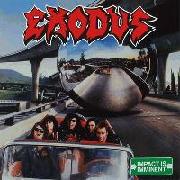
After the awful Impact Is Imminent, one might expect Exodus to climb back up the track with renewed aggression. Instead, with Force of Habit, the band steers the cart into an entirely different section of the ride this time.
Released in 1992 — a moment when thrash was already losing ground and the metal landscape was shifting — the album abandons much of the speed and urgency that defined the band’s earlier work. The riffs slow down, the songs stretch out, and the overall approach leans far more toward mid-tempo groove than the frantic thrash Exodus helped pioneer.
But the rise of grunge and its flannel shirts wasn’t the only influence at play. Another specter haunted metal at the time. After the massive success of Metallica, many thrash bands began slowing things down in search of broader appeal. Less speed, more groove, simpler riffs, longer songs: exactly the kind of shift heard throughout Force of Habit.
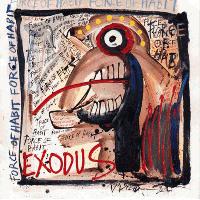
The difference is that Metallica, for better or worse, pulled it off. Exodus didn’t quite get there. This isn’t a bad album, but it never comes close to achieving a similar level of impact. In hindsight, it feels fair to say the band was aiming for that same mainstream breakthrough. Even the visual presentation hints at it: the classic logo is gone, replaced by a more abstract aesthetic, suggesting a deliberate move away from the band’s past.
Natureally, all tha changes extends to the music itself. Up to this point, Exodus followed the classic thrash blueprint: high tempos, tremolo-picked riffs, constant section changes, controlled chaos. Here, many songs revolve around a single main riff, repeated for long stretches with fewer structural variations. It’s a more groove-oriented approach — slower, simpler, and more repetitive.
The album is also notably long, with several tracks pushing past the six- or seven-minute mark, making it the most extensive release of the band’s early career. Combined with uneven songwriting, this results in a record that often drags. On the bright side, at least Exodus finally delivers a competent production (something that shouldn’t feel like a victory this late in their career, but somehow does).
Tracks like Thorn in My Side, Architect of Pain, and the title track spend much of their runtime in mid-tempo territory — something almost unthinkable in the band’s earlier work. And to be fair, this new direction does produce some strong moments.
Thorn in My Side opens the album with a catchy, groove-driven riff that sticks immediately. It’s simple, almost hard rock in structure, but undeniably effective. The track warns: "That's what you'll get this time". The title track pushes this approach further, built around a dragging, repetitive riff meant to generate weight through persistence. It works — to a point — but can feel a bit exhausting.
One Foot in the Grave adds some dynamic variation, shifting between slower passages and brief accelerations, while Climb Before the Fall offers a rare glimpse of the band’s past, with gang vocals and a striking double-bass opening. A standout track.
Then there’s Good Day to Die, which almost feels like an outlier. More concise and groove-focused, it delivers immediate impact and shows what this album could have been with tighter execution. It proves that the issue with Force of Habit was never the change in direction itself — but how inconsistently it was handled.
But not everything fares as well. Fuel for the Fire, despite a more traditional thrash riff, is dragged down by awkward vocal layering that sounds more like waking up with a hangover than a performance. Best avoided at all cost. The covers add little of value and feel like filler — a questionable choice on an already overlong album.
Architect of Pain is perhaps the most ambitious track here. Its opening even flirts with an Alice in Chains-like atmosphere — not a bad thing in itself — but at over eleven minutes, the song overstays its welcome. There are good ideas buried within, but they’re stretched far beyond their natural limits.
In the end, with Force of Habit, the roller coaster train of Exodus comes to a complete stop. What follows is silence: a long hiatus where the band steps off the ride entirely, only to return years later and try again.
And indeed they would return years latter... stronger and fueled by pure hatred.