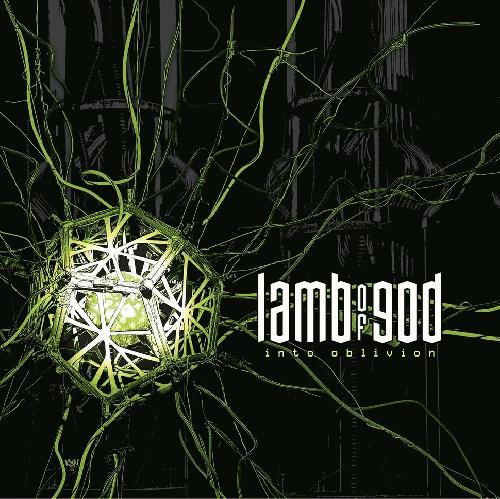
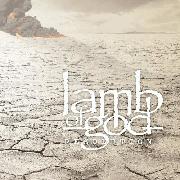
Review Summary: Into Oblivion proves Lamb of God can still execute their formula flawlessly—but after decades of refinement, the formula itself is starting to feel worn out
“Into Oblivion” continues the sonic direction that Lamb of God leaned into on 2022’s Omens: tremolo-picked riffs, palm-muted chugging, and melodic guitar leads weaving through tightly locked grooves beneath Randy Blythe’s unmistakable roar. The unfortunate part is that the band now executes this sound so comfortably that very little actually stands out.
Blythe opens the title track declaring himself “the watcher outside the frame,” but the line unintentionally mirrors a recurring issue in both the album’s music and its perspective. Much like the band’s songwriting, which rarely steps outside the boundaries of its established formula, Blythe’s lyrics often position themselves as commentary from above the chaos—an observer diagnosing society’s hypocrisies—while rarely interrogating that vantage point itself.
“Parasocial Christ” injects some much-needed energy, recalling the breakneck momentum of Wrath-era tracks like “Contractor.” The lyrics feel slightly more self-aware than usual; the criticism of modern parasocial culture can just as easily be directed inward as outward, making the song more compelling than the band’s frequent “scream first, reflect later” approach.
When it comes time to drop the hammer, however, the band still knows exactly what it’s doing. A crushing bass-and-drum groove opens “Sepsis,” the album’s first single, before Blythe slips into the sneering semi-clean vocal phrasing he began experimenting with on VII: Sturm und Drang and especially on Omens. Unfortunately, it remains one of his least convincing tools. Nearly two decades removed from their peak thrash-groove formula, the band still pulls out the same circle-pit riffing trick they perfected years ago—and while it still works in bursts, its repetition begins to wear thin.
“The Killing Floor” opens with a riff that briefly flirts with a nu-metal texture reminiscent of Linkin Park or Deftones, but the song quickly settles into familiar territory. Disjointed transitions disrupt the flow, and the track ultimately feels like Lamb of God operating on autopilot. Even its closing breakdown echoes earlier moments from “Parasocial Christ,” reinforcing the sense that the album is already repeating itself before reaching its midpoint.
The band shifts toward melodrama again on “El Vacio,” a move reminiscent of the atmospheric ambition of VII: Sturm und Drang’s “Overlord.” Unfortunately, Blythe’s clean vocal approach once again struggles to carry the weight of the song. The track drifts rather than builds, making its title—Spanish for “the void”—feel unintentionally appropriate.
“St. Catherine’s Wheel” is a welcome exception. Its stop-start dynamics and soft-to-heavy transitions flow naturally, recalling some of the stronger moments from Resolution. Blythe’s cleaner vocal passages finally add something meaningful to the track rather than feeling forced. Even a paint-by-numbers formula can still be entertaining, as long as no one expects to be surprised when the picture is finished.
By the time “Blunt Force Blues” arrives, the album’s repetition becomes harder to ignore. Familiar breakdown structures and recycled rhythmic ideas begin to blur together, making it one of the least memorable tracks on the record.
“Bully” brings some interesting drum patterns to the table, but the band rarely commits to them long enough to let them develop. Instead, the song repeatedly pivots back to straightforward groove metal riffing. Even the title feels oddly juvenile coming from a band now well into their fifties, reinforcing the sense that Blythe’s lyrics often frame social criticism in blunt, accusatory terms rather than the more reflective tone the album occasionally hints at elsewhere.
“A Thousand Years,” however, stands out as one of the album’s stronger moments. The gritty bass tone introduced earlier in “Sepsis” returns here with far greater impact, and Blythe’s clean-to-harsh vocal transitions finally feel natural rather than forced. Small details—like the metallic percussion accent in the intro and post-chorus—add just enough texture to give the song its own identity.
The closing track, “Devise / Destroy,” opens with a clean guitar line that leads into a bouncy groove showcasing Blythe’s aggressive half-shouted delivery. In these moments, the band briefly reconnects with the swaggering southern groove that once linked them stylistically to Pantera. It’s a solid closer to a decent—but ultimately predictable—album.
Into Oblivion delivers exactly what longtime fans expect from Lamb of God, but across its forty-minute runtime the band rarely ventures outside the blueprint they perfected years ago.