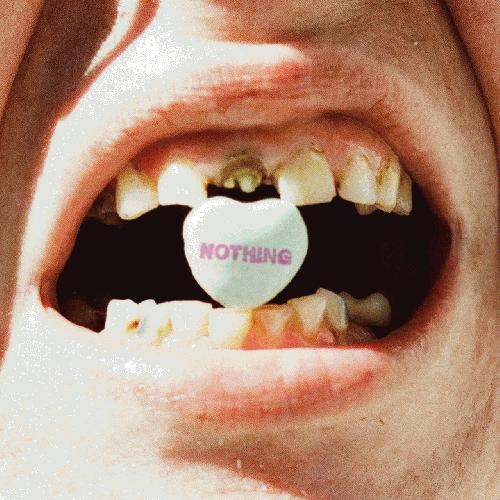
Review Summary: Post collapse.
The world we live in is rapidly decaying. With each passing day, humanity is one step closer to inevitable destruction through the heinous actions of corrupt governments and politicians that couldn't give less of a damn about the common man. No matter what personal or political beliefs you may have, we can all agree our current state of affairs is pretty bleak. Few bands shine a light on this unfortunate reality as much as Philadelphia born and raised shoegaze band, Nothing. What started as a small bedroom project under the thumb of mastermind Domenic "Nicky" Palermo has metamorphosed into a flagship act in modern shoegaze today. Where pioneering bands such as My Bloody Valentine and Slowdive were stealing the hearts of many with their dreamy, romantic blend of ethereal noise, Nothing brought to the table a much darker, more antagonistic approach to the genre. From the jagged, punky debut
Guilty of Everything to the absolute earth shattering masterpiece
The Great Dismal, Palermo and co. have established themselves as renegades with their ability to connect with others through the most relatable topic of all - the everlasting ache of the human condition.
2020 and onwards has certainly been a difficult time for most of us, and for a long while it seemed as though Nothing had taken its final breath with the marvelous swan song
The Great Dismal. Years went by, until finally 2023 rolled around and through the collaborative effort of unlikely cohorts Full of Hell, Nothing returned to the limelight with Frankenstein's monster and probably the first
(grindgaze?) album in existence,
When No Birds Sang. An interesting blend of the band's typical formula and Maryland's finest grindcore;
When No Birds Sang proved to be an enthralling, unique pairing that both parties somehow not only made work, but established a fine line between beauty and complete hideousness. Since then, things have been relatively quiet. Could it be that there was
nothing left in the pipeline? Well, here in the lovely year of 2026 all of the pessimistic and downtrodden among us can rejoice, as the evil genius of Palermo has finally resurfaced in the form of the band's long awaited 5th LP,
A Short History of Decay.
Kicking things off with the somber, yet strangely uplifting "Never Come Never Morning" is somewhat of a red herring. Seemingly acting as a premonition for what's to come, the song feels like a melancholy reflection on the past and how simple things used to be, with Palermo earnestly stating under a gentle, soft acoustic guitar passage
"When I was young, life was easy." A touching ballad that reveals itself more with repeated listens, serving as a stark contrast from the ever-looming abyss of our downward years to come.
(see what I did there?)
Following track and lead single "Cannibal World" is where the quiet moments of introspection found in the deceptively optimistic opener are completely snuffed out, as we are hurled headfirst into the mouth of madness with the familiar side of Nothing we've come to know and love. The song explodes into a wall of fuzzy, noisy guitars and breakbeat drums that almost sound mechanical in nature. Like the formerly indomitable human spirit slowly being taken over by a sinister artificial intelligence, especially highlighted by the ironic usage of AI in the music video for the song. "Cannibal World" is a stark look at modernity and how we are unsuccessfully coping with the world's evils. Title track "A Short History of Decay" keeps up this palpable energy and proves to be one of the strongest offerings in the band's entire discography. A deep, lumbering drum beat welcomes in a foreboding atmosphere of siren-like guitar waves and Palermo distantly proclaiming
"If there's one less thing I need, its some life lesson." Keen listeners will notice Cloakroom mastermind and Palermo's right-hand man Doyle Martin's influence show up all over this song and album in general, which is certainly welcomed. Another interesting note, Whirr's own and former band member Nick Bassett (alongside a few other close friends of the band) have returned to the fold and provided mixing duties, creating a much different vibe than previous album under the work of Will Yip. Admittedly, this is my only big gripe with
A Short History of Decay. While the album fulfills its purpose and there really aren't many complaints with the production, the record just doesn't sound as captivating and massive in scale as its predecessor.
Slowing things back down with the depressed beach bum jam "The Rain Don't Care" into second single "Purple Strings" just screams that Palermo is
tired of all this shit. Carried along by stripped down acoustic guitar and gorgeous string arrangements, "Purple Strings" proves to be an album highlight and one that is sure to tug on the heart strings.
"I'm getting to know myself, in spite of the bend." Final single "Toothless Coal" will be sure to please fans of
The Great Dismal, as the song channels the energy and weirdness of "Say Less" with a little bit of "Famine Asylum" blended in. Beginning with a psychotic funhouse vibe of twisted electronics and pulsating waves of crushing guitar and bass develops into a beautiful final act with Palermo's vocoded croons taking center stage into a grand finale.
"Poetry, it petrifies me. Tying me in knots."
Now, although
A Short History of Decay has proven itself to be a well crafted and enjoyable experience so far - there has yet to be a song that truly
overwhelms in the same way
The Great Dismal was able to achieve, until now that is. Following track "Ballet of the Traitor" is far and away the most enthralling song on the entire record and an absolute career highlight. Combining elements of all different eras of the band, "Ballet of the Traitor" is a haunting song that needs to be experienced firsthand. Nearing the end of our journey, penultimate track "Nerve Scales" sounds surprisingly grounded and straight forward compared to the rest of the album, almost as a passage taken from the realm of Purgatory. The space between, another brief moment of introspection before diving back into cold reality. Closing track "Essential Tremors" is an interesting note to end on, while not bombastically heavy and psychedelic as to be expected from a Nothing closer, shows Palermo at his most vulnerable. A beautiful song in its own right, the song almost feels like acceptance of defeat. That through all of our pain, we ultimately leave nothing but footprints that fade away with time.
Overall,
a short history of decay is an excellent record and a solid addition to the band's discography. Though slightly lacking in variety,
a short history of decay proves that even in the darkest of times, the human spirit persists. We may be scarred, beaten up, hurt, and near defeated, but ultimately suffering is what makes us stronger and who we truly are as human beings. If this is to be our reality, then let us plunge into the mouth of chaos together. Nothing will be awaiting you at the precipice, after a lifetime spent on the end of golden chains.