Review Summary: The great reset.
For Rob Zombie,
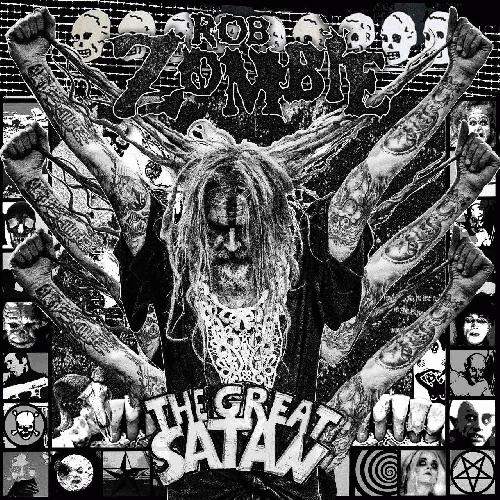
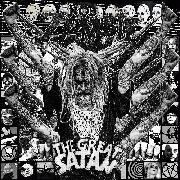
The Great Satan is a hard reset on the perennial formula used, at this point, for more than half of Zombie’s solo career. The album title alone is a glaring admission of this, violently veering away from the gaudy, long-winded and absurdly ostentatious titles of the last three LPs in favour of a simple, heretical three-worded album title that reveals far more than one would think. Couple that with Piggy D and John 5’s departures – members that have been permanent fixtures of Zombie’s solo records for nearly two decades (the former moving on to play in Marilyn Manson, and the latter in Motley Crue), and you have some idea of the scale and impact this is going to have on Rob Zombie’s sound before you’ve even heard a note of this record. And here’s the thing; the line-up change was long overdue. While I love a lot of the work Piggy and John have contributed with Zombie, it’s hard to argue with the fact that this outlandish grindhouse aesthetic, with goofy album titles and capricious styles of writing, had reached the zenith of its potential back in 2013, in the form of
Venomous Rat Regeneration Vendor. Every iteration after that first attempt has been a diluted, more obtuse, scattershot, and staler version of what
Venomous Rat Regeneration Vendor so thoroughly delivered. By
The Lunar Injection Kool Aid Eclipse Conspiracy, we really had reached the lowest point in Zombie’s career: an album that impressively delivered the most experimental music of his career in the most derivative and clumsy way imaginable. The biggest takeaway from the last decade of Zombie’s music is that he had well and truly got lost in his own experiments, losing the core essence of what made him so great to begin with.
The departure of John 5 and Piggy D would normally be something to lament, but when they did leave it felt organic, and kind of a relief over being a disappointing surprise. It was an opportunity for all parties involved to go off and do something different, but more importantly it gave Zombie the chance to recalibrate and reassess his direction. Of course, when the news broke out that original members Mike Riggs and Blasko were returning, I was elated with the decision. While it wasn’t necessarily a creative decision guaranteed to bring bold new sounds to the table, it did ensure that Zombie was looking to bring his sound back to its roots, and that’s exactly what
The Great Satan is. Essentially, Zombie’s eighth studio album strips itself down to basics and serves up a slick blend of
Hellbilly Deluxe and
The Sinister Urge creature-riffage with the heavy, driving punk energy of White Zombie. There’s a peppering of that experimentation from recent records, but it’s used as more of a novelty, superseded by heavy, fuzzy riffs and big, pounding grooves. “Revolution Motherf*ckers”, “Sir Lord Acid Wolfman”, and “(I’m a) Rock “N” Roller” bring the return of that disco-swinging groove associated with Blasko and Riggs’ early Zombie albums, and it’s an absolute blast to sit through; “F.T.W. 84” and “Tarantula” bring full-blown heavy metal to the table; “The Devilman” brings that intimidating Black Sabbath-styled doom riffing; and the likes of “Heathen Days”, “Punks and Demons” and “The Black Scorpion” deliver the White Zombie sound so many fans have yearned for.
Overall, while
The Great Satan doesn’t deliver anything new per se, it’s a reset that refines Rob Zombie's creative edge, and is conducive to representing sounds from his entire career. There’s something here for every fan of his works, and it’s all executed concisely. More importantly,
The Great Satan just brings that fun factor again, and frankly, that’s all you can ask for.