Review Summary: A magnificent conclusion to the Lunatic Soul project—one that blooms like a flower in the heart of darkness
The solo project of Mariusz Duda, Lunatic Soul, was clearly planned with a strong sense of purpose from the very beginning. The debut album (Lunatic Soul, 2008) was dark, atmospheric, and electronic, centered on themes of death and loneliness—mostly instrumental, with minimal vocals. The second album, Lunatic Soul II (2010), followed the same path but felt deeper and more personal.
With the third album, Impressions (2011), Duda made a major turn: a completely instrumental, vocal-free ambient record that functioned as a companion piece to the first two albums. It was obvious that experimentation, rather than convention, was his main concern. The fourth album, Walking on a Flashlight Beam (2014), became more electronic and more conceptual. On the fifth album, Fractured (2017), he pushed the electronic elements even further, moving into trip-hop territory. The sixth album, Under the Fragmented Sky (2018), was shorter and more ambient. Then, on the seventh album, Through Shaded Woods (2020), Lunatic Soul reached a more folk-oriented, nature-driven sound—less electronic, more acoustic, with Scandinavian influences.
Overall, from the first to the seventh album, Lunatic Soul maintained its deeply personal and atmospheric identity while gradually moving from early darkness and electronic textures toward hope and folk-based music.
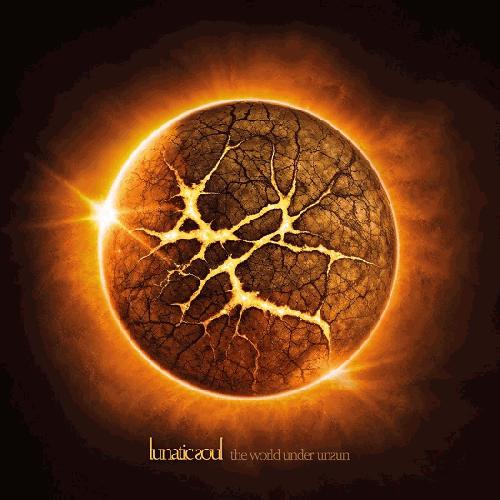
And now… on October 31, 2025, five years after the previous Lunatic Soul album and two years after the latest Riverside release, the eighth Lunatic Soul album, The World Under Unsun, was released. A 90-minute double album, it is—by every measure—the most important work of this fascinating and ambitious project so far. With this album, Duda completes the “Circle of Life and Death” within the Lunatic Soul discography, finally leading us to the destination he had envisioned and planned from the very start.
Let me put it this way: all Lunatic Soul albums have followed a non-linear conceptual narrative revolving around the cycle of life and death. What we have here is a recurring loop—birth, life, death, decay, and rebirth. This cycle functions like a circle, connecting the albums conceptually, though not in a strict chronological order. It tells the story of a solitary hero passing through different stages of life and death. So far, we’ve had four darker, more introspective albums leaning toward death, and three more hopeful, nature-oriented albums leaning toward life. Now, the eighth album—The World Under Unsun—serves as the conclusion of this cycle and brings the story to an end. An epic, emotional summation, like the end of a long journey that gathers all previous themes into one final statement.
The obvious question is: does this mean Lunatic Soul is over? The answer is unclear. Duda has said that the life-and-death cycle of Lunatic Soul is now complete. But it’s still possible that the project may return in the future—under the same name, perhaps, but with a different theme and a new narrative.
As I said, this is the most important Lunatic Soul album to date—and Mariusz Duda himself clearly knew that. That’s why two significant things happened here. First, there’s a five-year gap between this album and the previous one, meaning Duda spent more time on this record than on any Lunatic Soul album before it. Second, until this point, Lunatic Soul had been signed to Kscope Music, a label mainly focused on independent and experimental music. For this release, however, Duda moved to InsideOut Music, a much larger and more professional label—one capable of providing a bigger budget and access to major European and American markets. As a result, the album was produced in better-equipped studios, with a stronger focus on sound quality and mixing, and the entire production process was handled on a far more professional level.
Genre-wise, the album is rooted in progressive rock, enriched with atmospheric, electronic, ambient, and folk elements. The overall mood is dark, contemplative, immersive, and deeply absorbing. The guitar riffs are heavier than on previous albums, and the cold sonic landscape creates a world that perfectly matches the album’s title: a feeling of existing beneath an invisible sun—an “Unsun”—a sun that exists, but offers neither light nor warmth. A place where darkness dominates, yet hope for the sun’s return still lingers.
Conceptually, the album deals with decay, death, rebirth, and ultimately the cycle of life itself. Listening to it—how should I put this—the album title alone leaves little room to think about anything else. It feels like walking through a hidden world beneath the eternal shadows of an unseen sun. A place where darkness is not frightening, but beautiful and thought-provoking. Its emotional peaks bring tears to your eyes, and Duda’s magical voice pulls you deep into yourself. This is an album that forces you to think, and invites you to listen again and again, each time understanding it more deeply.
It is a magnificent conclusion to the Lunatic Soul project—one that blooms like a flower in the heart of darkness, restoring a sense of balance through its layered complexity and quiet hope.