Review Summary: Matanza’s Final Act: Heavier, Darker, and Almost Humorless
Pior Cenário PossÃ*vel (Worst Case Scenario) is Matanza’s final studio album — and it arrives already carrying the weight of several farewells. It is the last record featuring bassist China and vocalist Jimmy London, as well as the band’s final release under the name Matanza, before they disbanded and later split into Matanza Inc. (led by Donida) and Matanza Ritual (headed by Jimmy).
Regarding the album’s darker theme — in contrast to their usual songs about drinking, brawling, and devil women — Jimmy explained:
“We create the concept for each Matanza album before even writing the first song. Now, however, you’d have to live on Mars to sing about good trouble, firing shots in the air, and having fun. Maybe on the next record we’ll be in a better mood.”
And indeed, the atmosphere shifts considerably on this final effort. The band’s lyrics were always aggressive, dealing with fights, deaths, and murder — but there used to be a cartoonish layer that made everything feel more acidic than oppressive. Here, that layer is noticeably thinner. Donida sounds serious this time — perhaps a reflection of the internal tensions that would culminate in the band’s breakup a few years later.
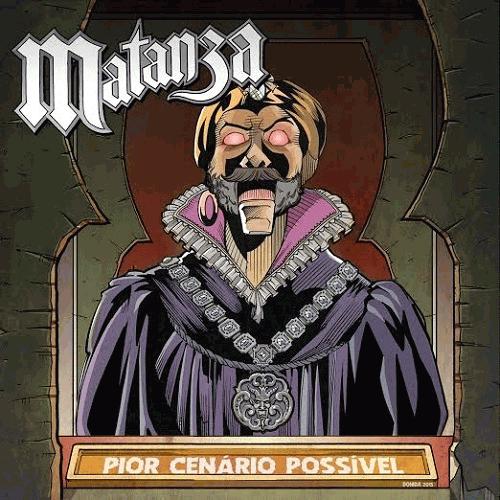
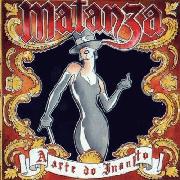
Even the cover art reflects this aesthetic shift: gone are the exaggerated, sensual figures of the past, replaced by a nearly robotic entity dressed in clerical attire, wearing a hypnotized expression. The visual humor gives way to something colder, more symbolic, and less inviting.
Musically, the album also marks a perceptible change. It is the most openly heavy metal–oriented work in the band’s career. Several tracks feature slower tempos — such as “A Casa em Frente ao Cemitério (The House Across the Cemetery)” and the title track “Pior Cenário PossÃ*vel (Worst Case Scenario)” — and almost all of them run longer than three minutes. The production and the introductions of various songs lean more toward traditional metal than hardcore.
It is also the only album by the band to feature two guitarists in the recording (Donida and MaurÃ*cio Nogueira). The presence of a second guitarist increases both the weight and the sonic density. As Jimmy put it:
“It’s one more instrument — which means 20% more arranging capacity, more noise, more pressure. We kept the sound organic, making the drums feel like they’re right there beside you. With every record, we refine the process. This time we used the tape machine to warm up the sound, but without actually storing the audio on it. After all, what would be the fun if everything were always the same?”
So, with all that said, what is the final result?
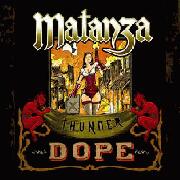
Unfortunately, PCP ends up being the only truly mediocre release in the band’s career. Even Thunder Dope — a B-sides compilation — feels more cohesive and interesting than PCP.
That doesn’t mean there aren’t strong moments.
“A Sua Assinatura (Your Signature)” delivers a more menacing Jimmy than ever before, in a track that moves at a slower pace than the band’s traditional standard. It’s heavy and dragging, and Jonas’s drums seem to cement every riff into the ground. An excellent moment.
“A Casa em Frente ao Cemitério (The House Across the Cemetery)” sounds like the bitter outburst of a territorial ghost — not the ethereal, poetic kind, but the type that slams doors, drags chains, and hates new neighbors. The lyrics exude the resentment of someone who died but never got over the fact that life went on without asking permission. The spirit refuses to accept others occupying what was once his space; there’s an almost petty obsession with ownership, as if the house were still registered in some supernatural land office. Musically, it’s dragging, rough, and heavy. In other words: it works very well.
The title track, “Pior Cenário PossÃ*vel (Worst Case Scenario),” acts as the album’s manifesto: dense, measured, and less inclined toward easy irony. It replaces overt mockery with constant tension and fatalism. The riff feels more oppressive than celebratory, and the drums maintain a steady pace that reinforces this sense of inevitability.
“Conversa de Assassino Serial (Serial Killer’s Conversation)” is basically Matanza’s official audition to be included on the soundtrack of Dexter. If it played over the show’s opening credits, no one would question it — it might even improve the mood. The riff is dry, repetitive, obsessive — much like the narrator’s mind as he offers practical advice on how to be a serial killer. And just when you think you understand the song’s direction, an unexpected brass section appears at the end, adding an almost ironic twist to a track that was already flirting with absurdity.
Beyond these standout moments, the rest of the album doesn’t deliver much more than expected — and sometimes not even that. It doesn’t quite feel like autopilot, but there’s a persistent sense that something is missing. Perhaps urgency. Perhaps inspiration. Perhaps simply that spark of exaggerated irreverence that was always the band’s soul.
The result is an album with good flashes, but diluted by fillers that add little to Matanza’s discography. It’s not a disaster — far from it. But coming from a band that almost always delivered solid or very good records, mediocrity ends up weighing more than it should.
And perhaps that is the real worst-case scenario.