Review Summary: I cannot hit all the right notes / I’ll keep learning till I die / Dance on, all you yearning people / For one day I might expire
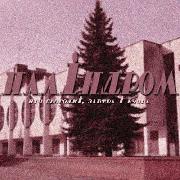
Palindrom’s third album, whose title can be loosely translated as “Conceived While Waiting in Line,” hits differently than his two previous exercises in spontaneous lo-fi experimentation. It is, however, quite hard to pinpoint the difference. It’s not that I like all the songs, there are some certified snoozers in the second half. It’s not about the variety of styles presented here, as both previous releases are reasonably eclectic as well. What defines the album is how expertly the artist juggles and sequences the moods and emotions on display. Sometimes we experience a radical mood change from one song to another, sometimes the same topic is analyzed in different songs from different angles.
But before you change the mood, you need to set it, which is where the first song comes in. When put against its gentle and relaxed piano and saxophone background, the lyrics sound like a slap in the face:
Fly on, go higher and higher
Spread out your wings, let people stare at you
Right here and now,
You’re falcon, you’re falcon…
Now, fall down
It will not get better
And then, the first mood swing comes in, as after such a somber beginning the album transitions into probably the most danceable and catchy tune Palindrom has ever written. “I can’t do anything” features an engaging melody and beat with good-natured self-ironic lyrics. Palindrom can be scathing towards himself in his songs, but this time it’s like he’s just gently poking fun of his own shortcomings while also inviting everybody to dance.
Now that you’ve had some fun, it’s time to be subjected to intense rapping of one of the darkest tracks on the album. “City” describes Palindrom’s native Lviv from the viewpoint of a crow, first as the bird flies over it, then as it is devoured by a stray dog. However, staying true to its fluid form, just one song later we are presented with a lighter view on Lviv, as “Café ‘Hope’” (song No. 5) provides a romantic description of Palindrom’s favorite food joint. We will, however, face a darker perspective on the subject later, when environmentally themed “Plastic 2” (song No.7) describes people eating ravenously on their summer terraces, while mother nature suffocates under the tons of human waste.
In between the two Lviv songs lies the first cover song of the album, “Cherry Blossom Tempest”, originally penned by Zenoviy Guchok, one of the most ridiculous and ridiculed dinosaurs of Ukrainian music scene (I don’t know if his name sounds as funny in English as it does in Ukrainian, but I surely hope so). Palindrom kept the original lyrics but completely changed the music (you’d understand why if you’ve heard the original song, lol), turning a cheesy old-fashioned ballad into his own thing with soaring synths and passionate singing. At the beginning of the song, we are also treated to an excerpt from a random Zenoviy’s interview where the aging star rambles about the younger generation of singers not being able to sing properly.
This whole kaleidoscope of emotions culminates in the track “Lucifer,” which is a clear centerpiece of the album. It is based on a real-life event, namely an airshow that went horribly wrong (there is an article on English Wikipedia about Sknyliv Air Show disaster, if you’re interested). The story is told in passionate sarcastic rapping against a brooding industrial background from the viewpoint of a SU-27 plane ready to fall “like Lucifer” on the crowd of unsuspecting spectators. This catastrophe, officially the deadliest airshow in history, deeply shocked Palindrom at the time, as he mentioned in one of his pre-release interviews. So now, as he returns to the subject years later, you can hear him screaming his soul out.
This fluidity of emotions persists until the end of the album, sometimes with the mood swing happening within the confines of the same song. A clear example of that is the closer “Kherson,” which was written at the time when the titular city was still under the Russian occupation. As such, the song features darker rapped verses about the city straining its back and baring its teeth at the occupiers, which transform into a lighter chorus, full of hope for eventual liberation of Kherson. The city was indeed liberated mere two month after the album was released, but it still suffers greatly from the Russian occupational forces that remain across the Dnipro River with their planes harrowing Kherson with bombs and their drone operators indulging in human safari, targeting random citizens in the streets.
Like I said at the beginning, the latter half of the album is not as efficient, with some of the lyrical themes reused for lesser effect, and some of the songs failing to make a lasting impression. Such is the case with the second cover song. “Racketeering” (song No.9), originally by the very obscure “Lesyk Band,” tells a story of a hapless local businessman being harassed by criminals. It is amusing and endearing, but ultimately not that interesting.
One of the latter half songs that does work as intended is “With a Bouquet of Roses” (song No.10). Despite its rosy name, this is one of the few songs on the album that directly reflects on the realities of the Russian aggression against Ukraine:
Like a pillow the ground is stuffed with the dead
And the slope keeps expanding away
I’d keep holding the flower bouquet in my hands…
But I’m sticking it into a grave
The song culminates in the heaviest moment on the album, as the drums speed up and rapping gives way to frantic screaming followed by harsh vocals. I’d say that this would serve as a perfect conclusion for the album, but Palindrom ended up writing a couple more songs at the last moment, including the one about Kherson, so we ended up with thirteen songs in total.
Despite some issues with pacing and number of songs, the album overall represents a fascinating and special experience. I wrote a lot this time, but I wanted to show you how rich the background of a lot of the songs here is, and how much effort is put into the album. Palindrom will move on to a different sound afterwards, but “Conceived while Waiting in Line” is a triumphant combination and expansion of his early style.