Review Summary: Masterfully produced and more mature than its predecessor, but ultimately a refinement rather than a revelation.
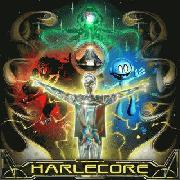
Danny L Harle is one of those producers whose fingerprints are seemingly everywhere, even if his name isn’t. He’s a London composer and PC Music-adjacent architect of hyper-glossy rave-pop. He’s spent the last few years orbiting high-profile vocalists while cultivating his own brand of emotionally earnest, neon-saturated dance music. On his debut album, Harlecore, he was making this sort of “club candy” (hyperpop, rave culture distilled into stuttery vocal samples and big pulsing bass, clearly engineered for maximum dopamine). It was the kind of record you wouldn’t be surprised to see soundtracking a “Best Overwatch Plays” compilation aimed squarely at Gen Z. Glossy, YouTube-core melodic EDM: emotionally sincere on the surface; algorithmic underneath. Serviceable, kind of vapid. Music for big party vibes, but nothing remarkable on its own.
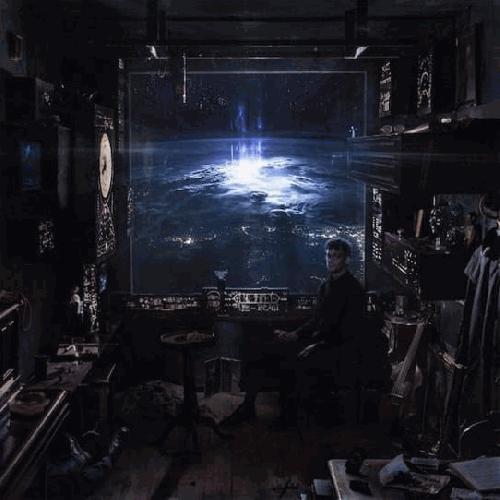
Cerulean is, in many ways, trying to be a more mature version of that. The energy is noticeably restrained by comparison. The RGB lighting has been dimmed to a cool deep blue. The manic, jittery chaos of Harlecore is gone, replaced with something more deliberate and guided. The production is incredibly clear and crisp, masterfully engineered from top to bottom. It pulses a little quieter and slower in the background. Even when he digs into his bag of gimmicks (like the pitch-shifted vocals he’s a little too attached to for my liking), they’re less insufferable, more integrated into the architecture of the tracks.
But—and here’s the big thing—Cerulean absolutely DOES NOT work independent of its vocals. Strip away the guest singers and much of this record feels skeletal. The production is smooth and polished, but rarely inspiring on its own. Nothing that makes you think, “Oh man, this is IT," in isolation. The vocal collaborators are the oxygen the album needs in order to breathe. It’s fortunate, then, that the vocal performances are pretty solid all around, and Harle very smartly gives them room to shine. On the Clairo interlude “Facing Away,” Harle demonstrates rare restraint: a minute of near-absence, just her voice suspended over the faintest electronic hum before ambient textures quietly emerge as the track is ending. It’s nice. It’s subtle. A promising shift away from the excess of Harlecore and a clear sign that Harle is trying to build a more cohesive world this time around.
And then it’s followed by “Raft in the Sea,” the first real emotional punch. It begins with a low bass pulse and vocals before gradually lifting off, layering whistling, a short but very effective horn refrain, and stacked vocal textures all in service of the melody. The album's polished almost to a fault, but here the polish works. The slow build pays off, and for a moment, Cerulean feels less like highly engineered rave music and more like genuine emotion surfacing.
Elsewhere, the rave DNA still shows through. “Laa” leans back into that club muscle memory: a steady build, a brief vacuum of silence, then boom-boom-boom bass slamming back in, getting crunchier and more distorted until it sounds like the strobe lights might explode. It’s still chaotic, but more choreographed now. It’s not necessarily that the blueprint has changed; rather, Harle has improved at guiding the chaos in these more overstimulating tracks.
Cerulean sounds like an artist who wants to be taken more seriously, and Harle succeeds often enough in this endeavour. The hypercringe vocal spam and all-over-the-place energy are gone. Everything feels intentional. Composed. But while I find myself admiring the craftsmanship throughout, I’m not consistently moved by it. I’ve been deep in an ambient phase lately, and next to that kind of immersion, Harle’s glossy trance-pop feels more impressive than indispensable. It’s a refinement, not a reinvention. A controlled evolution of the same synthetic DNA. Masterfully produced, occasionally affecting, but still not transformative.