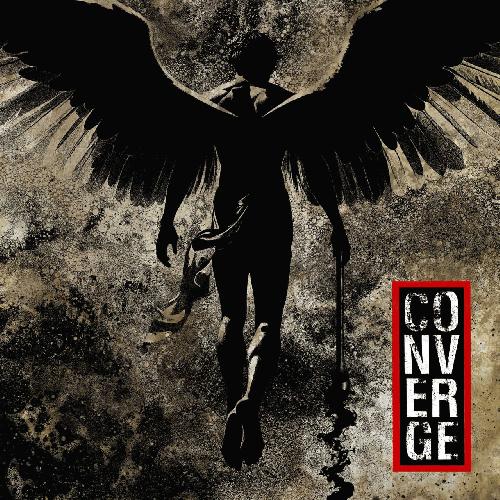
Review Summary: Converge’s Love Is Not Enough strips romance to structure, delivering 30 minutes of ferocity, tension, and hard-won acceptance. Brutal riffs, blistering drums, and rare vulnerability affirm a band not proving its legacy—but solidifying it.
Converge unleash their newest record, Love Is Not Enough, with the title track, one that feels less like a warning and more like a stripping away of surface impressions to reveal the structure from which even the concept of "love" arises. It posits that love alone is insufficient, whether for a relationship, institution, or organization, to sustain what it claims to protect. "We have to stomach the taste of our own blood," vocalist Jacob Bannon declares, preparing listeners for the remaining half-hour of hardcore that anyone familiar with Converge has come to expect (and love) from the metalcore titans.
The title track bleeds seamlessly into the heavier, chugging riff of "Bad Faith," a song destined to be a mosh-inducing staple should it ever make its way into a live set. Its slower tempo is quickly inverted by Ben Koller's blistering drums on "Distract and Divide," channeling the high-speed intensity of 2006's No Heroes and proving that, even approaching their 50s, Converge can still crank the heat high enough to remind the younger generation exactly who built the throne they now circle. Keeping the temperature at a boil, "To Feel Something" maintains the ferocity before collapsing into a brutal, neck-snapping slow-groove breakdown reminiscent of the closing moments of Slayer's "Ghosts of War" from 1988's South of Heaven. If you, like Bannon, "just want to feel something," this track will do the trick, and if not, well, "numbness comes when needed."
For those in need of a pause, Converge position the album's lone instrumental, "Beyond Repair," at its midpoint. Led first by a haunting guitar line from Kurt Ballou, then by Nate Newton's pulsing bass and Koller's slow, tribal-esque percussion, the track may test impatient listeners, but that patience becomes the price of transformation. Acting as a structural hinge, it divides the album into two distinct movements: tracks 1-4 ask, "Is love enough?" while tracks 6-10 respond, "No, and here is what remains."
"Amon Amok" does not so much explode as descend, thematically extending the title of the previous track through a meditation on acceptance—"we'll take what is deserved." It is not resignation, but a hard-won equilibrium amid chaos. A shimmering backdrop surfaces beneath Ballou's chugging guitar, invoking post-metal textures in a way that feels newly expansive for Converge this late in their career.
After acceptance comes the question: what lasts? "Force Meets Presence" grapples with that tension through a colossal, stampeding riff. Bannon trades vocals with Newton and Ballou, while a soaring lead cuts through the weight, aligning texture with sheer force and elevating the track as a standout. Like "Beyond Repair," "Gilded Cage" is a slow-burner. Bannon's cleaner vocals surface in the verses before yielding to his signature harshness in the chorus. Some may consider it a secondary lull, but thematically its sludginess drags prior ferocity downward just enough to restore balance and build tension for what follows.
The album's most emotionally charged moment arrives with the nearly five-minute "Make Me Forget You." Having confronted acceptance and asking what endures, the focus shifts to regret and the burden of what has been left unsaid. Musically restrained—solid drums, straightforward riffs—the track derives its power from emotional undertow, echoing the vulnerability that defined moments on 2017's The Dusk In Us, particularly "A Single Tear."
Those emotional stakes carry directly into the closer, "We Were Never the Same," notably the first unreleased track the band performed live before album details were even finalized. It arrives as an inevitable conclusion to a record that opened with the declaration that "love is not enough to fend off the scavengers." Ballou's tapping guitar line spirals downward beneath Bannon's piercing question: "Why do we all gather to mourn yet not to cherish?"
After 30 years of reshaping the language of metalcore, Love Is Not Enough does not feel like a band reaching upward, it feels like recognition. The crown was never in question; Converge forged it record after record. They are not ascending to something new, but standing firmly within what they have already become. What remains is not proof, but permanence—the sound of a band no longer arguing for its place, but defining its shape for those who choose to stand within it.