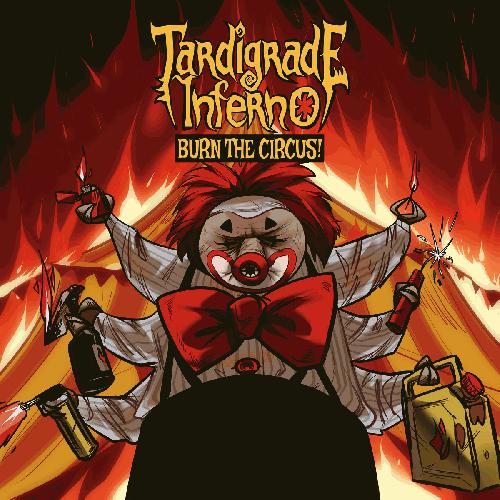
Review Summary: Burn the Circus proves that Tardigrade Inferno didn’t come just to set up the show — they came to set the tent on fire and walk away through the ashes.
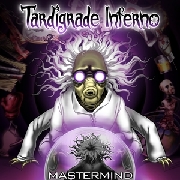
Burn the Circus is Tardigrade Inferno’s second studio album. It follows the spectacular Mastermind (2019) and the great EP Arrival of a Train (2023), further cementing the band’s unique aesthetic within metal.
There is a classic danger surrounding the second album, and it is especially cruel to bands with strong debuts — as is the case with Tardigrade Inferno.
The first record is usually created without restraints: material accumulated over years, with no pressure, no external expectations, and often no audience to please. The second album, however, carries an invisible burden: proving that the initial success was not a fluke. The band must decide whether to repeat the formula (and risk sounding lazy) or change too much (and be accused of “betraying” its own identity). It is a creative minefield.
For bands with a strong aesthetic or a striking concept, the risk is even greater: the second album can become self-parody or, at the opposite extreme, an abrupt abandonment of what worked. Surviving this moment requires artistic maturity and courage — understanding what is essence and what is mere ornament.
When a second album succeeds, it doesn’t just follow the first one: it defines whether the band has a future. When it fails, the label of “promise” turns into a sentence.
So, did Burn the Circus succeed? The answer is a resounding YES.
But did the band change its style? Yes and no at the same time. All the circus elements are still there, but the band sounds more dangerous, less “funny.” Musically, perhaps the biggest difference lies in the keyboards. They are no longer as prominent and upfront as on Mastermind, and they have also lost much of their “retro-futuristic” (I love this definition) character.
With Burn the Circus, however, the band expands its aesthetic signature: this is no longer just about sonic metaphors — the Tardigrade Inferno universe here feels like a macabre circus set on fire.
The first two bombs of the album set the overall tone. The opening track Ringmaster Has to Die makes it immediately clear that something has changed. If Mastermind presented the circus as a spectacle, here the master of ceremonies is already condemned from birth. The song is aggressive, theatrical, and direct. The circus atmosphere still exists, but now it feels hostile. This is not an invitation — it’s a warning. The mains riff is razor-sharp and the chorus is very dramatic. Great start!
The heavy mood continues in Clockwork God. Here the mechanical, oppressive aesthetic comes to the forefront. The rhythm is almost industrial, evoking the idea of a god that functions like a machine — cold, predictable, and inhuman. The keyboards create a sense of automatism while the band delivers a critique that feels less caricatured and more bitter. The circus starts to resemble a factory.
9 Out of 10 feels as if it came straight out of the Mastermind recording sessions. The band plays with ideas of approval, success, and validation, while musically keeping everything slightly off-kilter. It’s that forced smile hiding something deeply wrong underneath.
Nailed to the Ferris Wheel might be the most overtly circus-like song on the entire album. The circus returns explicitly, but now as an instrument of torture. The track balances theatricality and heaviness with impressive intelligence.
Splinter in the Eye is emotionally aggressive. The title alone gives away the concept: something small, but unbearable. Musically, the band sustains tension and discomfort throughout, with no clear catharsis — topped by a beautiful vocal melody in the verses. Incredible.
Burn the Circus keeps the high standard achieved by the band with Mastermind. It’s remarkable what these Russians have produced in just two releases. All I can do is hope they keep this momentum going with their upcoming third release, scheduled for March 2026 (judging by the first single released — Hide n Seek — there is very little to worry about…).
I love the godfathers of metal (Iron Maiden, Metallica, Judas Priest, etc), but I would love to see more bands like Tartigrade Inferno getting recognition it deserves.