Review Summary: The land you loved is now so barren and so cold…
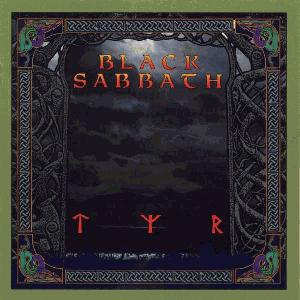
Released in obscurity and filled to the brim with Norse iconography and religious lyrics, 1990’s TYR is regarded by some as the furthest Black Sabbath ever strayed from their signatures. However, I would wager that the album is a successor to the mythical aura pursued a decade prior circa Heaven & Hell and The Mob Rules. This parallel is made especially blatant as the opening clean guitar progression nods at “Children Of The Sea” before gaining its own epic voice with evocative choral chants, pounding riff sets, symphonic keyboards, and a triumphant chorus.
From there, it’s cool to see the album expand upon the power metal tendencies that Headless Cross merely hinted at. “The Law Maker” and “Jerusalem” are stellar examples; while the tracks differ in tempo between the former being one of their fastest songs and the latter coming out more anthemic, they stand out for their charged up drums and storytelling vocals spruced up with soaring highs and harmonies. Even when “The Sabbath Stones” carries the doom torch with methodical trudges and ominous vocals, there’s still a speedy finish to reckon with.
Those epic tendencies reach their peak as a three-track suite introduces the album’s back half. “The Battle of Tyr” is the sort of short ambient keyboard vignette well-worn by this point but is enough spruced up enough to play like proto-dungeon synth, especially when it flows so seamlessly into the fantastical acoustic strums and echoing vocals on “Odin’s Court.” That integration is even more on point as “Valhalla” comes crashing in with explosive drums, bursting guitar chugs, and an appropriately hardy chorus. Admittedly the tracks do lose some of their thunder taken out of context, but that’s just an argument for them to be viewed as a singular piece.
I must admit the last couple songs don’t end the album with the same grandiosity though their dynamic contrasts still offer intrigue. “Feels Good To Me” is undeniably the odd man out with its AOR power ballad sensibilities slowing the momentum but even it is still driven by a hazy aura and another solid chorus. Fortunately “Heaven In Black” fares considerably better as it closes on an upbeat note informed by a “Children Of The Grave”-style gallop and rapid fire vocal lines.
The lineup’s chemistry also feels more potent than it’d been for some time, less preoccupied with what a Sabbath record *should* be and committing more to the atmosphere than ever before. This may be Tony Martin’s peak performance as a vocalist, putting that Headless Cross confidence toward a more nuanced character with a broad range. While the production has its quirks, notably muffling Tony Iommi’s guitar tone in the midst of Cozy Powell’s domineering drums and keyboardist Geoff Nicholls’s growing prominence, the hazy mix reinforces the album’s personality.
TYR makes a case as the strongest installment of the Martin era as well as one of Sabbath’s most overlooked efforts overall. Its power-doom dorkiness was no doubt the most uncool thing in the face of developing extreme metal and alternative scenes, but its commitment to its theological aesthetic gives it a unique flavor. One can certainly similarities in groups like Candlemass, Manowar, and Bathory were doing around the time and its influence can surely be felt in bands to come like Sorcerer, Doomsword, and the one that literally took their name from it. It’s no doubt an acquired taste but Odin knows it matches my taste to a tee.