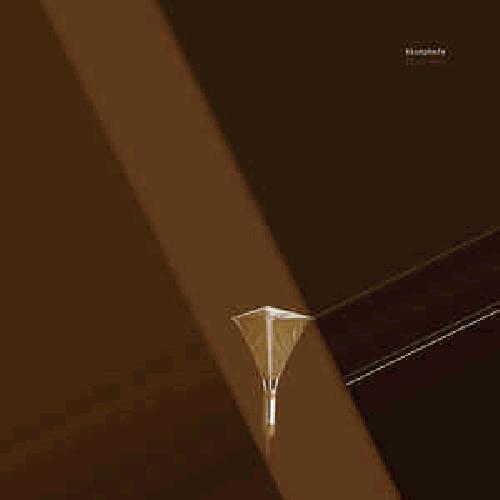
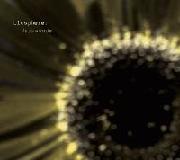
Review Summary: This reissue rewards patience with a level of immersion that only deepens the longer you stay with it.
I recently wrote about Substrata [Alternative Versions], a release that fundamentally reframed one of Biosphere’s most celebrated albums by pulling subtle little details closer to the surface and giving them more to do. And now, after spending many late, restless nights working from home through bouts of insomnia, listening to the Dropsonde reissue alongside it, the contrast between these two albums became impossible not to notice.
Both Substrata and Dropsonde are incredible albums, but they operate on very different wavelengths. If Substrata feels a little floaty and cold, almost sort of held in suspension, Dropsonde is more concerned with motion and warmth. There’s rhythm here, foot-tapping percussion that gives the music a sense of forward momentum even when it’s moving slowly. That motion often comes from repetition and phrasing rather than from tempo or intensity, but the difference is noteworthy, especially when talking about their respective reissues.
The Substrata [Alt Versions] release positioned samples closer to the surface that once hovered nearly out of sight, expanding melodies and revealing details you didn’t even realize were there the first time around. Dropsonde doesn’t receive that kind of sonic overhaul. It doesn’t recontextualize the tracks but rather sharpens their image, never seeking to rewrite the album’s identity. The music still sounds the way it always has: track lengths remain the same, and the atmosphere is left intact. What gives this reissue its real weight are the eight additional tracks (two of them reworks). In that sense, this reissue doesn’t revise Dropsonde so much as it completes it.
These added songs don’t register as auxiliary material. They aren’t some uninspired tacked-on bonuses or archival leftovers included out of obligation, as so many artists are wont to do. They share the same DNA as the original album so completely that it’s honestly hard to remember a version of Dropsonde without them. Tracks like “In the Shape of a Flute” and “La Caldera” slot into the album’s aesthetic effortlessly, to the point where they arguably stand shoulder to shoulder with the original tracklist, if not surpass parts of it.
“In the Shape of a Flute” in particular is one of the clearest examples of what makes this era of Biosphere so special. There’s galloping percussion here that immediately recalls “Birds Fly By Flapping Their Wings,” but it feels more relaxed and settled into the mix. The jazz flourishes don’t sit on top of the track; they’re woven into it. The flute itself is present but never showy, accenting the rhythm rather than dominating it. Everything feels dimmed, the movement controlled rather than insistent. It’s kinetic ambient but restrained and comfortable in its own pacing.
What really struck me as I spent more time with this reissue is how even many of the quieter, slower tracks give you something to latch onto. “Fair Winds for Escort” might seem understated on first listen, unremarkable even, but subtle rhythmic patterns gradually work their way into your head. Before you realize it, this piece of music has more intent and world-building than you’ll likely give it credit for initially. That sense applies across the album. Not every track announces itself immediately, but you can be sure they’re always doing something in service of the larger atmosphere. It’s a detail you likely won't consciously register at first, but one that gradually reveals itself as core to the album’s lifeblood over time.
“Windscale Piles” and “La Caldera” lean a bit more into melody and distinct electronic textures. In the case of the latter, there’s that familiar forward-moving percussion that defines tracks like “Birds Fly” and “In Triple Time,” though here it’s slower and more reflective. There’s a subtle melody sitting in the background, not buried to the point of invisibility, but subtle enough that you almost exaggerate it in your head when humming along. It feels like the notes are there, even if they’re never fully articulated. I don’t know if that’s just the power of ambient fused with jazz-inflected rhythm, but there’s something indescribably awesome about how said rhythms interact with this sort of ‘implied’ melody at times.
What changes most with this expanded version of Dropsonde is the listener's relationship to its length. At close to two hours, it initially feels like a massive barrier to entry, especially given the repetition of these tracks. But over repeated listens, that sprawl stops feeling excessive and starts to feel purposeful; you start to settle into that mode of repetition. It’s an album that (and I’ve said this of many of the greatest ambient works) isn’t asking to be consumed so much as inhabited. It creates its own sonic world, its own ecosystem, and once you open up to it, the runtime fades into the background.
There’s so much more I could say about this album and its original tracks that I barely touched on here, and that’s part of what makes returning to it over and over again so rewarding. This reissue didn’t change how Dropsonde sounds, nor did it need to. What it did was solidify the album’s identity and further enrich its world. It’s an album that isn’t aiming for resolution so much as continuation. Many will feel too intimidated to tackle a release of this length and restraint, but they needn't. It's the kind of album you can let slowly evolve, piece by piece, here and there, when you've got some time and when the headspace feels right. And if you afford it that level of patience, it quietly reveals itself as a remarkable piece of music, and I daresay Biosphere’s crowning achievement to date.