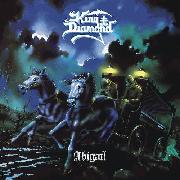
Review Summary: There is life after death.
On par with almost every legacy outfit that defined heavy metal in the ‘80s, the next decade saw King Diamond shouldering the weight of previous work from his namesake outfit (some of it, borderline classic) and the Mercyful Fate classics. While the reunion of the latter crew was somewhat expected, the assembly of a team around King Diamond and Andy LaRocque with US musicians, turned out to be a more nuanced process, especially since the band had just developed its sound for the ‘90s with
The Eye. The two outfits released several albums in tandem with inevitable style exchanges, which prompted fans to half-seriously/half-jokingly advocate for artistic sovereignty analogous to the cerebral status of the namesake agent in Phillip Dick’s
A Scanner Darkly. Stepping on two boats at the same time also resulted in merit fluctuations, from album to album, for both bands.
Spider’s Lullabye was axiomatically nowhere near legacy King Diamond but it aged remarkably well, whereas the remaster mended some sound work issues; the three-song concept at the end of the album was interesting, though its placement and its length, maybe have been a hint of King Diamond’s fallow season in that respect.
The Graveyard, the successor release, was a low flight and probably a valid argument about King Diamond prolonging his abstinence from full-length concept albums. But then
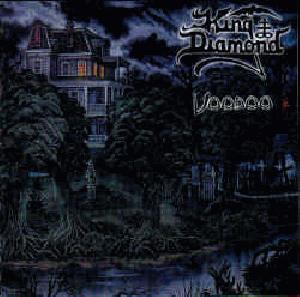
Voodoo came along; despite being semantically familiar its concept was strong, while musically, it was the first album to rival the band’s classics.
A cursory read of the lyrics is revealing about the parallels between the story herein and the concept of
Abigail; the colonial-style Louisiana house adjacent to a Voodoo cemetery versus the haunted mansion, the initially clueless family that has come to live in the premise, the possession of an offspring by otherworldly/spiritual entities, the exorcism performed on the wives as a measure of last resort, and finally, the reckoning at the end. The above said, the album title alone is telling about the additional, two-fold twist; the omnipresence of the Voodoo cult in conjunction to the inelastic “not near our grave yard” (NNOGY) mentality of the immaterial cohort that sets out to displace the new tenants from day one. In view of the present-day housing crisis almost everywhere in the world, the analogies between NNOGY and the deleterious NIMBY movement, are not without merit. Then, there is the pattern of people settling in an unknown area, unaware of the perils attributed either to the land or already settled immigrants therein. This hearkens back to the population of the North Americas in the 18th and 19th century, and sets the ground for the cultural and bloody clashes that have been unfolding hitherto. Story becomes even more agonizing, as it is unclear whether the treacherous custodians of the Voodoo graveyard are acting in the physical world or within their victims’ minds.
Nominally, the plagiarism of key aspects of a concept with respect to previous work by the same artist is nothing to write home about, but that doesn’t mean that the story narrated in
Voodoo does not cause shivers throughout. Instrumental (sic) in that respect is the complete synchronization of what the band has agreed to play with King’s vocal work, in terms of sentiment. Petersen can recite the innards of a phone book and get away with it, due to the horror his multiple impressions can emanate. However, it is the subjective opinion of the reviewer that his immense talent and novelty may have concealed the formative period of the band and the resulting sub-optimal flow of some albums. Of the first five King Diamond albums, all great-to-classic in merit, only
Them sounds like every unit of the band is fully locked in telepathic communication mode, with
The Eye following from a distance. Both full-lengths are also characterized by to-the-point/no-fat arrangements, even though
Them is more adventurous in design.
The Eye is also improved in terms of sound production, whereas
Them still lacks the treatment it deserves. Even the short concept in
Spider’s Lullabye complies with the aforementioned set of traits.
With all analogies accounted for,
Voodoo is no different. King eerily sets the stage for the narrative to unfold, and a faint innuendo is made therein about the amplified/coarse grained heft of the rhythm guitars, an innuendo that becomes a brutal reality by the time the thrasher “LOA House” invades the senses. One might get the impression that the album will focus on US power/thrash metal, not far from the style of outfits like Helstar. However, the reality is that
Voodoo is shrewdly playful with tempos, but besides the simple yet evergreen arrangements, the attribute that sets the album apart is the sinister conversation of King Diamond’s invocations with Andy Larocque’s leads. The latter are characterized by a conscious departure from speed and shredding for the sake of it, into melody and terseness and more importantly, the solid scaffolding of discontent and terror from King’s vocals and story. Regarding the performance of the rest of the crew, while the arrangements allow no room for any aberrations (your reviewer is looking at
Abigail and
Conspiracy), they are extremely solid in sustaining the band’s leading duo. In that light, drummer John Luke Hebert brings forth the aforementioned US metal flair, acquired from his stint with Chastain, and the album
For Those Who Dare.
The ‘90s were a hectic period for King Diamond; especially from 1995 onward, the quest of keeping tabs with both his personal outfit and Mercyful Fate was quite an achievement overall, yet far from flawless (more so for Mercyful Fate…). For some reason,
Voodoo managed to escape the decay that comes with overproduction of music from increasingly similar outfits, whereas in retrospect, it feels like a somewhat overdue reckoning of both the ‘80s and ‘90s period of the band. Its lineup never got to record another album, as the band’s cross hairs shifted to a different, but equally interesting direction.