Review Summary: the coldest room in your head, finally rendered in hi-fi
One of the most striking things about Substrata has always been just how quiet it is. Even with the volume cranked to max, it often feels hushed to the point of being damn near inaudible at times. You almost have to strain to hear these little details in the background that seemingly don’t want to announce themselves. That quality is part of what made the original album so special for me and, I’m sure, many others: its restraint, its refusal to surface anything too cleanly, its sense that everything meaningful was happening just beneath perception.
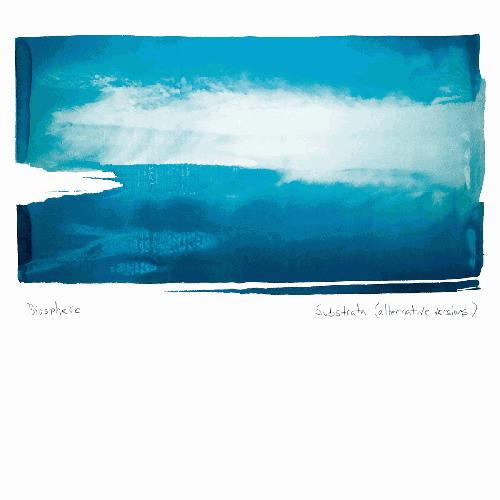
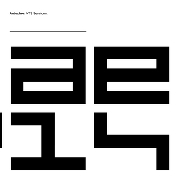
Substrata [Alternative Versions] plays around with that exact tension. At its best, it feels like someone simply walked into the room and turned the volume dial up. Not louder in a blunt sense, but closer to the listener. Background elements that once existed purely as atmosphere are suddenly given dimension, depth, and shape. And what’s fascinating is how often this leads to a moment of recognition. You get these, “Oh… is that what that sound was?” moments. The album becomes a slow series of realizations, as textures you thought you knew reveal themselves as something richer and more intentional.
No track benefits more from this level of clarity than Poa Alpina. In the original version, its warbly, barely distinguishable synth hum sat low in the background, functioning more as a mood-setter than a melody. Here, it’s pulled closer to the surface and given real presence. That subtle humming forms a gorgeous looping figure. There’s a cold, detached beauty to it that was only hinted at before. What once felt like a background gesture now feels like the emotional core of the piece, and yet it still retains that sunken quality that defines Substrata as a whole. It’s the rare case where something so clearly wanted to break through and is undeniably all the better for having done so.
That same approach works beautifully across much of the album. Many of these tracks benefit from having their quieter elements fleshed out, especially sounds that were already compelling in the original but buried so deeply they bordered on subliminal. The alternative versions don’t overwrite the originals; they clarify them and afford more depth and nuance. They give weight to textures that once floated by unnoticed, without turning them into obvious foreground statements… Most of the time (more on that later).
The Things I Tell You is another standout in this regard. The piece feels expanded, more fully realized, particularly in its latter half, where the rhythm becomes more pronounced. The addition of subtle percussive elements (bordering on a restrained drum-and-bass pulse) gives the track a sort of propulsion that wasn’t there before, or at least not as clearly defined. It doesn’t break the spell, but it does shift the gravity of the piece, making it feel urgent while still remaining unmistakably ambient at its core.
That said, this increased clarity isn’t an across-the-board W. In some cases–especially in the latter half of the album– bringing everything closer to the surface works against what made the original versions so haunting. Silene is the clearest example of this. In the original, the ambient fog before the almost jazzy hook felt unresolved in a deeply compelling way. The background element never fully revealed itself and was almost swallowed by the ambience around it. In the alternative version, that hook becomes a very addictive, ear-catching loop, but something essential is lost in the process. The original’s ambience had a nostalgic, vaguely unsettling quality, kind of reminiscent of the hazy dread found in Akira Yamaoka’s Silent Hill 2 score, and that atmosphere thins out once the loop is brought fully into focus. It still makes for a compelling (and especially pronounced) hook, but the vibe has totally flipped, which some will see as a detriment, and for good reason.
Uva-ursi suffers for similar reasons. The alternative version feels lighter and airier, whereas the original carried a darker undercurrent that made it undeniably more compelling. A lot of the latter half of Substrata was defined by that shadowy ambience and sounds that felt heavy despite their quietness. Here, many of those same pieces float more freely in the mix, losing some of that oppressive stillness that made them so affecting in the first place.
In a few cases, the differences are even more stark. Kobresia, while still beautiful and impactful, feels noticeably stripped down. The alternative version is far shorter and lacks some of the quiet ambient breathing room that made the loop hit harder when it swung back into focus in the original. It’s not ineffective, but it does feel slightly gutted.
That push and pull defines this version of Substrata as a whole. It’s both a blessing and a curse. Some tracks are undeniably improved by the added presence and clarity; others lose the very ambiguity that made them resonate so deeply to begin with. The album works best when it reveals hidden depth without dissolving the fog entirely.
Still, even with those caveats, this release feels meaningful rather than disposable. It doesn’t replace the original Substrata, nor does it try to. Instead, it reframes it, sometimes to stunning effect, sometimes less so, but always in a way that highlights just how carefully constructed Biosphere’s music is. And when it works, as it does most spectacularly on Poa Alpina, it feels like the album is finally allowing something that’s been suppressed for a while to breathe. A masterpiece seen from a different angle, flaws and all.