Review Summary: It's one of the pioneers of Portuguese prog. It's an excellent work.
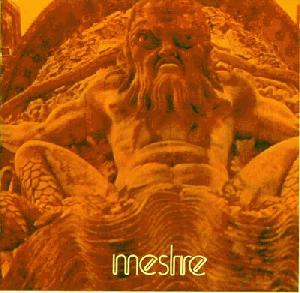
“Mestre” is the debut studio album of Petrus Castrus that was released in 1973. The line up on the album is Pedro Castro, José Castro, Júlio Pereira, Rui Reis and João Seixas.
Petrus Castrus was a Portuguese symphonic progressive rock band formed in 1971 by brothers Pedro Castro and José Castro. The name of the band comes from the Latin translation of the name of Pedro Castro. The band suspended their activity in 1974. In 1976, Petrus Castrus returned with a new release, in 1978, their second album, “Ascensão E Queda”.
In 1971, Petrus Castrus released their debut EP “Marasmo” and in the following year they released another EP “Tudo Isto, Tudo Mais”. Both works cemented their musical approach to British progressive rock music. It was with these two works we can start talking about prog rock in Portugal. Of course we can’t forget the Portuguese pioneers, Quarteto 1111. However, Petrus Castrus emerged in a decade of great musical innovation and experimentalism, and where many Portuguese bands tried to copy what was broadcast by radio and on the records brought from abroad.
It happened the same with “Mestre” what happened with the debut album of Quarteto 1111. It was also banned, for three months, by the Censorship Commission. It was only with the fall of the political regime, on April 25, 1974, it was possible to create something new and with liberty. So, “Mestre” became also a very important album, like “Quarteto 1111” is for prog rock in Portugal. This is the main reason why we can say that the two early musical works of Quarteto 1111 and Petrus Castrus are the pioneers and represent the first truly progressive rock musical experiences in Portugal.
With “Marasmus”, it became clear that Petrus Castrus was not a vulgar band. On their first EP and on the following, Petrus Castrus questioned the traditional Lusitanian soft customs, in song lyrics and many arrangements. As happened with Quarteto 1111, Petrus Castrus also used many poems of the Portuguese contemporary authors and poets such as José Mário Branco, José Carlos Ary dos Santos, Alexandre O’Neill, Sophia de Mello Breyner Andresen or of the Brazilian poet Manuel Bandeira. They also used poems of classic Portuguese poets like Fernando Pessoa and Bocage.
“Mestre” isn’t a classic symphonic progressive rock album like “Ascensão E Queda” is the second studio album of Petrus Castrus. Rather, “Mestre” is more an eclectic album which included a part of its elevated claim also by the used texts, all in Portuguese, of different poets, all critics of the political regime at the time. Virtuous solos or extravagant instrumental braids are looked for in vain here. Nevertheless, this mix of more angular rock, folk-like, organ proto-prog and psychedelic, with a shot of jazz and some sound effects, was quite progressive. Basically, the music is very melodic, sad to passionate pianoforte. José Castro sings, accompanied by his brother at the piano, the most distant instrument on this album. In addition, subtle to powerful bass, drums, acoustic and electrically amplified guitars, other keyboards and sometimes a xylophone come together. Often, the music takes on the ride and turns into a more dynamic, somewhat straighter rocker. Beautiful songs stand next to hard rocking, boogie piano numbers and cheerful dancing, often provided with distortion and other psychedelic effects. In addition there is a raw and angular production.
The highlight of the album is the introductory title. “Mestre” is an elegiac gripping mixture of wonderful singing, great piano, swinging organ movements, spinet miniatures and subtle rhythm accompaniment, which digs deep into the auditory canals. This is really a great symphonic track. The rest of the album no longer reaches the density and the sound, or the progressivity of this piece. It’s very eclectic, there is no common thread and often the music is in more mainstream waters. Due to that, the whole thing is quite colourful and varied but I think there are many other great tracks on it like, “Pasárgada/Saudades Do Rio Antigo”, “Tiahuanaco”, “História Do Azul Do Mar” and “Só Mais Nada”.
Conclusion: “Mestre” brought a new and unusual sound to Portugal. In addition to the attempt to build a symphonic rock, well structured and executed ideas, Petrus Castrus stood out for the originality of the lyrics. “Mestre” comes to reveal and confirm a band that achieves a musical and poetic unit worthy of registration. If the musical influences are rooted in Emerson, Lake & Palmer, Yes, Procol Harum and Pink Floyd, the lyrics plunge deeply and directly into the reality that surrounds and feeds us, like from the allegory, “História Do Azul Do Mar”, the analysis of national myths, “Pátria Amada”, to the direct interrogation, “Tiahuanaco”, to the verification of a fact, “Mestre”, many of the times with the use of great poems of some of the best and most representative poets of the Portuguese language. “Mestre” demonstrates the qualities of a band that reveals a conscious, lucid and intentional work in a meaningful and often critical instrumentation. It’s the reason why the band is one of the best representatives of prog in Portugal.
Music was my first love.
John Miles (Rebel)