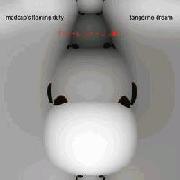
Review Summary: An interesting start. It has few to do with their next space works.
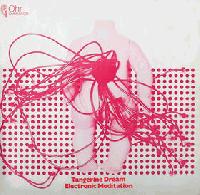
“Electronic Meditation” is the debut studio album of Tangerine Dream that was released in 1970. The line up on the album is Edgar Froese, Conrad Schnitzler and Klaus Schulze. The album also had the participation of Jimmy Jackson and Thomas Keyserling.
Tangerine Dream is a prog electronic band that was founded in Berlin, Germany in 1967. The band was formed as The Ones in 1965. Tangerine Dream is one of the electronic pioneers with an extensive career. Their work comprises several different phases. The initial phase called The Pink Years is the phase that is of interest for this review. As its name indicates, it’s a phase partly influenced by Pink Floyd. The albums that belong to that phase are the first four albums of the band, “Electronic Meditation” from 1970, “Alpha Centauri” from 1971, “Zeit” from 1972 and “Atem” from 1973.
Their initial phase began with an avant-garde and herb-rocking debut work, perhaps misleadingly titled “Electronic Meditation”, because it’s more a krautrock than an electronic work. It was only on their second studio album that the synthesizers came into play. Besides, the line up on “Electronic Meditation” isn’t what is considered their classic line up. It was only on their third studio work that appeared what is considered their best line up, Edgar Froese, Christopher Franke and Peter Baumann. On their second effort Bauman wasn’t still present. So, “Electronic Meditation” appears to be quite a polarizing album between fans. After “Electronic Meditation”, each member went his separate and own way.
“Electronic Meditation” deviates from all the other albums of the huge Tangerine Dream’s catalogue. As I mentioned above, it’s very ironic that “Electronic Meditation” was the only Tangerine Dream’s album released in the 70’s where its title didn’t fit at all. It’s neither electronic made by synthesizers or meditative. It consists mainly of experimental noises performed with classic rock instruments. Nothing less representative could have been released as the debut of this band. It’s a rock album made with rock instruments. It’s actually krautrock, the musical style invented by the German musicians in the late of the 60’s and early of the 70’s. “Electronic Meditation” is quite similar to “A Saucerful Of Secrets” and “Ummagumma” by Pink Floyd. Still, I also noticed the kind of music that Schulze later on would record with Ash Ra Tempel after he had left Tangerine Dream. Sometimes I even hear some hints of Jimi Hendrix, but also from their compatriots of Amon Düül, another krautrock German band from those days, one the best and most famous too.
“Electronic Meditation” has five tracks. The album starts with “Geburt (Genesis)”, a track dominated by Schnitzler’s scratchy creaking cello, combined with wild drumming and furious flute sounds. After a while something like a rhythm develops, but as soon as this is the case, the piece is already over and it goes straight into its second track. The fittingly titled “Reise Durch Ein Brennendes Gehirn (Journey Through A Burning Brain)” begins as a freeform piece, then the organ enters with mighty tones. Finally the piece develops into a garish guitar orgy. The track encapsulates the whole krautrock vibe and is a perfect example of crunchy rock and roll. It’s the highlight of “Electronic Meditation”. The pounding drums and acid guitar continue for “Kalter Rauch (Cold Smoke)”. It begins with quiet organ sounds, which are repeatedly interrupted by short outbursts of chaos. Then the cello scrapes again, and snappy drums come and go, and another relentless psych guitar attack ensues. It was mostly Pink Floyd that gave the inspiration to the track with its lengthy guitar/organ freak-outs. “Asche Zu Asche (Ashes To Ashes)” feels almost conventional compared to the rest of the album with a consistent rhythm and a halfway recognizable melody. The piece grows more and more furious with more distorted guitar over lazy cymbal heavy backbeat and, suddenly, fades out. It reminds me a bit of The Doors. The concluding “Auferstehung (Resurrection)” begins with an almost solemn organ melody, to which a narrator declares a kind of an incomprehensible text recorded backwards. In the further course, the theme of the opening track is taken up.
Conclusion: Tangerine Dream is the best and most important electronic progressive act of the 70’s and of all time, and they would over the decade make some of my all-time favourite music. Tangerine Dream is, next to Kraftwerk, the most well-known electronic formation in Germany. And just like them, they began almost entirely non-electronically. The first Tangerine Dream’s album is quite a refreshing and experimentally quirky affair, quite different from the works that both Schulze and Froese later released. The five tracks are certainly worth listening to. I think the music here is probably better digested for many people than some of the material on their earlier real electronic albums. Besides, “Electronic Meditation” is a nice way to discover how Tangerine Dream started their career. And, all in all, the music on this album is probably a pleasant and interesting surprise, especially for those who are huge fans of the krautrock style of music.
Music was my first love.
John Miles (Rebel)