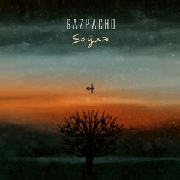
Review Summary: Magic 8-Ball: When Gazpacho Became Andersen’s Solo Project
Magic 8-Ball feels like a turning point for Gazpacho — and unfortunately not in a direction that strengthens what once made the band unique. The group that once thrived on chamber-like balance, quiet tension, and subtle distribution of instrumental voices now sounds noticeably tilted toward a single musical center. The most striking change is the near-disappearance of the violin. For years, Krømer’s playing functioned as a hidden emotional narrator: not always dominant, but always meaningful. Here, it appears only in fleeting fragments, and more importantly, it is absent exactly at those moments when the music is begging for a human melodic line. The result is a sound world that often feels strangely flattened.
The album’s only truly great track is Starling. It is beautifully structured, patient, organic, and atmospheric — a reminder of how strong Gazpacho can be when every instrument breathes naturally within the whole. The violin appears here with intention, adding depth without demanding attention. This song could hold its place among the band’s best work. Gingerbread Man begins in a promising, rhythm-driven style reminiscent of Night, and Torp delivers an excellent bass solo — a rare moment where the music feels genuinely alive. Yet the ending slips into predictable gestures, and the violin remains unused despite clear opportunities.
The Unrisen also begins well, even offering a rare violin passage. But around the four-minute mark, the lead is abruptly taken over by a harsh synthetic tone that tears through the atmosphere and interrupts what might have become the album’s emotional peak. Instead of developing organically, the song shuts down emotionally.
The more pop-leaning We Are Strangers, Ceres, and Magic 8-Ball contain glimpses of potential — a short guitar solo here, an interesting rhythmic shape there — but none of these ideas are allowed to unfold. Sky King features tasteful arrangement, yet falls into melodically obvious territory. The biggest disappointment is Immerwahr: a delicate acoustic-guitar section around 5:15 briefly opens the music, only for the ending to collapse into generic rock.
The performances are solid. Ohme remains expressive, the drummer measured, Torp often impressive, and Vilbo makes the most of his limited space. Krømer, however, is barely present — not by choice, one suspects, but because there is simply no space left.
And that brings us to Andersen — and here lies the heart of the problem.
His keyboard writing does not merely guide the music; it overrules it. Instead of serving as a textural component among many, his sounds occupy every gap, fill every silence, and frequently smother the potential of other voices. The palette is neither refined nor particularly imaginative: synthetic string washes, abrasive leads, and repetitive gestures that feel more reflexive than inspired. The music has no room to breathe because Andersen does not allow it; he dominates the sonic field so thoroughly that the album often feels like a single-vision studio project rather than a band effort. What makes this even more frustrating is that he seems to be trying to appear versatile — but the result is paradoxical: the more he pushes, the more uniform the album becomes. Moments that cry out for violin or guitar are instead plugged with keyboard sounds that feel interchangeable, occasionally even amateurish in timbre — at times reminiscent of the more primitive end of ’80s synth presets.
This tendency has been building since Molok, but here it reaches a point where Magic 8-Ball no longer feels like a collective creation. To my ears, this is essentially an Andersen solo album with session players. Occasionally interesting, but far from the Gazpacho many of us once loved.
For me, it is their weakest album since Night.