Review Summary: A forgotten gem from Sweden’s heavy elite — one album, one mood, and one hell of a vibe.
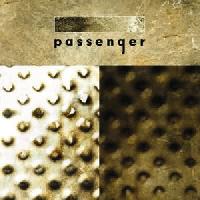
Supergroups are a tricky beast. Too often, they promise fireworks and deliver flickers. But Passenger, the self-titled debut (and only) album from this short-lived Swedish project, actually earns its stripes.
Formed by Anders Fridén (In Flames), Niklas Engelin (Engel, ex-In Flames), Patrik J. Sten (ex–Dream Evil), and Håkan Skoger (ex–Gardenian), the project dates back to 1995 when Engelin and Sten toyed around under the name Cliff. Nothing surfaced from that early experiment, and it wasn’t until 2000 — when Fridén and Skoger joined — that Passenger truly took form. A demo dropped in 2001, and two years later came the band’s sole full-length outing.
Despite rumblings of a reunion over the years, Passenger remains frozen in time — and honestly, that might be for the best. Given Engelin’s on-and-off relationship with In Flames and Fridén’s ever-shifting artistic direction, this lone release stands as a fascinating snapshot of early-2000s metal evolution.
Musically, Passenger trades the melodic death metal pedigree of its members for a sleek, nu-metal–infused sound — all thick grooves, shimmering electronics, and melancholy melody. Think Reroute to Remain meets Trust Company with a dash of Korn’s moodiness. Fridén leans heavily into clean vocals here, and unlike the polarizing experiments in In Flames, this is a space where his croons belong. He slides effortlessly between somber and soaring, his voice carrying emotional weight on “In My Head” and “Just the Same,” while his trademark harsh delivery returns just when the intensity calls for it — especially on the explosive single “In Reverse.”
You can hear Fridén’s admiration for Jonathan Davis in the layered vocal textures, but it never crosses into mimicry. Meanwhile, Engelin’s industrial and alt-metal sensibilities anchor the sound — steady, head-nodding riffs take the wheel instead of frantic melodeath chugs. It’s all about groove over flash, and it works wonders on cuts like “Circus,” which hits that perfect balance of grit and melody.
Sure, Passenger plays it safe at times. “Circle” veers a bit too far into mid-tempo alternative territory, feeling more like a lost In Flames B-side than a bold side project experiment. But then you hit “I Die Slowly,” and everything clicks — sharp riffs, electronic flourishes, and a massive, earworm chorus that encapsulates everything right about the record.
Passenger might not have reinvented the wheel, but it didn’t need to. It’s a snapshot of early-2000s metal done right — confident, emotional, and surprisingly cohesive for a one-off project. Two decades later, it stands as a curious time capsule and a reminder that lightning sometimes strikes just once.