Review Summary: Sum 41 stumbles across the finish line.
Heaven :x: Hell is Sum 41's final album — a double concept album marketed as each part capturing a specific side of their sound. Heaven is meant to reflect their lighthearted pop-punk roots, while *Hell* explores their heavier and more riff-oriented side. Usually, Sum 41 are known for combining both aspects in their records, with albums like *Underclass Hero* leaning toward their lighter side, while others like Screaming Bloody Murder lean more toward their heavier sound.
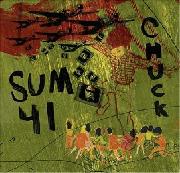
It’s an interesting concept in theory, as either side often tends to stick out for the worse — like Chuck, an album that has an overall more aggressive tone but also includes tracks that feel out of place.
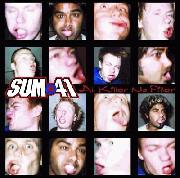
The album starts off with the surprisingly enjoyable Heaven, which successfully recaptures the energy and anthemic nature of their debut All Killer No Filler — an element that’s been noticeably absent from their more recent records. Originality has never been, and still isn’t, Sum 41's strong suit. Songs like “Future Primitive” sound strikingly similar to “No Brains.” This isn’t the first time Sum 41 have recycled their own material, and it’s not even the first time they’ve tried to pass off a rewrite of “No Brains” as a new song — though this time it’s fortunately less blatant. To take it a step further, the anthemic “Bad Mistake” is just a few minor changes away from being a cover of The Offspring’s “You’re Gonna Go Far, Kid.”
That being said, despite a severe lack of originality, Heaven is, as I said, a pleasant surprise. It’s nice to hear Sum 41 embracing their roots and having some fun again, with songs like “Johnny Libertine,” which sounds like every other fast-paced, tongue-twisting pop-punk song from the early 2000s. Every band from that era has a few of these, so we can’t really fault Sum 41 for it — even if it sounds like a happier version of “A.N.I.C.”
With *Heaven* recapturing their pop-punk roots so effortlessly, one could assume *Hell* would do the same for their heavier side — drawing from albums like Chuck, instead of their more recent 13 Voices and Order in Decline, which I personally found uninspired and dull. Alas, Hell, while a noticeably better effort than those aforementioned records, has more in common with them than with Chuck or even the divisive Screaming Bloody Murder. As such, Hell ends up being the noticeably weaker half of the package, with songs like “It’s All Me” featuring a chorus strikingly similar to “Waiting for a Twist of Fate,” the opening track on *Heaven.*
The cracks in the concept of a Sum 41 double album are immediately noticeable with songs like “Stranger in These Times,” which feels as though its heavier sections exist solely to fit the theme. The same can be said for “Paint It Black” and “How It Ends,” which have a somewhat stronger bite than most songs on *Heaven*, but could have easily belonged to the first album. As such, the double-album concept ultimately fails — the main differences between the two halves being a few Chuck-lite riffs, heavier tuning, forced breakdowns, and raspier vocals. In short, Hell is actually more pop-punk than both 13 Voices* and Order in Decline combined, and comes across as a collection of songs that didn’t make it onto Heaven and were thus forced to fit on Hell.
Heaven on its own would’ve easily been a 3.5+ album — a nice homage and send-off to the legacy of Sum 41 — as even it has aggressive parts that match the best songs on Hell. Unfortunately, the inclusion of Hell noticeably drags down the overall quality of the double album, making it a literal hit and miss.
Thank you for the good times, Sum 41 — even if you stumbled across the finish line after biting off more than you could chew.