Review Summary: The prince of shock rock reunites with his original band to deliver nostalgic, self-reflective, punchy rock ‘n’ roll that well warrants the price of admission
Alice Cooper’s visit to Greece on July the 11th marked a defining moment for the local Greek rock community, fueling unprecedented anticipation. Greek rock radio stations inundated listeners with tributes, amplifying excitement across fans. I seized the opportunity to add Cooper to my rotation, mainly to reflect on his influential catalog and enduring contribution to rock music, and just to remember his most iconic moments. Aside from that short encounter, my engagement with Alice Cooper’s oeuvre has been sporadic, driven largely by completionist impulses rather than sustained enthusiasm. I have encountered his landmark studio albums, listened to many of his iconic tracks, and appreciated their craft without becoming a devoted devotee. Yet, upon deciding to visit his latest studio release,
Revenge, I was pleasantly surprised by its freshness and notable replayability. The album defies expectations, offering renewed energy and thoughtful, enduring appeal that merits reconsideration within a contemporary rock context.
After all, the reunion of legendary bands for lucrative tours is quite common these days, yet, truth be told, producing a new album that competes with past glories is a rare sight to behold. So, let’s get this straight:
The Revenge of Alice Cooper is such a rare, noteworthy occurrence, occasionally bordering on a marvel in its execution, illustrating a distinctive, “analogue” appeal within a modern, digital age of sterile rock ‘n’ roll.
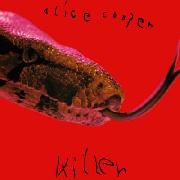
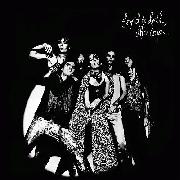
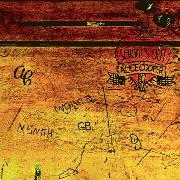
Revenge stands as a deliberate and self-assured return to the algebra of rebellion that forged the group’s early identity, while simultaneously negotiating the advances of decades in rock culture. This album arrives as a deliberate act of reassembly: the surviving original lineup -Michael Bruce, Dennis Dunaway, and Neal Smith- under the seasoned direction of original producer Bob Ezrin, present a formidable, heavy-hitting experience. Their first full album since
Muscle of Love signifies a bold, meteoric comeback.
My initial reaction was a surprising departure from expectations. Upon hearing the first track,
Black Mamba, I anticipated a self-parody or meme-worthy relic of past dominance. Yet the experience contradicted these presumptions. Big time! Instead of a gimmick, the group delivered a nuanced, unexpectedly compelling engagement with their former zenith, provoking thoughtful reflection. The band grooves triumphantly with reinvigorated energy, penning songs unexpectedly strong for a group of musicians that haven’t jammed on studio for fifty plus years. Remarkably, with consistent material, they manage to craft tracks that invite repeated listening. Their cheerfulness and imaginative flair are complemented by catchy riffs and solid musicianship. While not wildly experimental in nature, the work manages to stay afloat in a sea of banal, modernized rock ‘n’ roll, maintaining engaging warmth and human nuance that keep the listener coming back for more.
Politics and agendas in music often surface, challenging expectations. I anticipated that aging rock-stars might rely on instruments to back their vocals; however, that assumption proves faulty. Cooper’s voice functions as a distinct instrument, occupying its own space while consistently supporting the ensemble. Rather than dominating, it harmonizes, reinforcing the instrumental textures. This is an artistic, deliberate choice that re-frames performance, highlighting vocal artistry as integral, collaborative, and mutually co-existing within the musical whole.
From a musical standpoint, the album’s texture benefits from a conscious studio craftsmanship that echoes past sessions while embracing present possibilities. The tracks glide between abrasive, swaggering jams of glam-era sleaze, as on
Kill the Files, where Cooper’s muttered, poisonous delivery conjures the claustrophobic energy of a mental institution, and the sleazy groove of
Black Mamba, featuring Doors’ Robby Krieger as a guest. The record’s sonic architecture also nods to the band’s more psychedelic tendencies, with
Blood on the Sun offering a delicate, acoustic-psych resonance reminiscent of early
Love It to Death while maintaining a modern clarity. This balancing act -between ferocity and finesse- displays the band’s adeptness at channeling their past into a compelling present. The presence of Glen Buxton’s guitar work in
What Happened to You adds a historical anchor, helping to tether the new material to the original’s lineage even as it progresses.
The instrumentation always has something interesting to add up, taking the classic rock n roll formula and completely turn it on its head by using wonderful guitar interplay, playful drums and, simply solid musicianship that surpasses expectations with its audacious vitality. From the driving biker rock of
Wild Ones to the provocative proto-punk of
Crap that Gets in the Way of your Dreams,
Revenge courses with raw power and spirit often lost in the modern digital age, relentlessly challenging celebrity culture, notably in
Famous Face, while reinforcing its authentic rock legacy with the primal energy of
I Ain’t Done Wrong. Although a backstory adds allure, this album can stand on its own merits. For a group of aging renegades, it is indeed, something remarkable to behold. The end result is not a mere nostalgia trip but a reconfirmation of the band’s fearless ethos, a testament to their enduring chemistry, and a reaffirmation of their unique capacity to blend theatricality with raw, unpolished energy. Above all, it is a fun mix of over-the-top hard rock, self-reflection and self-aggrandization, all of that coupled by (I’ll say it again) terrific guitar work. In this sense,
The Revenge of Alice Cooper operates on two temporally charged axes: it honors the verbose, high-octane assault of the band’s early days, and it simultaneously sprawls into a modern palette that accommodates punk’s bite, glam’s swagger, and the riff-driven expansiveness of later rock forms.
Lyrically,
The Revenge of Alice Cooper continues the tradition of barbed storytelling with a satirical wink. The title itself, plus songs that skew toward self-bravado, reflects a discipline in which personal myth-making is performed with gleeful mischief. The album also ventures into ambitious stylistic corridors, from glam throwbacks to monster-movie creep fables and even space-tinged soundscapes, all of which demonstrate a fearless willingness to experiment without surrendering the core hallmarks of the band’s identity. This mixture of stylistic exploration and reverence for the source material is not a contradictory stance but an integrated philosophy: the group locates the thrill of risk while operating within a familiar framework.
The only drawback that I found lies in the record’s overall length; the album presents a largely commendable effort, distinguished by a tight A-side whose energy and craft stand out. Minor faults surface, however, in a few tracks that feel somewhat derivative, especially toward the end. A bit of fat trimming would sharpen the sequence, but the quality remains intact overall. Notably, the B-side lags behind the A-side in impact, though none of its entries feel strictly filler.
To summarize,
The Revenge of Alice Cooper succeeds as both a celebratory reunion and a forward-looking statement. It is a triumphant, nostalgic return to the original band's 1970s sound, featuring classic rock and horror themes, evoking the vitality, humour, and theatrical guts of the band’s earliest days while proving that their energy remains undiminished by time. Fifty years later, these rock & roll outsiders demonstrate that they can pick up right where they left off, perform with vigor, and still bear the unmistakably brand of “Alice Cooper” effortlessly. It is a fabulous, old school rock 'n' roll statement and clearly one of the best rock albums of 2025.
Recommended tracks:
Black Mamba
Wild Ones
Kill the Flies
One Night Stand
Blood on the Sun
Famous Face
What a Syd
I Ain’t done Wrong
See You on the Other Side