Review Summary: https://www.youtube.com/watch?v=eGPI76PVjnw
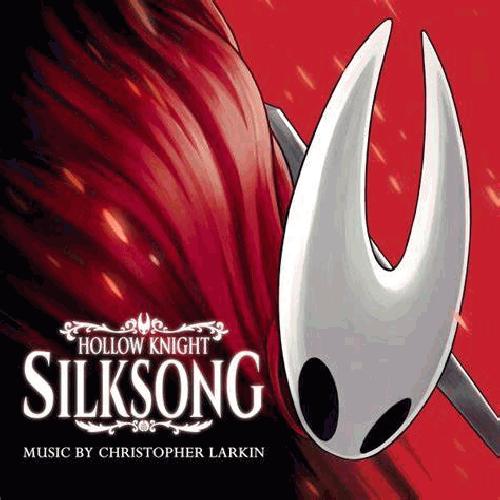
Silksong feels like one of those rare moments in gaming. I’m not even trying to sound hyperbolic—if you’ve been keeping tabs on the news leading up to and following its release, you’ll know it temporarily broke Steam due to user overload when it launched. It also caused a firestorm on the internet regarding the current economy of gaming. How is this game, made by a modestly sized team (by which I mean literally a few people) this damn good while also being so affordable? How is it so packed with quality content and devoid of bugs (lol) at launch? Team Cherry have delivered yet another masterpiece—for a measly twenty dollars—and here once again to help them musically map their world is Larkin with another brilliant score.
Similarly to what I said of Clair Obscur’s superb soundtrack earlier this year (definitely check this game out if you haven’t), Silksong’s OST fleshes out its gameworld with so much character and nuance, bringing the ailing kingdom of Pharloom to life in vivid, colourful detail.
Team Cherry already excel at world building, maybe even on a level comparable to Fromsoftware, and this soundtrack facilitates that degree of environmental storytelling in a way few have in recent memory. You don’t need a lore dump to immediately appreciate the wistful reflection of “Lost Verdania”, a once lush, thriving corner of the kingdom now succumbed to ruin; or the sadness of a once shining citadel left to languish in “Choral Chamber”; or how palpable the dread and tension become upon entering the “White Ward”, TC’s haunted psychiatric hospital horrorshow filled with eldritch monsters. The atmosphere and mood of these pieces establish an expectation for players before they even have time to soak up all the environmental details.
This degree of worldbuilding extends to boss encounters too. The “Cogwork Dancers” features a mechanical backdrop of cogs and gears turning while a theatrical dance of strings plays out. The visual presentation of the boss tells us these two are very close by how they dance with and embrace one another, but it’s the music that really hammers this point home. After you’ve dispatched one of the dancers, the remaining dancer performs its moves slowly, meekly. The song gets stripped back to a rudimentary music box about to wind down. It’s a resignation, and one of the sadder moments in the game, even if you don’t fully understand the lore behind it. Larkin’s ability to articulate the feelings these spaces and interactions are meant to evoke is nothing short of masterful, and the Silksong OST excels at subtly guiding player emotions like this.
Another thing that really stands out about Larkin’s work here is its breadth. Though a lot of these compositions are melodious and tinged with sadness, he doesn’t lean too hard on one palette. There are tense moments like “Sinner’s Road,” filled with sparse strings and resonant horns, contrasted by serene moments like “Moss Grotto,” featuring gentle woodwinds and soft harp plucks. The former has this oppressive stillness to it: notes linger for too long, with some distant percussion breaking the silence at irregular intervals. It creates this unease, like you’re being watched, like you’re not supposed to be in this place. Whereas “Moss Grotto” sounds damp and alive with earthy textures, every sound feels softened by layers of woodwinds and keys.
Larkin also does an exceptional job sequencing multiple pieces thematically. Take “Red Memory” and “Last Dive,” the two tracks in the finale leading up to the true final boss. “Red Memory” is this hugely cathartic, inward-facing piece of ambient with all these dissonant layers bleeding into each other. It’s a moment in the game where both the player and Hornet are confronted with the echoes of her past—moments of responsibility, of loss, of failure. “Last Dive” is comparatively very outward-facing and feels like the culmination of everything “Red Memory” hinted at. All of her regrets and the weight of her responsibility now sharpened into resolve, plunging headfirst into the abyss as the strings swell. There’s rarely a long respite; it keeps pushing, pushing, much like the descent itself. It’s an incredible one-two punch and one of the more memorable moments in gaming this year, and it wouldn’t have been nearly as effective if it didn’t have such a great soundtrack.
When all’s said and done, it’s clear that Christopher Larkin understands and respects Team Cherry’s vision, and he has the ambition to match it. I will note, that while I do think an OST like this works better outside of the context of its game than something like the aforementioned Clair Obscur’s, it’s undeniable that it works far better alongside the actual game. Pieces like Moss Grotto come to life so much more when you have the faint rustling of plant life shifting in unseen drafts. There’s a certain degree of that world-building immersion you might miss if you just parse the soundtrack. Not so much a criticism as an observation, but it’s a shame that many won’t experience the music in the context of the game if only because of how punishingly difficult Silksong actually is. For those that do, Silksong is that rare experience where every note feels like part of the world itself.