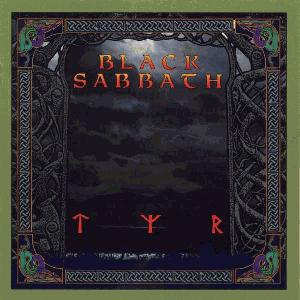
By 1990, Tony Iommi could have thrown in the towel. Many in his place would have just lived off royalties, toured the hits, and sold nostalgia under their own names. Robert Plant and Jimmy Page come to mind. But not Iommi. He refused the easy path. He reinvented the band through chaos, navigated lineup roulette, and finally anchored Sabbath with Headless Cross—a strong record in its own right. Then came Tyr, and here he turned “epic” up to eleven. Maybe twelve.
The two Tonys—Martin and Iommi—dropped the pseudo-satanic imagery of Headless Cross and instead looked north. They painted with myths, not clichés, and built soundscapes where guitars, keys, and vocals created atmosphere without drowning in pomp. Tyr is not the kind of cheesy and boring epic metal that Manowar does. It doesn’t rely on thousand-voice choirs, hyper-technical solos, or orchestral padding. Instead, it is raw, uncut at the edges, heavy as stone. It builds tension not through bloat but through clever positioning: riffs sharpened to blades, keyboards casting shadow and space, Martin’s melodies soaring above the storm.
And it works. “Anno Mundi” is a grand opening, announcing that Sabbath has stepped into saga territory without losing their teeth. “Jerusalem” burns with drama but never tips into melodrama. “The Law Maker” is pure steel, Iommi proving again why he is the riffmaster. Then comes the trilogy—“The Battle of Tyr / Odin’s Court / Valhalla”—where Sabbath craft a mythic arc that feels as natural as breathing. No frills, no tricks, just pure atmosphere carved into heavy metal.
This is the album where Black Sabbath bury Manowar and 80% of epic metal. And the comparison is apt. Tyr is closer in spirit to Bathory’s Hammerheart or the raw brooding grandeur of Manilla Road and Cirith Ungol. Epic in weight, not in window-dressing.
The lyrics add texture without pretending to be a history lesson. The Norse mythological thread is more about evoking a world than reenacting it. It gives the record identity, a cold horizon to stare into while the riffs grind below.
Of course, it has flaws. The production could have been better—the early-’90s thinness sometimes shaves off Iommi’s mass. The bass recedes when it should thunder. And many metalheads will always consider it “too much of a departure” from Sabbath’s roots, preferring to shun it rather than admit it’s a direct progression of the epic spirit that already existed in songs like “Children of the Sea.”
But Tyr deserves more than dismissal. It is an underdog album, unfairly cast aside, when in truth it shows Sabbath still pushing forward, still daring. As you put it, “Tyr doesn’t have pomp. Tyr is raw, uncut at the edges, and heavy as ***.” It may not sit on the same throne as the Ozzy or Dio years, but it doesn’t need to. It stands in its own hall, beneath Norse skies, a sword raised against mediocrity.