Review Summary: “Smashing the mirror, rolling in the shards, and calling it expression.”
Let me start with some context: I listen to heavy music. Really heavy music. Cannibal Corpse? Sure. Deathspell Omega? Absolutely. Gorguts, Ulcerate, Portal, Akhlys, Cattle Decapitation? All in rotation. I’m not some boomer yelling at clouds. I’m someone who appreciates extremity when it’s earned—when it’s smart, self-aware, theatrical, or sonically transcendental. I don’t shy away from violence in lyrics. I shy away from lazy violence.
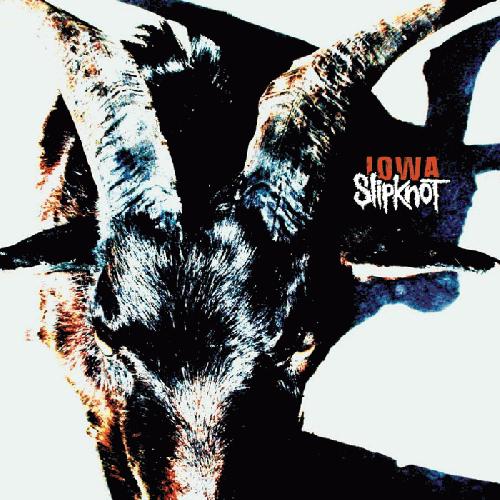
And that’s the core problem with Iowa: it’s not intense—it’s immature. Not violent—it’s infantile. Not edgy—it’s edgelord cosplay written by grown men who should have known better. It’s try-hard brutality. The lyrical equivalent of a teen punching a wall because nobody gets them.
Let’s rewind. Slipknot’s self-titled debut in 1999 was, no doubt, a visceral grenade—a blueprint for controlled chaos. That album felt dangerous in a way few mainstream metal albums did at the time. It had real urgency, real madness, and a level of sonic unpredictability that earned its spot in late-90s metal canon. They were clawing their way out of Iowa’s cultural wasteland, and you could hear every splinter of that pain in the riffs, samples, and fury. The debut worked because it was unfiltered, not because it tried to be.
Then Iowa hit in 2001—and instead of growth, refinement, or evolution, we got an escalation. Not in songwriting, not in structure—just in shock. The lyrics feel like an arms race to out-edge the debut. This is where Corey Taylor dives into full-on “I hate you, Dad” mode. Take these lines:
“People = ***”
“You all stare but you don’t see, there's something inside me.”
“I want to slit your throat and *** the wound.”
I mean… come on. This isn’t dangerous. It’s Hot Topic theatre. It’s what happens when you confuse trauma with art and believe that volume and vulgarity automatically carry weight. Corey Taylor is clearly in pain—he’s said as much—but his writing here is so over-the-top it collapses under its own bluster. There’s no metaphor, no layering, no ambiguity—just surface-level outrage in all caps.
What makes it worse is the disconnect between the band’s talent and their lyrical direction. Musically, Iowa has some serious chops. Joey Jordison (RIP) delivers some of his best, most unhinged drum performances. Jim Root and Mick Thomson throw down crushing riffs that straddle thrash, death metal, and groove. Sid’s chaotic samples and Craig’s eerie textures elevate tracks like “Gently” and “The Heretic Anthem.” This album is dense—sonically suffocating, on purpose—and that works. In terms of sound, Iowa absolutely slams.
But the lyrics drag the entire experience down.
And what’s baffling is that these weren’t 18-year-old mall-core kids. The band were in their late 20s and early 30s. They’d already toured the world, they had money, they had industry backing, and they still churned out this kind of lyrical content. Instead of using that pressure cooker to evolve, they turned into caricatures of their debut selves. It’s as if the label said “be more insane,” and they took that as permission to go full cartoon psycho.
“People = ***” isn’t a statement—it’s a cop-out.
“Disasterpiece” reads like a high school notebook scribbled after a bad breakup.
“Everything Ends” sounds like every melodramatic journal entry ever written by a 14-year-old with eyeliner and access to Resident Evil fan art.
And yes, you could argue that this was the aesthetic. That the rage was real. That the edginess was the point. But here’s the thing: real rage doesn’t have to scream obscenities to be powerful. Look at what Neurosis, Amenra, or Cult of Luna can do with silence and atmosphere. Look at the lyrical subtlety of bands like Mgła, or even mid-era Behemoth. Look at what Tool does with metaphor. Hell, even Cannibal Corpse—whose lyrics are pure gore cinema—have a sense of theater and commitment that’s strangely consistent.
Iowa has none of that. It’s a tantrum in album form. A record that mistakes volume for depth and shock for significance.
And the sad part? Slipknot eventually did grow up.
Vol. 3 introduced emotional nuance. .5: The Gray Chapter dealt with grief and guilt. We Are Not Your Kind was creatively rich, emotionally charged, and musically mature. But Iowa? Iowa is just them smashing the mirror, rolling in the shards, and calling it “expression.”