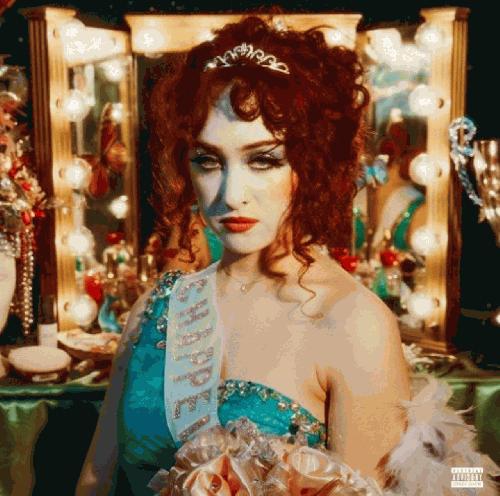
Review Summary: Chappell Roan’s fiery debut proves she’s one of the most unique and talented up-and-coming pop artists, but is bogged down by awful pacing and an overabundance of forgettable ballads.
Chappell Roan’s meteoric, seemingly overnight rise to superstardom was one of the biggest stories of 2024 (at least in the music industry). Her debut album,
The Rise and Fall of a Midwestern Princess, may not have reinvented the wheel in any significant way, but was a hit-generating machine. Songs like
Pink Pony Club,
HOT TO GO!, and
Red Wine Supernova were suddenly inescapable on radio stations, and for good reason. Those three songs are legitimately some of the best mainstream pop songs to come out in years; all three feature Roan’s impressive, soaring vocals as well as tremendous hooks that are bound to be ingrained in your subconscious for days on end. Even if you ignore the biggest hits, there are a couple of deep(er) cuts such as
Femininomenon and
Super Graphic Ultra Modern Girl that have all the same undeniable charisma and charm as the aforementioned chart-toppers.
”Um, can you play a song with a fucking beat?”
So, what exactly is keeping
The Rise and Fall of a Midwestern Princess from being considered a modern pop classic? Unfortunately, despite the heaps of praise I just gave for the album’s highlights, there is a whole other half of the album that needs to be taken into consideration. The remainder of the album’s tracks fall into one of two categories: melodramatic ballads that move at a snail’s pace, and decent, albeit forgettable pop songs that don’t have the same staying power as the album’s highlights. The latter category is obviously the least bothersome of the two, but is still worth mentioning. For example,
Naked in Manhattan,
Guilty Pleasure, and
After Midnight aren’t necessarily bad songs, but they lack the memorability and infectious hooks needed to compete with the album’s best.
”Dude, can you play a song with a fucking beat?”
The Rise and Fall of a Midwestern Princess’s biggest, most glaring flaw is its overreliance on ballads that do little more than interrupt the flow of the album. This would be more forgivable if they were at least interesting, or did anything to separate themselves from one another, but they all end up sounding very similar. Not only that, but the lyrics on these songs are nothing to write home about; the same tired themes of melodrama and heartbreak are repeated ad nauseam, and Roan’s occasional LGBTQ+ twist on the lyrics aren’t enough on their own to make the songs stand out. It’s also worth mentioning just how suboptimally these songs are placed on the album’s tracklist. For example, take the album’s midsection (the run from
Super Graphic Ultra Modern Girl to
My Kink is Karma). All three songs have earworm choruses, and two of which are brimming with positive energy and attitude. So, why exactly is there a pair of ballads (you read that correctly, a pair) both before
and after this section of the album? As a result, the album’s vibe shifts jarringly from feelings of despair and heartbreak, to upbeat feminine empowerment, and then right back to despair and heartbreak.
”Did you hear me? Play the fucking beat!”
Even despite its flaws,
The Rise and Fall of a Midwestern Princess remains one of the most significant and unavoidable landmark pop debuts of the last decade. Roan’s ability to write hits is indisputable, hence her intense and sudden rise to mainstream fame. If instead of an album, this was an EP that only featured the album’s best songs, we’d possibly be dealing with one of the most high-quality and consistent pop releases in years. In reality, however,
The Rise and Fall of a Midwestern Princess is an album that would’ve benefited tremendously from more editing and tonal consistency. Chappell Roan has all the potential in the world to one day release a pop masterpiece - assuming she can learn from her debut’s shortcomings.
3.5 out of 5