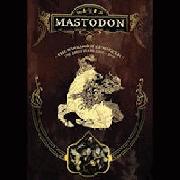
Review Summary: In Memory of Brent Hinds
The process of writing can sometimes feel like an empty room where ideas echo only faintly, yet it also offers a disciplined path to shape those tremors of thought into something coherent and meaningful. The following excerpt speaks to a personal and artistic pivot moment - a relationship with a band that spans fifteen years, a transformation from initial dismissal to a reverent, almost revelatory engagement. To review such an experience involves tracing the emotional arc, the technical evolution of the music, and the broader cultural context of the album within the metal landscape of the 2000s. The following review seeks to do just that: to analyse how
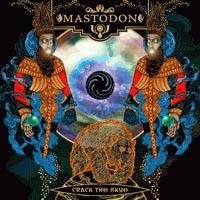
Crack the Skye operates as a culmination of Mastodon’s artistic ambitions, how its production choices and compositional daring expand the boundaries of the genre, and what the album reveals about the power of music to reshape memory, expectation, and identity.
Crack the Skye marks a definitive moment in Mastodon’s discography, not merely as a collection of tracks but as a concerted assertion of artistic ambition. The opening revelation is in the audacious scope of the album’s sound - an extension of the band’s sludge and progressive metal roots into a more textured, atmospheric, and densely arranged sonic world. The claim that the album is the most involved in terms of both music and production is not hyperbole; it is a statement about a band consciously expanding its vocabulary. The decision to pair technical complexity with melodic clarity demonstrates a meticulous balance: the complexity invites scrutiny, while the melodies keep the listener anchored, preventing abstraction from eclipsing emotional clarity. This duality is essential to the album’s lasting impact, inviting repeated rotations that yield new detail with each encounter.
The emotional core of
Crack the Skye is inseparable from its sonic architecture. Thematically, the album foregrounds grief, loss, and transformation, drawing on Brann Dailor’s family tragedy to infuse the music with a visceral authenticity. The shift away from the more aggressive tempos of earlier work toward a slower, more determined pace communicates the weight of mourning and the attempt to traverse it through art. In this sense, the album functions as both a personal catharsis and a broader artistic inquiry: how does a heavy metal band translate the ineffable experience of pain into sound that remains enveloping rather than alienating? Mastodon succeeds by integrating tumult and restraint - moments of explosive propulsion sit beside passages of contemplative, almost meditative space. The result is a work that can be described as both intense and meditative, a paradox that mirrors the complexity of grief itself.
Producer Brendan O’Brien’s involvement on
Crack the Skye represents a crucial turning point in the album’s texture and spatiality. O’Brien’s aligns with Mastodon’s ambition to make the album feel expansive without losing intimacy. The production choices serve the band’s intent to blend the brutal and the beautiful. This collaboration yields an auditory landscape where riffs breathe, tempo shifts land with surgical precision, and the listener is invited to navigate a sonic labyrinth. Such a soundscape is essential for a work that seeks to translate profound emotional experiences into a durable, engaging listening escapades.
Lyrically and structurally,
Crack the Skye sustains momentum through its seven-track architecture, a deliberate elongation that allows for development and variation. The album does not rush; it unfolds, offering a trajectory from discomfort and suspense to revelation and resolution, even as it preserves an openness to ambiguity. The sense of exploration -sonic, thematic, and existential- permeates the record, reinforcing the central metaphor as a space where memory, loss, and imagination converge. The critical reception often centers on the album’s bravura guitar work and its ambitious schematics, yet the emotional resonance remains its most enduring feature. It is not merely technical prowess that endears
Cracks the Skye to listeners, but the way those technicalities are harnessed to serve a narrative of endurance, reconciliation, and discovery.
Ultimately,
Crack the Skye is celebrated not only as a technical achievement within metal but as a cultural artifact that captures the late-2000s sensibility toward genre-blending, artistic risk, and emotional honesty. It stands as a testament to Mastodon’s willingness to push beyond established boundaries while maintaining a sense of cohesion and identity. For listeners, particularly those who discover the album in adulthood or after a period of distance, it offers a blueprint for how music can function as a therapeutic and aspirational force: a means to exorcise inner turmoil, to reframe pain as a source of beauty, and to remind us that even in the most intricate works, humanity remains the guiding force. Revisiting
Crack the Skye becomes an act of re-grounding, a ritual through which the individual reclaims a space for reflection, emotion, and intellectual engagement with art. In this sense, the album is not merely a collection of songs but a living archive of memory and meaning, dynamically reinterpreted through time and space.
Fundamentally,
Crack the Skye embodies a rare synthesis of ambitious composition, emotional depth, and production finesse. It is a record that rewards repeated engagement and civic discourse about music’s capacity to process loss, to expand sonic horizons, and to help us navigate the complex terrain of memory and meaning. The culminating relationship that stems from a fifteen-year constant jamming is, in essence, the story of how a work of art can grow with us - not as a static object, but as a living dialogue between sound, self, and circumstance.
Rest easy, Brent.
Recommended tracks:
Every
Single
One