Review Summary: Could you stay? Could you wait? Could you?
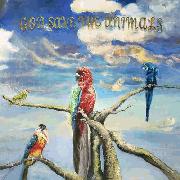
Headlights finds Alex G walking a line between where he’s been and where he’s going; between grown-up confidence and scrappy impulse. On one hand, it feels like a continuation of the maturation Alex G embraced on God Save the Animals—clean production, clearer vocals, more direct songwriting. On the other, there’s a pull back toward something older, more instinctual. Not quite a regression, but a soft circling. That push-pull is present from the first track: “June Guitar” is one of the most immediately endearing songs he’s released in years, driven by gentle mandolin, soft electric keys, and a kind of wide-eyed emotional tone that feels nostalgic without leaning too hard into sentimentality. It’s loose, light, and subtly bittersweet—the kind of opener that makes you think maybe this is going to be one of those albums.
In many ways, Headlights is Alex at his most confident. Where earlier albums bounced between textures and tones—sometimes thrillingly, sometimes unevenly—this one settles into a focused palette and sticks with it. The production is lush but never overwhelming: strings, pan flute, crisp acoustic arrangements. “Beam Me Up” benefits from that clarity—melodically simple, lyrically blunt, and all the more effective for it. Some things I do for love / some things I do for money—it’s a line that lands not because of how it’s written, but because of how little it tries to dress anything up.
But as strong as Headlights often is, it doesn’t quite carry the same weight or cohesion as God Save the Animals. That record felt like a statement: serious, emotionally resonant, and deeply atmospheric from front to back. From the shimmering swell of “After All” to the crushing finale of “Forgive,” it felt like a turning point in his discography. Headlights doesn’t aim for that kind of emotional gravity. It’s looser, less concerned with building an arc, and more focused on the strength of individual songs. It’s Alex G doing what he does best—writing strong melodies, leaning into odd textures, avoiding easy answers—but it feels more like a collection than a singular vision.
The album’s back half is where the looseness starts to undercut the momentum. “Spinning” is a highlight, dreamy and cinematic, but compositionally it’s little more than a two-minute jam stretched to its limit. “Far and Wide” barely registers, “Headlights” is pleasant but forgettable, and “Is It Still You in There?” is short enough to not be offensive, but also so slight it feels completely disposable. These aren’t disasters, but they don’t hold up against the first half’s stronger cuts.
That’s what makes “Louisiana” stand out all the more. Quietly tucked into the second half, it’s the one track here that fully commits to the lo-fi aesthetic Alex built his early reputation on. It’s raw, slightly warbled, and emotionally open in a way most of Headlights only hints at. It’s not flashy, but it doesn’t need to be. That roughness makes it hit harder than some of the more polished, full-band tracks—it’s intimate, honest, and completely arresting in its simplicity.
The album closes with “Logan Hotel (Live),” a song recorded in a hotel room with his band clustered around a piano. Despite the “live” label, it fits sonically with the rest of the record—clean, tightly mic’d, and free of ambient noise. It’s a fine song, and it belongs here, at least in terms of tone. But as a closer, it doesn’t quite land. Where “Forgive” or even “Guilty” felt like exclamation marks, this feels like a soft sigh. It ends the record, but it doesn’t close it.
Still, when Headlights works, it works beautifully. Tracks like “June Guitar,” “Afterlife,” “Beam Me Up,” “Louisiana,” and “Real Thing” rank among his most immediate and affecting. It might not be a major turning point, or a bold new chapter, but it doesn’t need to be. It’s a songwriter with nothing left to prove, settling comfortably into his strengths, and quietly refining what he’s always done well.