Review Summary: Poppy R&B at its finest
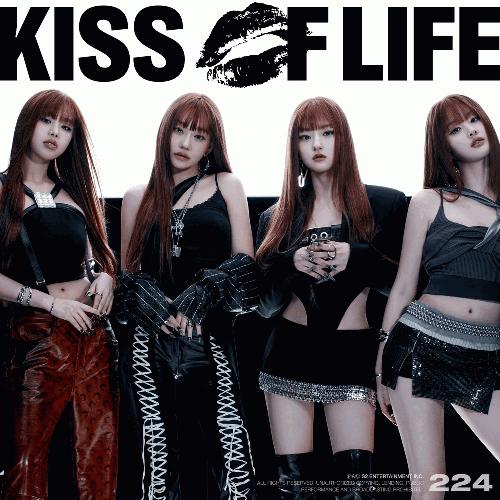
Crashing onto the K-pop scene in 2023 with their self-titled mini album, Kiss of Life has always eschewed genre norms in favor of turn-of-the-century R&B, harkening back to the sensual, slower vibe of early 2000s music. Whether that be taking inspiration from modern
Ariana Grande (itself a throwback to that era) or carving their own path, Kiss of Life shifts into sixth gear on their fourth mini album and blows the doors of any competition to maintain that they—and they alone—artistically dominate the K-pop space with a singular focus on creating R&B with surgical precision.
It’s no secret that I am numb to the vast majority of K-pop. The obnoxious overproduction, emphasis on rhythm replacing melody, overdone beatdrop choruses, and general lack of coherence or restraint makes it perfect for a population with increasingly reduced attention spans, but I can’t help but ponder where the artistic vision gets lost between the 10 co-writers, 15 choreographers, and every tight rule the companies that sign such acts force them to abide by in an effort to maximize commercial appeal. Prior to this album, for every song Kiss of Life has released displaying genuine genre mastery (e.g., Nothing, Sugarcoat), they have released a song artificially manufactured to be a hit (e.g., Igloo, Get Loud), hinting that with a bit more creative liberty, Kiss of Life would become much more than just another K-pop artist. And there is no doubt this strategy has paid off—Igloo is by far their most popular song despite being nearly as creatively bankrupt as WAP—but with 224, has Kiss of Life finally found their quintessential sound?
Vocally, the four members play a game of hot potato with the microphone, effectively flipping between another on a moment’s notice. Their vocal cadences are quite similar, with the main difference being their pronunciation of English words, thus flowing quite nicely. If I am being honest, I can barely keep up with the numerous vocalist swaps within songs, but they as a collective display brilliant technical ability. Whether it be the intentionality of vocal emoting, the perfect vocal moderation, or their explosion into a sequence of background runs as in Lips Hips Kiss, every vocal moment is precisely placed and impeccably delivered. The benefits of having four vocalists are fully articulated in each song’s final chorus sections, with vocal layering resulting in fuller sounds and a natural crescendo point for every song.
k bye is the obvious outlier here, a song seemingly inserted by S2 for the sole purpose of being a more digestible, typical K-pop song. Dominated by thundering 808 bass, k bye rhythmically rumbles on for just over 2 minutes before putting every K-pop trope out of its misery, devoid of melody variation (or really any melody at all). But with such a short runtime, it remains relatively inoffensive and at the least serves to provide further genre diversity to the mini album without completely ruining the momentum built up by the previous 2 songs.
The higher-paced songs add flair and variety to the bread-and-butter on the album. A funky bassline and rhythmic drumbeats akin to
Dua Lipa ripe with vocals ripped straight out of
Sabrina Carpenter’s Short n’ Sweet provide the backbone for Slide, while Tell Me adopts Latin beats and beautiful acoustic guitar before erupting into the most conventionally catchy chorus on the album. Without a doubt, though, Kiss of Life is at their best with mid-tempo R&B, which luckily dominates the soundscape on this mini album. Painting’s piano backbone flows into an incredible melody in the chorus, and I find myself begging for more of the funky horn sample, sprinkled in throughout at just the right moments without feeling overdone. And just as the song seems it has no more tricks up its sleeve, Kiss of Life seamlessly transitions the song into a key change that crescendos into a variation of the chorus with ubiquitous piano accents, elevating the song’s simplistic base ingredients into musical bliss. The outro begins less than 2 minutes into the song, yet Painting manages to feel both dynamic and cohesive.
Even more convincingly, Heart of Gold slows the pace further to let subtle atmosphere take hold and gives the song more breathing room than 99% of its contemporaries. It begins with a rhythm of perfect triple piano strikes and thunderous bass, giving it an almost-ethereal vibe filled with nostalgic sounds. Adding hip hop flourishes in the second verse is a brilliant move that further accentuates the influence Kiss of Life takes from 2000s music, and with different vocal delivery this song would feel right at home on any R&B record from that era. Kiss of Life know they are at the top of the K-pop game and are not afraid to demonstrate it with their supreme ability to blend different genres into their trademark sound.
Is this Kiss of Life’s holy grail, the release that will finally push them over the edge into K-pop immortality? Considering the controversy the group continues to get itself roped into, it seems unlikely. However, 224 marks a massive step forward for Kiss of Life in terms of consistency and cohesion and is pretty much the ideal standard that any K-pop group desiring to reach for creative heights while still maintaining commercial viability should aspire to.