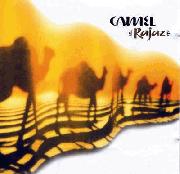
Review Summary: It represents a change in their sound. It’s closer to the melodic side of the Canterbury sound.
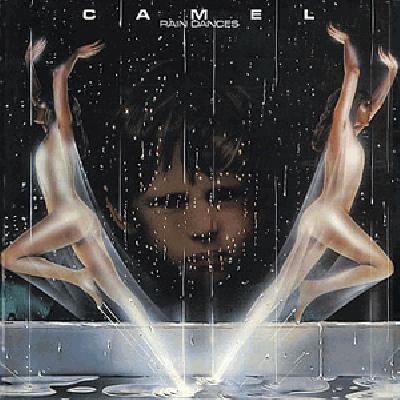
“Rain Dances” is the fifth studio album of Camel that was released in 1977. The line up on the album is Andrew Latimer, Peter Bardens, Mel Collins, Richard Sinclair and Andrew Ward. The album also had the participation of Martin Drover, Malcolm Griffiths, Brian Eno and Fionna Hibbert.
Camel is a British prog rock band that was formed in Guildford, Surrey, U.K. in 1971. It was part of the invasion of the British bands in the end of the 60’s and beginning of the 70’s. It’s one of the founders of what became known as prog rock. Camel is a band who always took a very own path and they never were inferior to the most of the other great prog bands. They’re respected and appreciated and they also continue influencing many other bands with different styles of music, even today. For instance, Mikael Akerfeldt from Opeth often mentions that he has suffered many influences from bands like Camel. Camel is a band that needs to be discovered, especially the albums of their classic period, especially “Camel” of 1973, “Mirage” of 1974, “The Snow Goose” of 1975, “Moonmadness” of 1976 and this one “Rain Dances”.
“Rain Dances” is the album that marks the first changes into the line up of the band and that ends with their classic line up and their classic era. After the stability on their first four studio albums, their bassist and founder member Doug Fergusson, quit the band soon after the release of their previous fourth studio album “Moonmadness”. His replacement was made by Richard Sinclair, an ex-Caravan’s member. To complete the transformation of Camel, the band had the addition of another musician, the saxophonist Mel Collins, an ex-King Crimson member. This transformation in the line up of the band brought a certain change on Camel’s sound, making it more experimental, relaxing and much closer to the jazz style. The album has also some participation of Brian Eno, the ex-Roxy Music’s member, on the keyboards.
As I mentioned above, former Caravan’s bassist Richard Sinclair joined Camel on “Rain Dances” and brought a dose of Canterbury sound to their music, which is particularly evident in the second half of the album. “Rain Dances” is a kind of a Camel’s answer to punk. Somehow, it was an optimistic album compared with some of the material that was being released by many of the greatest prog names at that moment. The band branched out into different directions from jazz to classical, passing by pop. Anyway, “Rain Dances” is a bit more accessible than any of its four predecessor works. In reality, “Rain Dances” shows Camel on the way to a more commercial style, a path that many others were going to do very soon too. That was something not exactly unusual for that year, but Camel goes that way with quality.
“Rain Dances” has nine tracks. “First Light” is an inspired instrumental piece, a great opener to the album. It’s the first time we can hear a sax on a Camel’s album. And what a great job was made by Collins on the album. “Metrognome” is a great song with a calm and beautiful start that becomes progressively more complex and experimental, with some jazz influences. “Tell Me” is a calm, delicate and beautiful ballad with a fine flute work. It makes us dream. “Highways Of The Sun” has a bit more of a commercial mood and has some pop characteristics. But, it has a final touch of Camel’s sound. It’s an example of how to make a good pop song by a prog band. “Unevensong” has many and great variations. It’s a pretty good and brilliant song. It has a lot of breaks and tempo changes. It also has great Latimer’s guitar solos. “One Of These Days I’ll Get An Early Night” is the most experimental track on the album. It also has good performances by all musicians. It’s a piece with great jazz influence. “Elke” is practically Latimer’s solo piece, featuring the usual excellent electronic experimentations by Eno. It’s a beautiful, peaceful and atmospheric instrumental song. “Skylines” is another instrumental with great jazz influences. It’s also a good number well performed by all members of the band. The title track is a reprise of the opener track. It’s the smallest song on the album but it’s a good instrumental track. It’s melodious, quiet, almost a classic theme of Camel. It represents a natural and a great ending to this excellent work.
Conclusion: “Rain Dances” was an album released in the punk era. A time where to be a progressive band was the same as being an old dinosaur. A time where many record labels and critics had turned their backs to the progressive rock music. It was in that context that “Rain Dances” was born. Anyway and despite those times, “Rain Dances” is a great work. It’s very consistent, but isn’t a masterpiece. Still, I’m not one of those who consider “Rain Dances” as a weak point in Camel’s career. It’s a well balanced piece with great moments, and the musical change of their sound is very enjoyable and flows gracefully from the beginning to the end. In my humble opinion, in the progressive rock, the bands can change and evolve into their music. I also think that the presence of some new band’s members in a group is also a very good thing, especially if they are great musicians and experienced artists. They can bring something new.
Music was my first love.
John Miles (Rebel)