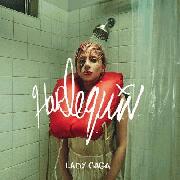
Review Summary: Scream it for me baby, like you're gonna die
Becoming a pop idol seems a lottery like the Hunger Games, where every few years a fresh-faced youth is propped up in excessively glamorous couture on red carpets and flame-rigged performances at awards shows. Unfortunately like most aspects of hot culture, the lifespan of an idol is relatively short unless they clutch the crown with white knuckles. Sabrina Carpenter is already doing Dunkin’ commercials and won’t be much of a name in a few years, but Lady Gaga has worn raw meat in public. She must’ve heard people calling Chappel Roan “the new Madonna” and thought, not on my watch bitch.
Gaga came blazing into the spotlight at the end of the aughts, a bona fide hit machine with a penchant for funneling out #1s like they were $1 bills. Between her debut
The Fame and the exceptional follow-up
Fame Monster EP Gaga spent 3+ years topping the charts with singles like “Just Dance” up through her monstrous smash “Bad Romance”. Even her disappointing sophomore full-length
Born This Way (featuring Gaga’s face on a motorcycle, potentially one of the worst album covers of the era) had the one-two punch of the title track and the soaring “The Edge of Glory”, even if the songs in between sagged.
Then…something happened. Lady Gaga became an idol, an icon, an IDENTITY, and even the Lady herself wasn’t sure what that was supposed to look like in the long term. With
ARTPOP, she leaned hard into the gimmick of being a sexy pop songstress, with the Gwen Stefani cover art, Ke$ha attitude, and a general lack of commitment to the bit that left the identity issues wide open like a wound. This resulted in a hard-left turn away from the extreme pop maximalism entirely, shedding the synthesized beats and blaring bass for “a refreshing course correction” into mid-century folk and Americana. What made
Joanne so different wasn’t the genre jump as much as the abrupt shift from the bad girl in the stuffed frog dress to a woman in Gucci (foreshadowing). Around this time is when Gaga made the shift to actor, starring first in music-adjacent
A Star Is Born with Bradley Cooper, which awarded her an Academy Award not for her acting but for original song with “Shallow”, a folksy and sad duet that pulled heartstrings in a depressing movie.
Ultimately the lack of direction and identity has plagued the latter stages of Lady Gaga’s career, and
Chromatica was (hopefully) a final hiccup before the return of Gaga in her full power. A return to her kooky pop self, the album comes across as a tentative toe-step back into the spotlight rather than the running splits that is
Mayhem. Even Gaga herself has said that this album is the culmination of what she’s wanted to make under the name since she started, and for the first time in a long time it FEELS like she knows what she wants. Spurred perhaps by her recent stint in
Joker: Folie a Deux, the freak flag is back flying. Opening with “Disease”, a song dripping with pop poison and ecstasy, with Gaga promising she can cure the nameless disease over a throbbing synth bass. The queen is back in the palace, and we haven’t even hit the first radio single yet.
“Abracadabra” solidifies Gaga’s return more than anything (When I first saw a clip memed, I honestly thought it was callback to one of her old videos). Draped in at least four different wild costume changes, Gaga sends it home with a thumping pelvic thrust. Filled with hooks and an addictive chorus, its the most confident Gaga has been in her own skin since
Fame Monster and you can taste it in the juice. The return of bizarre costumes and sensual mass dance numbers are clear indicators of some old-school Gaga incoming.
Mayhem is huge from top to bottom, but not overblown like
ARTPOP. It’s full of great songwriting with full confidence and complete ideas that
Chromatica lacked. The most obvious example of Gaga becoming self-aware on this topic is “Perfect Celebrity”, where she snidely calls herself, “a notorious being.”
“Show me your pretty I’ll show you mine / You love to hate me / I’m the perfect celebrity”
Gaga sounds like she’s having fun with herself, finally knowing what that self is. “Killah” (featuring the fantastic producer Gesaffelstein) is a full funk jam perfect for night walks down the strip. The album is split pretty evenly between sex-fueled pop tunes (“LoveDrug”, “Garden of Eden”), and more earnest love songs toward the tail end (“How Bad Do U Want Me”, “Blade of Grass”) which gives the album an unexpected arc that it falls into beautifully and sticks the landing with the gorgeous “Die With a Smile” with Bruno Mars. It’s simply an excellent album, coming in hot and ending warm and cozy. The pacing is neither excessively fast nor slow, cruising into its conclusion with a confident toe against the brake pedal.
For perhaps the first time since her very first record, Lady Gaga has rediscovered what that name means to her. The entirety of
Mayhem feels like an opus, a sex opera and love note somehow wrapped into a cohesive one. Call it a return to form, call it her final form, this is indeed what Lady Gaga encapsulates: An unbelievably fun and heartfelt record that cements her in the pantheon of Pop Goddesses.