Review Summary: Let nurse give you a shot!
Where does a band go thirteen albums into their career? You could phone in a half-hearted pastiche of your early career highlights or try tiptoeing through the same tightrope of familiar artistic exploration. Thirteen records in seems a bit late for a musical renaissance, and while
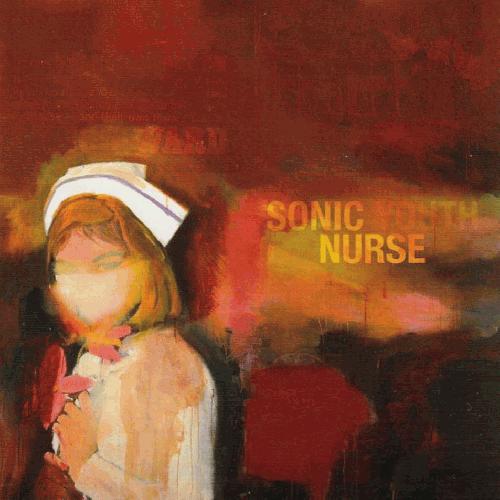
Sonic Nurse isn’t exactly a reinvention of the wheel, it’s a sterling example of a veteran band striking gold in ways both new and old.
Sonic Youth is a household name for most alternative rock fans, thanks to their fantastic musical output in the 80’s and 90’s. Champions of the no-wave movement, Gordon and co. injected an irresistible apathy into their deft explorations of atonality, dissonance, and blissful noise. Career-defining records such as
EVOL,
Daydream Nation, and
Goo made the group critical darlings and garnered them a devoted fanbase, and they didn’t need to explore any further ground to cement their status as legends of the alternative rock scene. As significant as those records are to this day, it would be a disservice to overlook the latter-day efforts of the band, particularly 2004’s overlooked masterpiece,
Sonic Nurse.
Expertly produced and crafted,
Sonic Nurse may be Sonic Youth at their most songful and comforting. It highlights the group’s knack for combining timbre and texture with fantastic songwriting, without forsaking the band’s riveting exploration of ambience and mood through extended jam sessions. Opener “Pattern Recognition” wastes no time settling in with its driving rhythm, angular harmonies, and Gordon’s signature snarl. Lee and Thurston expertly trade enchanting guitar leads atop Shelley and Gordon’s tight rhythm sections; the razor-sharp focus, superlative chemistry, and stalwart musicianship are evident of a band with a newfound hunger. Multi-instrumentalist Jim O’ Rourke adds a hefty new dimension to the album’s sound, as he did on
Murray Street, the album’s 2002 predecessor. Just like that record,
Sonic Nurse doesn’t quite abandon the familiar sinister flavors of dissonance and atonality the band is famous for, but it does feature a heavy share of unexpectedly tender and beautiful harmonies repackaged in more traditional song structures. “Unmade Bed” is a rare unicorn of a Sonic Youth track; blissful guitar-pop that is a particularly perfect microcosm of what this band does best in under four minutes.
Even the longer songs here are relatively easy on the ears; “Dripping Dream” and “Peace Attack” might be two of the breeziest tunes the band ever wrote, featuring labyrinthine passages of fantastic guitar-work and Moore in rare form vocally. “Stones” may be the album’s most illustrious moment - equal parts meditative and explosive, glittery yet unkempt, hopeful yet unnerving. “We’re not gonna leave you, stranger,” Moore earnestly sings in the impassioned chorus. For a band that started out with a seemingly uncaring ethos, it’s a beautifully tender moment in an album full of such moments. “I Love You, Golden Blue” is a similarly arresting ballad, in which Kim Gordon passionately croons to “someone who believes he can’t show himself to the world, believing he’ll only destroy the people he cares about…” (as detailed in her book). You’d be hard-pressed to find a more beautiful song by the band.
Though the album may be their most pleasantly alluring, it doesn’t eschew that textbook Sonic Youth eeriness. “Dude Ranch Nurse” is perhaps the most impressive and sinister moment of the entire record. A serpentine and seductive serenade from Kim Gordon, the song manages to juxtapose the unnerving with the comforting. Kim’s menacing vocals resemble that of a jaded, obsessive stalker, as she implores to the listener, “Let nurse give you a shot!” It’s a loving lullaby as much as it is a threat. The album reaches a fever pitch on this ghostly tune, reminding the listener that this is the same band that created utterly haunting records such as
Confusion Is Sex and
Bad Moon Rising. Similarly, tracks like the queerly titled “Kim Gordon and The Arthur Doyle Hand Cream” (seemingly a diss-track of sorts to Mariah Carey) and “Paper Cup Exit” (one of those rare gems with Ranaldo on vocal duty) showcase the record at its most macabre and volatile. Despite such unnerving cuts, the album ends with “Peace Attack”, a gorgeous swan song. Perhaps the happiest song the band ever recorded, it’s the musical equivalent of the sun coming up after a rainstorm, yet it retains the compelling musicality of the band’s best works.
As its title suggests,
Sonic Nurse is a musical rehabilitation - it’s comforting, it’s scary, and it’s necessary. Featuring some of the band’s most blatantly accessible and gorgeous music, it’s the perfect gateway drug into their music. Overlooked in favor of Sonic Youth’s earlier masterstrokes, it should be considered a clear standout in such a stacked discography, and is a shining example of a band striking new gold towards the tail-end of its career. A versatile masterpiece of sonic texture and harmony, it is perfectly titled. Give it a shot - better yet, let Sonic Youth give you one.