Review Summary: It’s called EEEEEEEASY LIVIN’
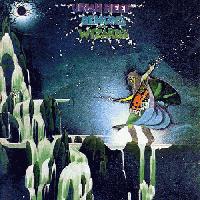
Uriah Heep’s previous albums had already set them apart from their protometal peers by means of their more whimsical bombast, but 1972’s Demons & Wizards feels thoroughly immersed in fantasy. Granted that iconic Roger Dean cover art might be doing some of that ‘eavy lifting since this isn’t a full concept album and I doubt the guys were really that interested in the occult. But even if “The Wizard” was probably a metaphor about their drug dealer or some ***, it’s no doubt musically evocative; the themes of wanderlust and otherworldly wisdom are paired with gorgeous acoustics, narrative vocals accompanied by sweet harmonies, and a floating structure that makes for an inviting opener.
From there, the other tracks utilize different moods to flesh out the dreamlike atmosphere. “Traveler In Time” is a work of more straightforward mysticism with a bunch of wah guitar effects, “Circle Of Hands” plays almost like a church service between verses driven by organs and contemplative vocals between a crashing riff set, and “Rainbow Demon” might as well be a doom number between its slower pace, menacing guitar/keyboard plods, and swelling chorus. It culminates with the closing one-two “Paradise” and “The Spell;” while the two tracks’ connections were likely unintentional, the way it flows from lamentful balladry to a swinging ragtime-esque climax is pretty special.
And with this being seen as the band’s mainstream breakthrough, the presentation is more overtly accessible. “Easy Livin’” is the most obvious instance of this at play, having essentially become the band’s “Paranoid” courtesy of its pulsating shuffle, buzzy keys, and eager sing-along vocals. The band remains over the top but having more individual tracks to work with across leaner lengths makes them more palatable.
Demons & Wizards doesn’t feel as prominent in the best seventies album discussions as it should be, but it’s a perfect listen for the era as far as I’m concerned. While it doesn’t differ too much from Salisbury and Look At Yourself, offering the same tropes at the same quality level, it feels more focused due to the tighter songwriting and focused narrative scope. There would be enough subsequent efforts to sustain Uriah Heep’s prowess, but Demons & Wizards plays like the culmination of an exceedingly wicked trilogy.