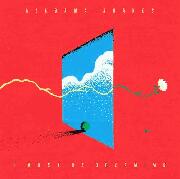
Review Summary: Look Up is a rodeo that never makes it to 8, but Ringo is nonetheless as charming and self-effacing as ever
Bit of context for that summary: in the sport of competitive bullriding, the rider must sit astride a furiously bucking bull for 8 seconds while only clinging on with one hand. The most likeable Beatle’s dilettantism in the highbrow world of country music isn’t exactly the white-knuckle thrill a rodeo might be, so maybe the metaphor isn’t all that apt. Still, there’s got to be a bit of bravado for Ringo to try on this particular hat at this stage in his career. And Ringo, out of all the Beatles except maybe George, is the one guy who could possibly make such an idea work.
Beaucoup of Blues was an initial, if poorly conceived, attempt to do just that, and much like
Look Up does more than 50 years later, that album was able to squeak into acceptability through charm and harmlessness. Of the Beatles, Ringo’s always come across as the most unassuming, and, in spite of the insecurity that must have surely gone with living in the shadow of three of the biggest egos in the music industry, the most honest, qualities that have often lent themselves to good country music. But of course, the best intentions and the right approach still don’t guarantee success.
A country album isn’t all that out of pocket for an ex-Beatle, of course. The early albums are rife with tracks that have at least a touch of country sound and the band were big fans of Cash and Buck Owens in the day, to the point of covering Act Naturally. The Traveling Wilburys’ roots rock sound was intensely indebted to country as well. But it’s pretty telling that this has never exactly been the Fab Four’s forte. Their approach to country has always been light, fun, and never to be taken seriously. Ringo’s attempt to do country seriously ends up admirable, but the result is an affectionate pastiche that doesn’t ever really feel like a
real album. Recruiting T. Bone Burnett and a slew of Americana luminaries of varying degrees of quality might be overtly calculated to shore up credibility, but they at least add a sense of variety, as much as is possible.
The album’s standout moments come in brief flashes, and are often thanks to the presence of the collaborators. The ever-inimitable Molly Tuttle lends a hand on the title track, and Larkin Poe’s presence on Rosetta makes for one of the more musically interesting moments on the album with it's earthy, droning quality. Of course, T. Bone Burnett’s production and songwriting are all over this thing, in fact he has solo songwriting on no less than four tracks, and cowriting credit on five more. The collaboration peaks with Time On My Hands, a wistful, weathered track buoyed up by a gorgeous steel guitar and strings arrangement. Would that the rest of the album were as memorable.
We can’t knock Ringo for having a little fun with his choice of genre of course, and it’s at least better than the putrid
What’s My Name. I think the reaction for most listeners can only be that it’s good enough music for an 80 year old Ringo Starr. But the shameless glazing this is receiving from the big publications is, in the face of the actual album, little short of embarrassing. We can celebrate an artist. We can respect the achievement of even writing and releasing an album at his age. But, with the exception of Time On My Hands, none of this approaches material I want to revisit for any reason.
So Ringo remains Ringo, for better and worse. And in keeping with the hangdog Ringo persona this isn’t even the best country-adjacent album by a Beatle. It’s an album for Ringo Starr, and if we can’t give it any sort of adulation, we can at least respect its intentions, and those of the artists who made it. That seems to be the entire point of the album in fact: Ringo putting his talents, such as they are, into something that he loves purely for its own sake. If Ringo’s playing around at somebody else’s rodeo, may be we can all just be happy that he can still ride.