Review Summary: Ulcerate’s greatest achievement to date
In a genre often plagued by monotony and repetition, where many bands fall into the trap of attempting to outdo one another in terms of sheer extremity, authenticity inevitably becomes lost in translation. Instead of focusing on who can play the fastest tempos, execute the most guitar solos, or deliver the deepest growls, reducing a genre with such immense potential as death metal to a mere contest of superficial intensity is a travesty. Fortunately, however, some bands resist the allure of mindless brutality in favor of something far greater. Ulcerate stands as the greatest champion of this philosophy, and such efforts are fully realized in their latest magnum opus, Cutting the Throat of God.
One of the elements that contributes most to CTTOG’s success is its performance. This is, single-handedly, one of the most exceptional musical performances I have ever heard. Paul Kelland’s vocals radiate the darkness and desperation that Ulcerate seeks to capture perfectly. Since Everything Is Fire, Kelland has mastered his trademark lows, and with Stare into Death, he introduced highs that still retain his guttural edge. This is a poignant advantage Ulcerate has over other death metal bands, as they are able to capture emotional nuance that would otherwise be unheard. Such styles are blended almost seamlessly, being encapsulated as an indomitable force of anguish rather than the mere signature death growls extreme-music enthusiasts have grown accustomed to. While the vocals are present in most bars, they don’t detract from the other instruments, instead complementing them. Kelland’s vocal style is rather unique in this respect, as his vocals take more of a lead role rather than a harmonic one. Yet, despite this, they manage to be more powerful and sincere than the vast majority of bands within death metal, acting almost as a symbiotic force—constantly shifting and contrasting but still remaining consistent and balanced. This level of versatility is a breath of fresh air, as it keeps the music engaging and focused while never becoming excessive.
Kelland’s bass work also shines with conviction. While it may be the least prominent instrument displayed (besides synths), it remains vital to the overall execution of the album, adding a heavy yet surprisingly warm tone amidst the weight of the piercing guitar lines. The fact that it lacks a melodic basis is ideal, as it further enriches the music with much-needed layers and depth that the rest of the instruments don’t quite provide. The album can also feel a little disorienting at times, and this is in no small part due to the bass producing subtle levels of dissonance along with the percussion, particularly during the more ambient sections. This really helps each song feel like a journey, culminating in a more unified apex. While Ulcerate’s older work was a cataclysm of calamitous proportions, their new approach—dramatically increasing or slowing the tempo at various points—diversifies the tracks immensely within given sections. Each song varies with levels of dissonance and harmony, even if not as apparent as pre-Stare Ulcerate, creating an experience that borders on meditative.
Continuing their newfound melodic direction, CTTOG expands on the melodic framework that was present on Stare into Death, primarily through the use of Michael Hoggard’s guitar work. I consider guitar lines to be the most important aspect of death metal, and thankfully, they are tremendous here. Hoggard effortlessly echoes each chord with profound conviction, harboring layers of chaos and disarray through each song, twisting them into some amalgamation of doom. While repetitive—particularly due to their rapid pace—Hoggard’s guitar lines never become sluggish or derivative. Copious amounts of modulation are used to keep them engaging while morphing in and out to create a hypnotic quality. There is a potent sense of ordered chaos harnessed within the guitar work. This ability to tap into the depths of the listener’s psyche further amplifies the twisted nature of the record. While the music remains relatively accessible by extreme metal standards, it manages to be far more emotionally exhausting and impactful due to the subtle yet constant shifts in melodic phrasing. Despite countless repeated listens, the melodic ideas and composition consistently remain interesting and infectious throughout each song. Due to the sheer tightness of the compositions and effortless flow of each track, I never felt a need to skip one over another. They each have their own retrospective ideas that are unique and purposeful, yet align with the record’s essence. Hoggard’s performance is the key to the magnetism of the record, and his distinguished style is essential in forming the delicate balance that defines the album’s being.
While Hoggard’s guitar work is vital to the album’s deceptively simple yet complex melodic backbone, Jamie Merat’s drumming serves as its lifeblood. Words can’t describe just how spectacular this man’s drumming is. While most of modern technical death metal’s drummers simply use the kit as a means of showing off with little to no cohesion with the guitars, Merat integrates his drumming seamlessly, giving each strike a deliberate and meaningful role. What’s most impressive about his drumming is his versatility and adaptability on the kit. The drums constantly ebb and flow, acting almost alive in a way, yet due to Merat’s pristine sense of phrasing, they never conflict with or weaken the existing melodic ideas of the record, only enhancing their potency. It’s less about him simply providing the beat or timekeeping and more about him acting as a rhythmic channel, intricately weaving and elevating patterns among the guitars whilst maintaining a complementary segue, both as the background and foreground for each song. Despite the fact there are hundreds of minor percussive shifts and variations, they never become distracting or overwhelming, flowing seamlessly. While Ulcerate conceived a more melodic approach in CTTOG, Merat’s expert use of polyrhythms and diverging time signatures keeps the record from becoming basic or contrived, enhancing the overall pace of each song. Oh, and just a warning: if you listen to this album, it will ruin your perception of 90% of drummers.
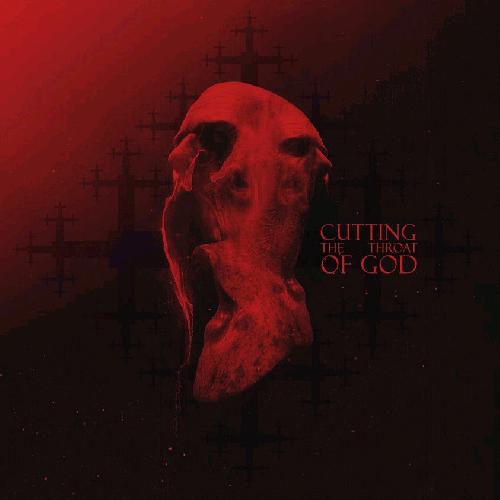
With the instruments blending so fluidly together, the atmosphere created is bound to be effective. Envisioning images of decay, nihilism, rejection, and misanthropy, CTTOG oozes with pure and untamed malice, especially within the lyrics. The record’s brooding tone remains painfully consistent across its runtime, rarely letting the listener catch their breath for peace. While there were potentially a few missed opportunities to subvert the listener’s expectations with changes in tone or mood, the album’s profound ability to consume the listener completely doesn’t make this a problem, instead drowning them into a deeper abyss of unspoken darkness. The lyrics are confrontingly bleak yet intellectually honest in their approach, with a variety of themes exposed throughout, and their captivation is almost excruciating considering just how oppressive they are. They are also written in a way that is speculative and nuanced, raising diverse interpretations for each song, almost bordering on the philosophical. With this in mind, their known context only adds to the stark desperation and powerlessness that creeps within Kelland’s vocals, as if begging to be released from the clutches of this maddening reality. It’s clear everything presented here is done with an organized and intentional purpose, realizing the existential dread that other extreme metal bands only seek to capture. Really, the only minor gripe I have with the presentation of the record is the album cover. While it’s well executed, it lacks the dynamics Stare into Death’s album art portrays. Either way, it’s still superior to the vast majority of death metal album covers and complements the record’s ethos.
Cutting the Throat of God isn’t just a testament to quality death metal; it’s the apex of everything that separates death metal from merely an evolution of thrash metal to the sonic personification of man’s utter futility within destruction and abandonment. It’s one of the most impressive displays of not just death metal but music I have ever heard, touching the inner corners of my heart with each listen. What Ulcerate has managed to create—not just with this album, but all their other releases—earns them the deepest admiration and respect a band within extreme music deserves, and I can confidently say: this is the purest vision of death metal that has ever been realized.