Review Summary: My Country 'Tis of Bey
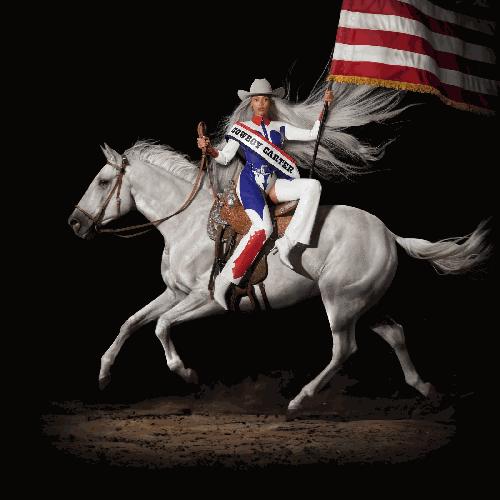
Those who say Cowboy Carter isn't a country album have no concept of the genre beyond a red solo cup. Because Beyoncé *is* country. Her roots lie in Texas & Louisiana, compare and contrast with a certain other pop-turned-country star who hails from down-home Syracuse, New York. Curiously, said artist has been warmly-welcomed into the fore while Beyoncé has faced backlash and ridicule from much of that same crowd. As many others have pointed out, her entrance into country music is part of a long, proud tradition of black musicians in the genre. And this isn't the first time she's made a country song either, consider "Daddy Lessons", off of her barn-burner 2016 album, Lemonade. It was one of the best moments, and it's expanded and explored in Cowboy Carter.
Fundamentally, this album is trying to address the cultural impasse faced in American society right now, and how Beyoncé considers it in the context of her life. So much division and animosity towards those who are different. "American Requiem" tackles this idea head-on, asking country crowds if they can stand her, if they fear her 'changing' country music. This song clearly states this the central theme, she sticks her flag in the ground, claiming her right to belong in country music. She proudly identifies herself her hometown and her family, quintessential country writing.
"Daughter" speaks to those violent, intrusive thoughts we all have when we feel threatened. And often times, where people do act on those thoughts, it can be a response to past traumas. Growing up surely was not easy for Beyoncé, who's alluded before to her dad's abuse of her mother, how she considers her family history to be one of unequal male-female relationships. And yet, she loves her father, and is surely not the only woman in America to have that complicated relationship. And then there's her husband. Jay-Z's infidelity is legendary, and was the entire focus of Lemonade. With the latest allegations coming out too, it's clear that she's still grappling with those trust issues, and if someone provokes her, she isn't afraid to resort to violence in her father's example. It's an acknowledgement of generational trauma, of wanting to heal but being afraid to lose inner strength. The choice of inserting an opera was daring and deserves credit, but it's not entirely new for her, long-time fans will remember her take on "Ave Maria" off of Sasha Fierce. (She has great taste on opera, many people seem surprised to learn one of her early teachers was an opera singer.)
She's not afraid to take big swings on this album, "Spaghettii" is a diss track against those who'd stereotype her as a black artist. Regardless of whether or not it's fair, Cowboy Carter has made her into a standard-bearer for diversity in country music. And she again lays claim to her rightful place within this genre, referencing the black outlaws who existed to protect marginalized communities in the deeply-racist American west.
The biggest criticism of Cowboy Carter is that, with her trying so hard to fit within the genre, she often surrenders much of the singularity that's made her a cultural juggernaut. Leaning on the legacies of Dolly Parton & Willie Nelson to bolster her own credentials seems to betray some insecurity. It also bloats the runtime of the album, and would've really benefited from ditching the covers and interludes. And sure, you can see the parallel she's drawing to her own situation in "Jolene", but she has always done best when she's spoken for herself. In other words, she doesn't need these country legends, she's Beyoncé! But there's also tons of small references that do work really well, because she's adapting them to her needs, consider the Patsy Cline reference on "Sweet Honey Buckin" or the Beach Boys allusion in "Ya Ya".
Speaking of "Ya Ya", there's a song that's just tremendous fun. The call-and-response and the rhythm of the backing 'ya-ya, ya-ya, ya-ya' never loses its momentum & hearkens back to something more classic in country music, with a hard-charging electric guitar in the backtrack that feeds the energy nicely. And in case you needed a refresher on her incredibly dynamic last album, Renaissance's fingerprints are all over "Riiverdance" and "II Hands II Heaven", they almost play like toned-down tracks from that era. But they have that energy and "oomph" that made the album so great.
At the end of the day, Beyoncé is larger than life, and she has the chops to do any kind of music she wants. Especially in 2024, when country music has never been closer to pop, she's not wasting that chance. Where she is fiercely and fully herself, there's no scene she can't conquer. Cowboy Carter is a culmination of all that's lead Beyoncé to where she stands today. Because she *is* a survivor, she *is* Queen Bey, she's her father's daughter & a bona fide, all-American cowboy.