Review Summary: Cause in the dark, it’s easier… to see
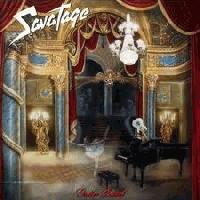
Savatage’s career trajectory is one marked by near constant evolution and there’s no better display of this in action than 1989’s Gutter Ballet. A focus on the band’s neoclassical talents tempered by producer Paul O’Neill’s guidance yielded legendary results with 1987’s Hall Of The Mountain King, paving the way for an even more involved collaboration and a shift toward symphonic metal. They may not fully committed to the jump yet as evidenced by all the hard rock songs still hanging around, but the hints of Broadway metal we got had to be unlike anything else out there.
The musicianship maintains a high caliber but it’s clear that some members took to the transition better than others. Jon Oliva’s performance is particularly mixed, his piano colors the album beautifully with gracefully simple strokes throughout but his shrill vocals carry a vulnerable discomfort compared to anything else he’d sang before or since. The rhythm section is delegated to supporting roles, putting in some occasional flourishes but often buried in the mix. Criss Oliva is ultimately the glue keeping this album together, his signature choppy gallops largely undeterred by the extra bells and whistles while his solos are only amplified in their surging displays of intense emotion.
What really makes this album so bizarre to sort out is the disparate songwriting, but it starts off with its best numbers. It’d certainly ballsy to start off with one of the biggest outliers but the anti-war vocal grit combined with that bass-driven funk metal groove hits better than it probably should. The title track and “Temptation Revelation” follow it up and immediately make their symphonic aspirations known. The latter is an elegant instrumental with a stirring guitar workout but the former is a ready candidate for one of Savatage’s all-time greatest songs; I love the gradually creeping piano introduction, the rolling verses, the surging choruses, and lyrics that contemplate life and its cyclical theatrics.
I say ‘one of’ because there is no greater Savatage song than “When The Crowds Are Gone.” It’s a brilliantly structured power ballad taking notes straight from the Queen playbook, its bookending piano segments almost literally setting the stage for a pounding verse/chorus set and a soaring solo that leads into a climax whose increasingly urgent laments are absolutely heart-rending. The lyrics are just as resonant in how they portray the endless yearning that comes with the artistic process; each in our heart of hearts hoping that our daily tribulations can achieve meaning in what we create. This song has made me cry multiple times. I wish I’d written it myself. Play this thing at my goddamned funeral, please and thank you.
Clearly nothing could top a song so majestic but I must admit that the rest of the album feels a little rocky even when divorced from it, a bunch of otherwise good songs marred by some odd flaw. “Silk and Steel” is another guitar-driven instrumental that may be a bit too long for its Rhoads-style classical flourishes while the speed sleaze of “She’s In Love” is beset by awkwardly sequenced vocals delivering even cringier lyrics. Some old school Savatage comes out to play with the more atmospheric “Hounds” and the sweeping bursts on “The Unholy,” but the production ends up getting too murky to make them out.
And with “Crowds” set as the band’s best song, I suppose there’s a certain symmetry in “Mentally Yours” coming out to be their worst. If other ballads emulate Queen, then this track seems to attempt the Alice Cooper school of theater rock. The ‘Timmy gone bad’ lyrics are trying way too hard with the bratty angle and the haphazard structure isn’t enough to offset the obnoxious chorus. “Summer’s Rain” and “Thorazine Shuffle” at least close on some damage control, the former offering the last round of sweet balladry and the latter hinting at the Streets to come with its darker riff set.
Even as a diehard Savatage fan, I’ve always had mixed emotions regarding Gutter Ballet. It would be rather reductive to just stick with the title track and “When The Crowds Are Gone” as the other songs do find their own ways to be enjoyable and the musicianship is packed with prowess and personality. I’m not sure if it’s necessarily the patient zero of symphonic metal but its trailblazer status remains undeterred even amidst its rather indecisive origins. Its significance is enough to make it worth checking out, but I wouldn’t make this the first time stop for a new Savatage listener.