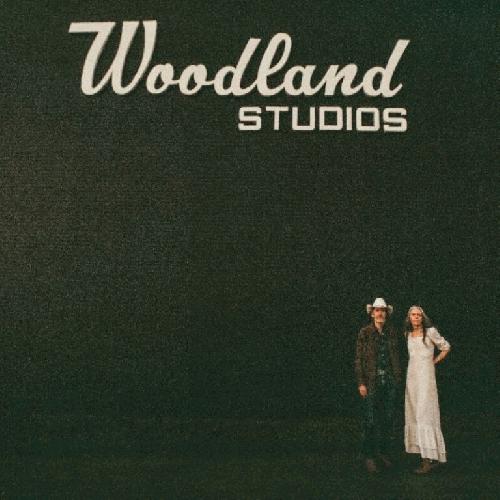
Review Summary: The best part is one starts when the other one ends
Woodland opens with ‘Empty Trainload of Sky’, a rumination on form and substance couched in the argot and tenor of good-old, down-home Nashville country. It’s a fitting herald for the return of
Gillian Welch and
David Rawlings, who over the last quarter century together have become, somewhat antithetically, one of the most singular voices in North American folk music.
After almost two decades of alternate timetabling as
Gillian Welch and
Dave Rawlings Machine,
Woodland’s double heading, as signalled by Covid-era living room covers compilation
All the Good Times, seems tailored to reflect the sense of newfound balance and harmony that vivify its runtime. Gone for the most part is the brooding tension of early career breakthroughs like
Revival and
Time (The Revelator). Instead,
Woodland subsists on the sunny aliment of folk music’s most aspirational couple trading the limelight as the songs require. The result is a suite of tracks like the pulchritudinous ‘What We Had’ which seem to invite the listener off the platform with a coal-fired, intimate domesticity heretofore unseen in their work.
With a longstanding musical thesis that there need be nothing new under the sun if things are built well enough, it would be tantamount to robbing their own stagecoach for
Welch and
Rawlings to change much more than the mood of their roundelay on their long-awaited return to original material. Thankfully for fans of the group such as esteemed British conservative David Cameron, songs like closer ‘Howdy Howdy’ remain firmly coupled to their signature close harmonies atop interweaving banjo and flat-picked guitar lines. Unlike other, less self-aware contemporary calls to reject modernity and embrace tradition, however,
Welch and
Rawlings have always been adroit enough to forsake wilful denial in favour of openly revelling in anachronism and inconsistency where it becomes them.
On
Woodland, this gives the couple a ticket to ride on the ghost train of American folk music without getting trapped in its rarefied mythology. Near-ubiquitous strings,
Woodland’s biggest and most novel sonic point of difference with its predecessors, freely transcend time and geography as they pass from staid, baroque ensemble arrangements to rowdy solo fiddlin’, while pedal steel glissandi fade in and out like the Doppler-affected whistle of a rattler passing by. Similarly, like a boxcar made of old railway sleepers, ‘Hashtag’ employs the humble Twitter hashtag as a novel lyrical conceit to give the time-honoured country ballad a new life. It is also a touching tribute to renowned country troubadour and mentor to
Welch and
Rawlings,
Guy Clark of which he would undoubtedly be proud.
Like the locomotive engine that provided the creative impetus for the album’s opener,
Gillian Welch and
David Rawlings are at this point a cultural touchstone in their own right. They would be foolhardy to try and re-invent the wheel.
Woodland may be a new coat of paint and a rearranging of the carriages, but a slight change in temperament sees
Welch and
Rawlings freed from the pressure of recreating their past, and allows them to continue down the same line without inadvertently doubling back at the junction. Like a dedicated trainspotter on the look out for the Union Pacific 3:15, fans can take solace in the fact that in this case, while the form may change slightly from time to time, for better or for worse, the essential substance remains unaltered. If
Welch occasionally seems to overshadow her partner, maybe it’s only because we missed her so much. We’ve waited a while for this train to arrive.