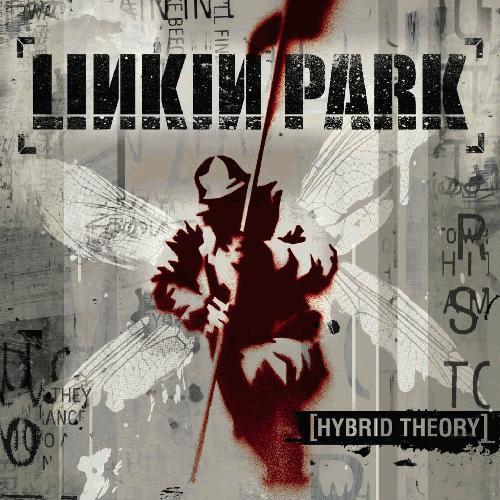
Review Summary: The birth of an icon
Crashing into the nu metal scene with One Step Closer’s visceral screams, Linkin Park’s Hybrid Theory immediately became the voice of a generation of angsty teenagers, and to this day anthems such as In the End and Crawling are celebrated for their emotional resonance to a broad population. Signed to a major and with a real budget for mixing and production, Linkin Park delivered a perfect debut at the perfect time with the perfect lead vocalist.
Dialing back from the complexity of the lyrics on their original EP, Linkin Park instead opts to hit on broader themes of alienation, depression, and paranoia, making the lyrics extremely relatable to anyone dealing with such familiar emotions. The lyrics themselves, however, are not what elevates the emotional response felt while listening to this record; every line Chester Bennington utters carries a deep emotional resonance that ultimately triumphs miles above the band’s contemporaries. While nu metal mainly focused on aggression and negativity, Chester’s voice evokes a more sensitive, delicate tone when he is not delivering his signature screams, as highlighted in Crawling and Pushing Me Away’s verses. No one can rival the raw passion in Chester’s voice, which is such a cathartic release. While Chester had not yet fully mastered the emotional aspects of the sing-scream here, hints of his vocal perfection reached on Meteora exist throughout this record.
Chester’s raw screams contain a unique tone, and his ability to seamlessly shift between clean vocals and aggression plays to the band’s benefit. The distortion added to the singing of the line “so insecure” from Crawling again highlights the desperation and despair in Chester’s voice that simply cannot be replicated. And the eponymous screams in By Myself also demonstrate that unique anger and aggression. Deathcore singers that juggle insane vocal gymnastics are technically far heavier than any Linkin Park song, but such deep gutturals can never rival the unfiltered emotion felt through any of Chester’s screams.
For a debut album, Hybrid Theory is immaculately polished. Linkin Park wastes not one second on this album, with momentum from one song carrying into the next all the way through the temporary respite Cure for the Itch offers. Perhaps the best example of such momentum is in the form of Forgotten, where the pre-chorus vocal interplay between Chester Bennington and Mike Shinoda begins not more than one second into the song. The layered guitars offer a crunching heaviness in songs like With You, where the distortion of the guitars seamlessly mixes with Chester’s own distorted vocals. Drumming and bass serve only to enhance the other aspects of each song, but they occasionally get their time to shine, as shown in Papercut’s final section.
Mike Shinoda’s vocal prowess cannot be understated; here, his rhythm ebbs and flows impeccably with background guitar grooves. It is clear that Shinoda is an actual MC and not just a shoehorned addition for the sake of creating a nu metal band, and his rap sections do not mess with the pacing of this record at all. Another highlight is his rap section on the electronically-manipulated Points of Authority, his flow bouncing in perfect harmony with the guitar riffage.
One cannot revisit Hybrid Theory without mentioning the electronic influence that further amplifies the unique emotions captured through Linkin Park’s exceptional hook-writing ability. In the End and Crawling begin with two of the most recognizable piano melodies of all time, infusing a haunting aura into those songs. While overall, the dark eeriness from their debut EP is reduced on Hybrid Theory, the electronic elements do still imbue a mood of sorrowful unrest. The synth melody in the background of Shinoda’s rapping on In the End may seem at first like a random addition to the mix, but by honing in closely on that melody, one recognizes its importance in establishing the overall somber tone that creeps throughout the song. Joe Hahn also gets to shine on songs like With You, with an intro full of DJ scratches and electronics. Small production elements like these exist throughout the album and serve to further increase the listener’s visceral emotional response to these songs.
Linkin Park songs have a knack for crescendoing during the final chorus, putting vocal interplay on the forefront and layering various melodies on top of one another to achieve musical bliss. Papercut’s bridge bleeds into an ascension into vocal harmony perfection, with Chester Bennington’s sensational singing (a continuation of the bridge melody) blending perfectly with the previous chorus’ refrain. Once again, this album displays its exquisite sound mixing, with each vocal layer distinguishable in the mix, yet perfectly matching each other and enhancing the emotional response. Another example comes in the form of A Place for My Head, which moves from a raging bridge with Chester screaming “Go away” on repeat into a section where Shinoda repeats the pre-chorus rap over a pulverizing guitar riff with Chester’s continued screams in the background, enhancing the intensity on display. These third-chorus manipulation techniques are expanded upon even further during Meteora, but their presence here cannot be understated.
Hybrid Theory may not be the most complex or diverse record ever written, but Chester Bennington’s singing prowess powerfully compensates for any simplicities in the songwriting. The more elementary instrumentals serve more as a backbone to the nascent vocal duo than anything else, but with such vocal talent on display, there is no need for guitar solos or complicated drum fills. The vocal cohesion, top-tier production and mixing, raw emotion, and simple yet iconic synth melodies blend together to yield musical transcendence.