Review Summary: *black mirror writer voice* wot if we gave leopold bloom an iPhone
Fontaines D.C. return with
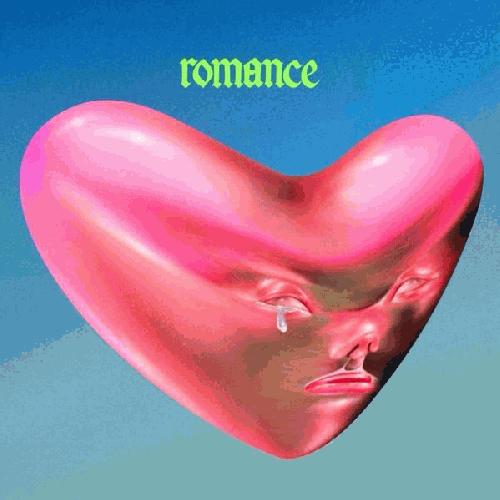
Romance, which is vindication for me personally, as Romance is what I’ve long believed every Fontaines song ever has been about. The Lotts tipped me off. That’s on Dogrel, which came out in 2019, apparently; it feels like it was at least a decade ago.
Romance, which came out just now, is the most mask-off Love has been throughout the band’s discography. It’s somehow their most honest – which is to say, raw – and their most polished at the same time. Which I suppose says something about how we make ourselves shiny for Love’s sake, despite Ugliness always seeping through eventually, morphing Love into something ***ed, like fire does to plastic. It is Fontaines at their most brit-pop. It is their most ((apocryphally)) accessible album; it’s also their most beautiful and their most hollow. Because of this some might cast aspersions its way for lacking depth. While I concede that moments across
Romance aim for the stars and end up face down in an inflatable pool (I don’t care for the first song and
Horseness… much), I believe that the sort of gossamer, alien sheen pulled tight across this album’s façade primes the listener to understand the thematic content in a different light.
Romance is about Love sure, but I think it’s also about Resilience. About how Resilience puts Love on its shoulders. It posits tragedy as points on a grid that stretches across a unit of measurement so large we're yet to name it, but always we are dropped off at a point of disarmingly gentle idleness. After
Horseness and
Death Kink, we get
Favourite. After
Desire and
In the Modern World, we get
Bug. Moving between these extremes has a tacit, illusory quality. The album’s back-and-forth insinuates a world beyond the immediate where these core pillars of the human experience are immune to the worldly conditions we express them in.
Romance deifies what makes us human.
Through canon literary allusions, they make Love timeless. Through the production, they make Love seem invincible. In retaining just a little bit of that post-punk volatility, they make Love violent when it needs to be. There are so many acoustic major chord progressions across this thing it can sound like you’re listening to hymns. Grian often sounds deferential to the songs themselves and takes every moment he can to catch his breath against the ineffable, a man trespassing the arena of Gods, toiling under the cumulative weight of all this ***ing *feeling*. As you were.
It's never really clear what the object of all this Affection is.
Favourite errs the closest to your traditional love song, but as per usual contains within it a more diffuse and hard-to-place definition of the term. Fontaines’ discography places Love in places where it should not be, in places that may cause it harm or at the very least turn it bitter. In making its object ambiguous, the subject becomes an omnipotent, driving force, rather than an ephemeral ache that makes you small and pathetic.
Romance has its problems. In a vacuum it sometimes sounds cloying, as overtly cinematic as a Marvel trailer, and indistinct from its forebears. But it also does something I've never experienced before: making Love an impetus is the kind of staging trick that allows realism and idolatry to exist in the same room. I wish I was good enough at sleight-of-hand to do the same thing with my parents.