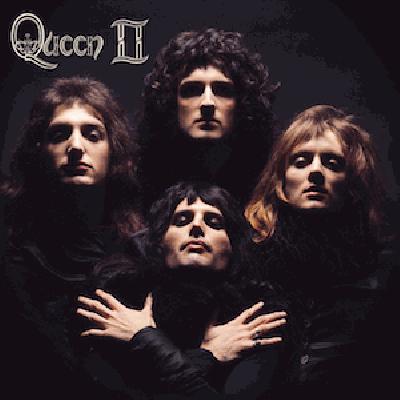
Review Summary: A medieval fantasy-tinged journey of goodness!
This album is mind-blowingly excellent, and the fact that it's finally getting the recognition it deserves nowadays is satisfying. After opening the door to another world of whimsical adventures waiting to be explored, spells waiting to be uncovered, and ogres in the fantastical lands of Rhye, Queen manages to get even more focused on this album with a unique idea of two contrasting yet connecting sides, Side White and Side Black instead of your typical Side A and B.
Queen II may not be a concept album, but it does have a loose theme running throughout most songs on Side Black about the battle of good and evil, penned by frontman Freddie Mercury. The sound on this album takes use of multi-layered tracks to have impressive vocal harmonies, multi-layered guitar overdubs, and a vast exploration of musical styles. Despite having largely negative reviews from contemporary critics, its now seen as a staple in their output and held in mostly high regard by retrospective critics, other musicians, and the band themselves!
Side White is penned by Brian May and begins with
"Procession/Father To Son" which is a hard rocker that starts slow with a heartbeat and epic guitar riff that sounds like the start of a movie, and functions as an intro to the album, building up excitement through its genius use of tempo changes and fantastic lyricism about a father talking to his son about a country he will acquire as he grows into royalty.
"White Queen (As It Began)" follows with an intro that is a tail to the previous track leading into this song via a fade-in and genius chord progressions, with sorrowful lyrics that get a strong emphasis from Freddie's vocal performance, and a section in which Brian makes his guitar sound like a sitar in Beatlesque fashion. This song is dripping with melancholy emotions and even has a heavy section that features perhaps one of their most brilliant guitar solos, a truly timeless tale conceived in a short song.
"Some Day One Day" is a poetic song in which all guitars play different parts yet despite this, the concept works quite well as the song works perfectly and features Brian May on vocals for the first time. Now most people are likely accustomed to Freddie but Brian never disappoints with his own vocals, his range is great for lighter songs and gets across the emotion perfectly.
"The Loser In The End" is a passable metal anthem penned by Roger Taylor about the difficulties of a mother watching their child grow up, it isn't much to write home about but it sticks out like a sore thumb on the more emotional Side White.
Side Black is where things get the most interesting from an artistic and lyrical standpoint. It starts with
"Ogre Battle" which is an impressive number that features the outro playing in reverse and smoothly sliding into the main guitar riff completely naturally, and its lyrics describe the battle in an arena of fantastical Ogre creatures.
"The Fairy Feller's Master-Stroke" features incredible harmonies, and use of a harpsichord which is rare in rock music yet pulled off amazingly here, giving it a medieval feel that fits right in with the vibe of the overall album. This song actually is based around a painting of the same name by artist Richard Dadd in 1864. This track leads into
"Nevermore" which is a beautiful well-composed piano ballad detailing the distress of a breakup with beautiful heartfelt lyrics and falsetto vocals it's really a shame that this song isn't longer, it is quite refreshing.
"The March of The Black Queen" is the band's first magnum opus stomping out of Side Black with a great variety of music during its seven-minute length. Starting with a slow dramatic piano intro with appoggiatura figurations on the B chord, the next section starts with an E minor as two guitars explode into the first line with backing vocals creating a harmonic carpet, making it one of the most unique and mind-bending songs of the 70's. The song also has amazing lyricism and leads directly into
"Funny How Love Is" which is a song influenced by Brian Wilson's wall-of-sound production style and harmonically influenced by them as well, while the music style takes some obvious inspiration from pastoral songs too. It doesn't quite work, and ends up in a severe sound clash between every instrument as they overpower Freddie's vocals, but it's decent enough.
"Seven Seas of Rhye" caps things off as the first entry in the UK singles chart by the band.
Overall, this is easily one of the best albums of all time and a must check out for any rock fan, they pushed their roots in rock and metal as far as they could which showed their studio mastery, and weaknesses in production, and paved the way for the rest of their career. It may not boast many global hits, but every song is sewn together from the odds to the ends seamlessly and it is an unforgettable experience of artistic brilliance, the dare to experiment, and while the production is slightly murky, it still manages to not blemish a nearly perfect record that showcases significant growth from their already good debut.
Track by Track:
1. Procession: ★★★
2. Father To Son: ★★★★★
3. White Queen (As It Began): ★★★★★
4. Some Day One Day: ★★★★
5. The Loser In The End: ★★★
6. Ogre Battle: ★★★★★
7. The Fairy Feller's Master-Stroke: ★★★★★
8. Nevermore: ★★★★
9. The March of the Black Queen: ★★★★★
10. Funny How Love Is: ★★★
11. Seven Seas of Rhye: ★★★★★