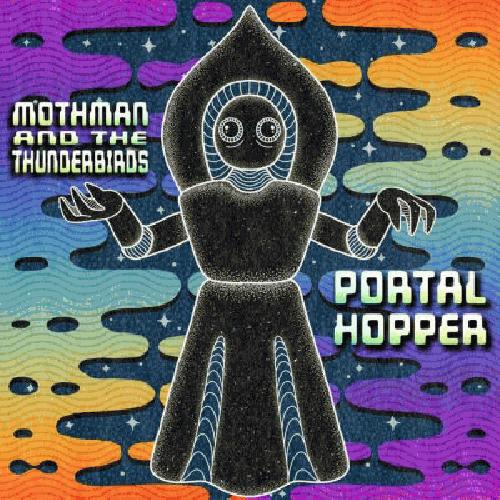
Review Summary: Alex Parkinson has captured the sound of yet another big prog metal band. I can’t wait until he’s caught’em all.
Three years ago now, a much younger and more masculine me reviewed the debut album of a one-man progressive stoner metal project named
Mothman and the Thunderbirds. Aside from it being a quirky adventure into the world of cryptids, it left behind the overall musical reputation of mimicry - closely copying the sound of
Mastodon and other stoner prog metal bands. Today, Alex Parkinson returns with a new and starkly unexpected sonic aesthetic, revolving much more around the vibrant and pop-oriented worlds of
Devin Townsend and
Moon Tooth than the sludgy fuzziness of riffs past.
Beginning with a few compliments to the artist: the musical compositions of
Portal Hopper are generally more creative and original than
Into the Hollow, and the level of distinctness in each of the albums’ sounds is equally as admirable. If one introduced both albums to an unfamiliar ear, it would be difficult for them to recognize much similarity between the two.
I speculate that this is partly thanks to Parkinson’s well-chosen collaboration with the underground pop-prog metal talent
Egor Lappo. The influence that a sound engineer has on the album‘s compositional writing varies a good bit; however, in
Portal Hopper, if one knows
Egor Lappo's work, it’s pretty obvious how he impacted the product’s development. Listening to an album like
Trancevoicer gives one a conception of the bright, colorful lead guitar melodies, cotton candy synths, and earworm vocal hooks that take tracks like “Ruby Skies”, “Fractals”, “Squonk King”, and “Polygonal Polliwag” to hedonistic levels of enjoyment.
The album has a few tracks that lean more into atmospheric and subdued territory, like the relatively epic track “The Zaratan.” This track harnesses the kind of post-metal textures of
Devin Townsend’s Accelerated Evolution that build up to a calmingly sublime interlude of sparkly guitar chords, shimmery airy synths, and light hymns - a climax perfectly fit for the album’s ending. However, the album does not end here because we apparently still need to get back through the portal hopper and return to the normal world. The following track has an upbeat vibe similar to the highlights in the paragraph above with the addition of uncanny vocal sprinkles reminiscent of
Others by No One. The album finishes off with a somber acoustic track named “Attic” recounting the previous magical events of the
Portal Hopper; it’s not the worst ballad on the album, but it’s a tad unnecessary.
The other ballad, “Somewhere in Time,” does not do the album much service either. The guest vocalist that Parkinson brought to do this sounds like a bad Billie Joe Armstrong impersonator and because of that the two tracks he’s on sound like low-budget 90s pop-rock songs. They are not terrible on their own but they do not mesh cohesively with the rest of the futuristic hyper-pop prog metal of the rest of the album. Conversely, some of the harder, sludge-ish “Flatwoods” tracks on the album also do not fit into the core sound of this new aesthetic and rather sound like unearthed extras from
Mothman and the Thunderbirds’ previous effort.
Portal Hopper presents us with a large chunk of music warranting appreciation from underground prog metal fans. As I see it, around eight to nine tracks on the album fit a clear vision of a sweet and delightful upbeat prog experience, but the other three to four tracks detract from this purpose. Putting myself in the songwriter’s shoes: If
Portal Hopper was supposed to be a means of traveling through a vast, eclectic mix of musical styles, then I would have spent more time exploring different styles, further diversifying the album compared to what was presented. But if
Portal Hopper was supposed to resemble this melodic, dessert-like sound found on a majority of the album, then I would have cut the distractions out of the story.