Review Summary: it is not taboo to go back and fetch what you forgot
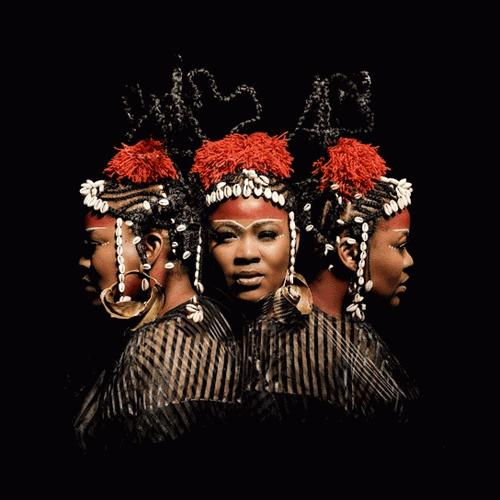
Recently, I headed out to Trafalgar Square to cast my vote in a particularly historic South African election. I stood in the mercifully short queue waiting for the foreign voting station to open with Thandiswa Mazwai's latest album as my soundtrack. The fountains were at rest while the music simulated the trickle of absent water down sandstone and marble. At the end of 'Biko speaks', a recording of Steve Biko prophesied the events of post-Apartheid rule. Well played Steve, it has all come to pass as you predicted. I sighed and felt my heel rising and falling to the beat. Occasionally, the right album finds you when it is most relevant.
Mazwai comes from an activist home, and that political upbringing informs all her work, even though she has defended younger artists who were scolded for not being outspoken enough. Mazwai has stated her belief that most art is political whether intended or not, but from the overtness of the messaging in the opening third of the record, she slips into thankfulness for the gift of music and what it has meant for her. And here her words ring true; her tribute to Miriam Makeba begins with Makeba recounting how she was taken in by the president of Guinea. Her exile from America after marrying a member of the Black Panthers is not mentioned, but it is implicitly there. The beauty of it is that it is first and foremost a complex, slow-burning piece of jazz tribute.
Elsewhere, Mazwai's Pan-African beliefs inhabit the songs; even the album title is a Ghanaian concept of reclamation. Songs like 'children of the soil' abound with West African polyrhythms and tones, but are sung in a vocal style specific to Thandiswa. It's a stunning trip through the distinctive instrumentation and melding of various sounds. Another amazing moment of cross-pollination can be heard in 'Dogon'. The dancing West African strings and percussion are given a driving beat and Mazwai's heavy, soulful vocals play off a distinct call-and-response which dips below the Equator. The brass that rounds out the introduction also has that mournful colour that echoes the tinge of a southern sky.
In terms of variety, Mazwai touches on folk, Mbaqanga and jazz, even a little slick, lustrous bass on the opening of 'emini' that wouldn't be out of place in a rock setting. An interesting additional element comes from the archives of aged Xhosa recordings which served as the bedrock and inspiration of the album. Traditional instrumentation opens the standout track 'kunzima: dark side of the rainbow'. This introduction moves into mercurial piano and restless percussion that stutters, creating sequence and progression without picking a direction. The song closes with mocking audio from the South African parliament; absurd posturing in a country that for months has endured ten hours of planned power outages a day amidst brutal violence and over thirty per cent unemployment.
I felt a catch in my throat on that fresh morning outside South Africa house; my favourite moment on the record emerged from 'children of the soil'. Playing like a West African lullaby, the song suddenly dips into something distinctly of the South; Mazwai's voice becomes fire and resistance, so desperate to be heard and understood. We are all in line, after decades of corruption and degradation, conflating filthy politics with hope. Sometimes, I think politics burns in the veins of Africans. Every morning I wake up with the bitterness of the last two decades - I cannot imagine the searing pain of those who still have nothing, those who are not fortunate enough to take refuge elsewhere. Political assassination is rampant with a hit every two weeks. Apathy, once unheard of, is now laced with acrimony like a bad street drug. We feel the fear of the July 2021 riots and know there's only a thin layer of paraffin smothering the smell of rot underneath. Still, somehow, we are a nation that makes do. Even if your hope is an illusion, it keeps you talking, making wry jokes, keeps you engaged, and keeps you caring. And for some, it keeps you making music as powerful and beautiful as
Sankofa.