Review Summary: Undeniably evocative of past glories but still offering ways to move forward
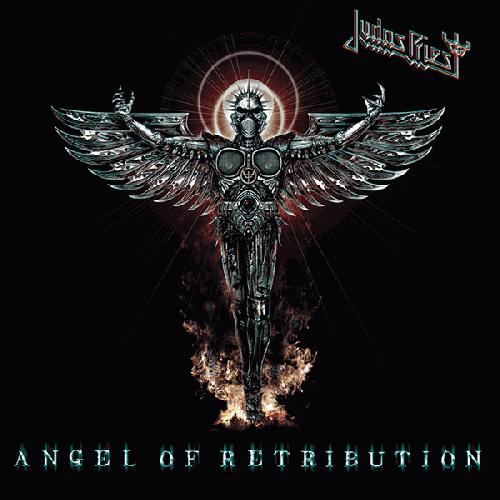
Judas Priest’s reunion with Rob Halford may not have had the same generational impact as Maiden’s comeback five years earlier, but I certainly can’t deny the impression that 2005’s Angel of Retribution made on me back in the day. I was certainly familiar with the classics but this was an album that I could feel a sense of ownership for as *my* Priest. I’ve since come to be pretty nostalgic for it, making for an ironic ouroboros with how much reverence it had for the band itself and its legacy. You think this is crazy, just wait another five-ten years for when the kids who grew up with The Force Awakens start talking about their own nostalgia for that…
Their musicianship and chemistry does a lot to dissuade any cynical notions, showcasing their signature tropes as well as some of the tricks they picked up in the years apart. While one can hear the experience setting in Halford’s voice, his broad range and theatrical conviction are as strong as ever with his solo collaborator Roy Z proving to be a smart choice for producer. The guitars also reflect their own power, retaining the downtuned magma from the Ripper years but not as afraid to dip back into more melodic sensibilities and upbeat chugs. Drummer Scott Travis has also gotten to be a balanced player, offering plenty of the blasts that made him a legend with Painkiller but also scaling back to hefty hard rock beats as needed.
With this also serving as a celebration of the band’s extensive discography, it’s fun to see how the varied songwriting pulls from their different eras. “Judas is Rising” is another one of the band’s powerful openers, playing like a “Victim of Changes” for the new millennium as its fade-in harmonies lead to declarative vocals bellowing over an intense mid-tempo chug and busy drumming. “Deal With The Devil” follows it up in lean anthemic fashion with “Revolution” and “Wheels of Fire” feeling rooted in the eighties spirit despite their contemporary tinges. “Demonizer” and “Hellrider” make no bones about their Painkiller aspirations but one could argue that they give a hint of what Jugulator could’ve sounded like with ol Rob on board.
The allowances of the band’s softer side are also splendid to see and might even be among the album’s best moments. “Worth Fighting For” is an especially welcome outlier as it’s laid back drive and wistful desert aura feel like a melancholic reflection circa Point of Entry while “Angel” is an earnest power ballad with stirring acoustics and incredibly aching vocals that always touch me more than I ever expect it to. “Eulogy” could be seen as something of a filler with its short length and the references to past song titles throughout being at their most blatant here, but it’s cool to see the piano reinforcing the “Epitaph” throwback feel.
But for all the looks back at the past, the closing “Lochness” manages to offer something new. While the notion of a slow ending colossus had been done before with “Monsters of Rock” and “Cathedral Spires,” this track is unlike anything they’d ever done before with its sprawling thirteen minutes cycling through glacial riffs, ominous verses, a gloriously cheesy chorus, atmospheric sequences, and a consistently haunting aura worthy of its subject matter. When I first pitched the idea of Lavaborne to its other cofounder, his response was “so kinda like Lochness.” We may not have our own lengthy cryptid-themed epic (yet), but this song’s power-doom bombast still deserves to be explored further.
Angel of Retribution may be a hair shy of the Judas Priest echelon, but it makes for an incredibly strong comeback. While the retrospective through a modern lens style could be seen as a little too pandering at times, the enthusiastic playing and tight songwriting do a lot to give the album its own unique flavor. It’s undeniably evocative of past glories but still offering ways to move forward.