Review Summary: You know the one with the crashing and the SCREEEAMS
Manowar is a band seemingly tailor-made for polarization. Even if you’ve acquired a taste for their ultra-manly USPM cheese, their body of work showcases some of the genre’s absolute best and worst with some of their most majestic anthems standing alongside their most embarrassing. Their extreme commitment to musical kayfabe and tendency to abandon about as many projects as they’ve started make them a simultaneously frustrating yet entertaining group of personalities to follow. Their influence is broad across many demographics but it’s not been uncommon for some acolytes to deny the connections, opting instead for more cool kid-approved namedrops like Bathory.
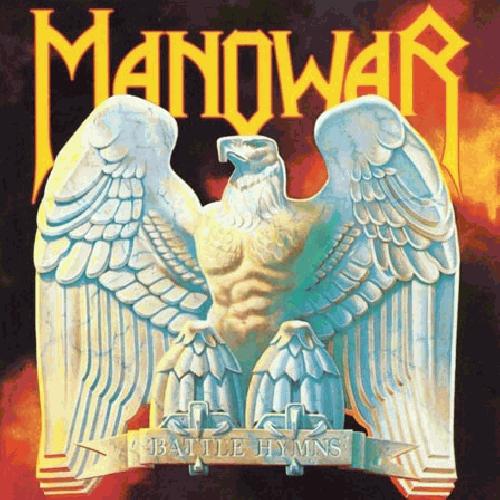
While the hard rock-isms and blue collar lyrics can make 1982’s Battle Hymns seem like an outlier compared to the albums that followed, it established the band’s signature tropes with proud arrogance. Bassist Joey DeMaio establishes dominance early on dispensing the riffs with gnarly distortion and occasional clean trills. Ross the Boss’s guitar work is more complementary but never feels too underutilized with plenty of tight leads and solos on display.
But with the bass often prone to showboating, even more so in the future, it isn’t too much of a stretch to consider vocalist Eric Adams the band’s true strongest asset. His voice perfectly exemplifies the Manowar attitude despite him never writing a lyric, his burly range is lower than your Dickinson/Tate archetype but can still reach for higher shrieks with confidence while his intense charisma keeps the hammy acting fun. Even at their most cringe, the dude sounds like he believes every word of what he sings.
That conviction is especially helpful in making the first half’s more rocking out songs not feel too out of step with their overall vision. “Death Tone” and “Metal Daze” are an effective opening one-two that both place emphasis on mid-tempo rhythms, the former setting up a mean biker snarl and the latter delivering their heavy metal mission statement with catchy chants. The Nam vet perspective on “Shell Shock” pairs well with its especially grinding riff set and their self-titled song puts a little upbeat boost alongside with the album’s most boisterous chorus.
From there, the last couple songs are where the Manowar identity truly takes hold. The crawling riffs and menacing atmosphere complete with Orson Welles spoken word can make “Dark Avenger” feel like a step into outright doom territory, but a sense of determined rage keeps it from falling into the sort of despair that Trouble and Candlemass would come to codify. “William’s Tale” is a brief interlude that’s a rare example of a DeMaio bass solo that keeps from getting too out of hand and the closing title track remains one of their greatest epics, presenting its level gallop with stirring battle cries, guitar fanfare, and an abundance of theatrical dynamics.
Overall, Manowar did well to put their best foot forward with Battle Hymns. While the aesthetic would still need a little more finetuning, it comes with musicianship whose prowess matches its hunger. It strikes a strong balance in its presentation, undeniably more over the top than what any of their peers offered at the time but also not getting too caught up in the self-indulgences that’d come to define them. All things considered, it’s a very bold first impression.