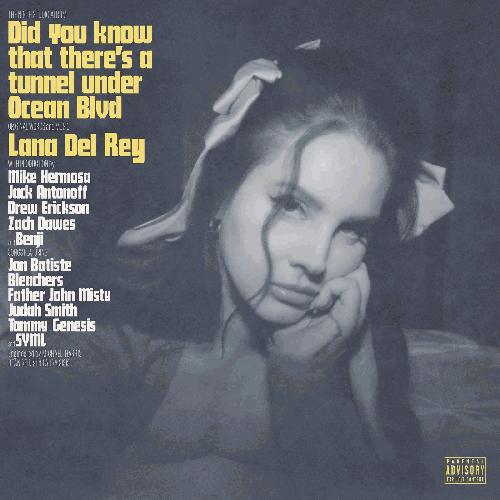
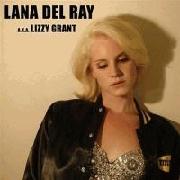
Review Summary: Lana combines lush instrumentals with compelling, sometimes strikingly honest narration in a way that comes together to form her strongest album yet.
There’s a level of irony inherent in this album. The commonly used phrase “it’s built on contradictions” doesn’t apply here, as it’s built on the same fundamental songwriting skills and narration style that Lana has built her entire career on. But there’s something compelling and slightly strange about an album that is so clearly a continuation of an artist’s thematic and stylistic tendencies, that also comes from such an honest and vulnerable state of mind, in a way that none of her previous work ever has. Its greatest achievement, purely in terms of the music, is how it’s able to blend simple but emotive ballads with lush and carefully constructed arrangements so consistently, in a way that never comes off as trying too hard to dress up or substantiate songwriting that wouldn’t otherwise be able to stand on its own. But ultimately, Lana’s greatest accomplishment here is how she’s able to recontextualize herself as a narrator without ever really deviating from what she’s been doing from the very beginning.
It doesn’t actually take too long for this to become apparent. Opening track “The Grants” is a slow, even slightly repetitive tune that revolves around the same brand of corny romanticism she has been outputting so prolifically for over a decade now. It somehow feels more genuine now than it used to though. I don’t know if it’s because of that aforementioned output, like she’s convinced me it’s real through sheer attrition and commitment. Maybe it’s the strings, or the way the harmonies develop. Melodically, the song does not present much in the way of new ideas beyond its first minute, but the instrumental builds and swells and its lilting cadence is undeniably pleasant. It makes for a strong opener even before the much more interesting themes of family and legacy (in the context of family) present themselves toward the end. This transition in theme is almost jarring when it happens. But then Lana, probably without a hint of irony, implores the subject of the title track “*** me to death, love me until I love myself” and suddenly everything is back to normal again. But again, I can’t deny those strings and harmonies. They take over, and all is well.
This sort of back and forth is a defining trait of the album and goes a long way in instilling a sense of variety into what might otherwise feel like an overly bloated tracklist. No doubt it will still feel that way for many, and it’s hard to fault them when you have tracks like Judah Smith Interlude, which is far too long and musically uninteresting for whatever conceptual contributions it makes to feel worthwhile. But even the simpler, less musically stimulating tracks like Kintsugi and Fingertips feature a sort of stream of consciousness lyrical flow that feels sporadic and almost hard to keep up with at times, while still coming across as thoughtfully put together. The lyrics on Fingertips show a genuine love and concern for her family, and reveal details of her personal life that make for more engaging lyrical content than we’re used to from Lana, and it’s genuinely emotionally impactful. And it all serves as a fitting lead-in to the career highlight run from tracks 10-12.
Paris, Texas is a straightforward piece that sounds like it could have existed solely as a piano arrangement, but it has that mysterious sound to it that has been missing from Lana’s music for so long and meshes so well with her vocals and overall presence as a vocalist. It also contrasts really well with Fingertips and shows strong sequencing. The ridiculously titled “Grandfather please stand on the shoulders of my father while he’s deep-sea fishing” is one of her biggest sounding songs ever, with a soaring chorus that highlights the best aspects of her vocal abilities, while the instrumental achieves a climax that even the best songs on NFR only flirted with. But its most striking aspect is the way its opening verse addresses the question of Lana’s authenticity as an artist, a question that has been levied against her for her entire career. “I know they think that it took thousands of people to put me together again like an experiment. Some big men behind the scenes, sewing Frankenstein black dreams into my songs. But they’re wrong.” While this subject has never meant as much as her detractors have wanted it to, for her to address and shut it down so directly is a powerful moment for her, that hits even harder given that it feels like it was already shut down by her recent musical achievements before she responded so directly. And following all of that is a gorgeous collaboration with Father John Misty, whose presence is felt long before his vocals come in on its evocative chorus. Their voices make for a powerful combination, and the transition from the verse to the chorus here is equally powerful, accentuated by a perfectly mixed and spaced out instrumental arrangement.
The final quarter of the album is comparatively weaker, but thankfully, it’s not just because the strengths of the first three begin to fizzle out. The introduction of trap beats makes for an interesting rhythmic shift that largely compensates for the loss of strings. It is a strange choice but given its placement on the album, feels deliberate enough to justify a song like Peppers which would come off as random if placed anywhere else. The reprise of Venice Bitch at the very end is another odd choice, but its melody still feels like it sums up a lot of the best aspects of this part of her career, and for that reason, it ties things together well enough. But at its best, this album blends that type of melodic sensibility with lush instrumentals and compelling, sometimes strikingly honest narration in a way that comes together to form her strongest album yet.