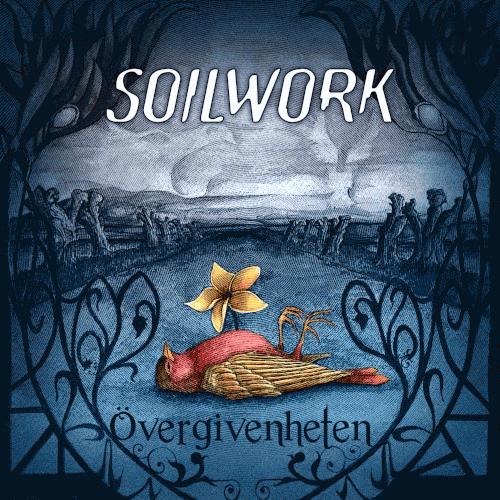
Review Summary: Soilwork's most ambitious, melodic, and diverse album since The Living Infinite.
How have Soilwork managed to remain fresh and relevant after twenty-six years of existence? Looking at other Melodic Death Metal bands that started around the same time, most of them have either faded away, settled into a predictable formula or abandoned the genre entirely. While it would be impossible to still call Soilwork a melodic death metal band, they haven’t abandoned their roots entirely. Additionally, they’ve managed to keep things (mostly) fresh and exciting by constantly adjusting their formula and introducing various outside influences on each album; not bad for a band coming up on their 30th anniversary. That trend continues with
Overgivenheten and sees them moving away from the formula of their last two albums by introducing a much more melodic influence that even contains elements of prog, alternative and folk.
Overgivenheten opens with acoustic guitars, keyboards, and what sounds like a folky country influence in some of the tones and melodies. When the song finally kicks off, the keyboard melody continues the folk feeling while the tempos ebb-and-flow under harmonized riffs, busy percussion, and Bjorn’s well-known shouting vocals. Over the duration of the title track the tempos shift, there’s a brief return to the opening motif, and Bjorn transitions consistently between raspy shouts and powerful clean singing; eventually ending with a subtle piano melody. It really is unlike anything the band have tried in the past. The following song “Nous Sommes La Guerre” begins with a woman talking in French before moving to what sounds like a half-speed track from
Natural Born Chaos (mostly due to the keyboard tone and melody). It transitions again to a rolling percussive element and clean singing from Bjorn before returning to the opening melody for the chorus… and this is how
Overgivenheten continues.
Every song has its own formula without ever making
Overgivenheten sound disjointed or aimless. “Electric Again” features the standard high-speed Soilwork aggression with a twist, “Valleys of Gloam” sounds like a heavier alternative rock song. As the album progresses, a few things become obvious. The most apparent thing is this is easily Soilwork’s most melodic album, but unlike their previous forays into that sound (
The Panic Broadcast and
Sworn to a Great Divide) the band haven’t lost their edge or energy. This album also features the most actual singing (and his best delivery) of any album thus far. The melodies, harmonies, and layers of clean vocals are catchy and powerful even during the verses. Finally,
Overgivenheten probably makes the most use of their keyboardist of any Soilwork release, but without ever becoming overbearing. Unfortunately, the quality of the front half doesn’t carry over to the second.
“Death, I Hear You Calling” is the first song that could really be labeled underwhelming. It’s a mid-paced rocker with a simple repetitive drumbeat, an overly repetitive chorus, and plodding guitar riff. Later “Golgata” starts with a proggy off-time introduction but quickly devolves into a typical Soilwork track. It’s not particularly bad, but forty-eight minutes into the album it feels a little extraneous. There are also the two tracks that clock in around one-minute each that don’t really add anything to the album but do diminish its momentum both times. Putting it bluntly, a 10-track album that cut the fluff would have probably made the album feel leaner and more consistent, but as it stands the last twenty minutes or so just doesn’t hit the way most the rest of the album does.
After Soilwork made their unexpected return with
The Living Infinite, things were surprisingly good for the band. They managed to find a working formula and even maintain a high quality on their next two releases. If there was a criticism to be had, though, it was that maybe Soilwork was getting a little too comfortable in their sound;
Overgivenheten fixes that.
Overgivenheten is easily Soilwork’s most ambitious and diverse release since
The Living Infinite, and they even managed to pull it off on a single disc instead of two. If there is a problem, it’s that maybe the album is a little too long and could have done with a few of the more conventional tracks being cut.