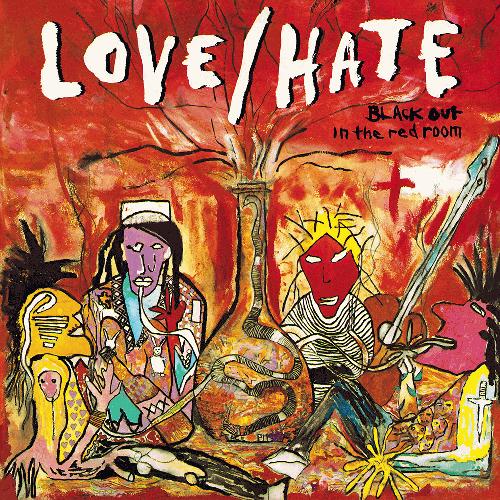
Review Summary: It seems there is not only hair in hair metal
By the end of the 1980s the popularity of glam metal was on its last legs. Despite that, there was interest from the audience and record labels, new bands, that were a dime a dozen then, were failing to reach a larger audience. The genre, itself devoid of much variety, degraded to a selection of clichés, which were carefully replicated without adding anything new to the recipe. The never-ending long-haired and greased flow of
Britny Foxes and
Warrants was getting muddy and discouraging any desire to listen to their output.
At a first glance, it seems that the Los Angeles band Love/Hate is yet another poor creation of the commercialized fashion with their long hair, stern looks, and the rest. And look at these wonderful names: Jizzy Pearl, Jon E. Love, Skid Rose. Only drummer Joey Gold decided to retain his name, probably because it was considered suitable enough as is. A quick look at the track list also “pleases” with its refinement:
Slutsy Tipsy,
Slave Girl,
Rock Queen. All of these definitely put one in the most positive frame of mind.
It is so nice to be wrong sometimes.
Indeed, Love/Hate on their debut,
Blackout in the Red Room, superficially follow most of the attributes of glam metal. They do look like just another bunch of bad boys singing about sex (
Rock Queen,
Slave Girl), drugs (
Why Do You Think They Call It Dope?), booze (
Fuel to Run,
One More Round), and some good ol’ hell-raising (
Straightjacket). Although you do get an occasional feeling that the band uses all of these just as a façade to get a recording contract and reach the audience familiar with the style.
But no. The place of the typical pop hard rock (or pop metal, if you will) common to the second wave of bands with their sweet choruses and simple melodies is replaced on
Blackout in the Red Room by hard rock of such ferocity that the above-mentioned Britny Fox and Warrant would faint. Probably, Love/Hate remembered that there is also ‘metal’ in the genre’s name, and provided it in spades.
Instead, the album brings to mind comparisons to
Guns N’ Roses’ debut,
Appetite for Destruction (particularly,
Nightrain) or early
Mötley Crüe ([b]Shout at the Devil[b]) and
Dokken (
Tooth and Nail). The band demonstrates almost punkish belligerence, which in turn makes you think that many of the clichés employed so actively here are used only for ridicule.
The tracks are short, concise, and precise in a punk way. Guitarist Jon E. Love does not draw much attention with endless solos and licks overshadowing his bandmates, preferring to work in a team and lead the song to its destination. For variety, he also employs some funky groove (
Why Do You Think They Call It Dope?), Eastern motifs (
One More Round), and a slice of country (
Slave Girl). Jizzy Pearl reminds us of Axl Rose on the more aggressive Guns N’ Roses tracks, but his vocals have an additional bluesy rasp, giving him a personal charm. Despite this quality, he doesn’t sound grating as some of his contemporaries do.
Moreover, we can hear rather impressive drum work of Joey Gold, which is usually unheard of on glam metal albums. Just listen to the closing moments of
One More Round. And, what is most surprising, there isn’t a single power ballad on the record. Even the track with a title like
She’s an Angel ends up being a rock cut, although its beginning may make you think otherwise.
While it is difficult to deny that Love/Hate does not bring anything new to the genre, the album can definitely serve as an effective medicine for those tired of the stagnant glam metal of the late 1980s. Too bad this excellent specimen is not remembered along with the Guns N’ Roses releases or, say,
Slave to the Grind from
Skid Row.