Review Summary: Secretly one of the most important albums in Motorhead's history
Motorhead’s seventh full-length represents one of the most dramatic turning points in the band’s long-running career, perhaps even more so than the preceding Another Perfect Day. Record label issues caused Orgasmatron to be released three years later in 1986, an eternity in early Motorhead time, and the album also saw them upgrade to a four-piece lineup for the first time. This would prove to be their only album with former Saxon drummer Pete Gill, but guitarists Wurzel and Phil Campbell managed to stay on long term to the point that the latter’s tenure was second only to Lemmy himself.
Thankfully the twin guitar configuration is integrated naturally, just sounding like Motorhead with a second guitar rather than attempting to get too flashy. There aren’t too many moments of shredding or over technicality, but the simple interplay is effective with the rhythms getting some extra power. While this could risk the rhythm section losing some of its potency, the drumming strikes the balance between precision and looseness in a way that Philthy Animal never could, and the bass is as thick as ever. It’s also interesting to note that Lemmy’s voice seems higher pitched and almost squeaky at times, but his mannerisms are always there.
One aspect of this album that I find nobody ever really talks about is how it saw the band shift to more chorus-oriented songwriting. Past Motorhead classics certainly had their share of hooks, but they tended to just focus on the riffs with the chorus either being a shout of the title or a quickly run through segment, often making them feel like afterthoughts. While the choruses on Orgasmatron still aren’t exactly tailored for arena rock, they certainly have a more anthemic quality than what came before.
It also helps that the band uses this approach with a decent variety of song templates. “Deaf Forever” starts the album cycling through marching verses and rung out chords soon contrasted by the much faster hits like “Ain’t My Crime” and “Ridin’ with the Driver.” “Built for Speed” and “Doctor Rock” are the catchiest tracks of the lot, the former cruising along a steady mid-tempo groove with reflective lyrics and the latter putting a hard-hitting bounce that would’ve fit right in on Ace of Spades. Even a song where the chorus is just the title like “The Claw” has a sense or urgency with Lemmy almost going full Halford with his screams at the climax.
Of course, the final coup de grace comes with the closing title track. “Orgasmatron” is unlike any other Motorhead song that came before it, consisting of a simple but ungodly dark trudging drone interspersed with swirling distortion and the vocals delivered in an effect-laden growl. All the past themes of politics and warfare on past songs are given full attention, resulting in what may be the most cynically brilliant set of lyrics Lemmy ever composed and giving life to what could’ve been an otherwise dragging experimental rocker. Future efforts would see the occasional attempt to repeat this formula, but nothing could ever be this striking.
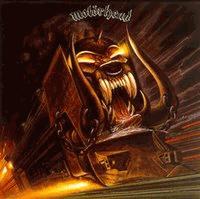
Orgasmatron may not have the brand recognition of Overkill or Ace of Spades, but it is secretly one of the most important albums in Motorhead’s history. It effectively bridges the gap between the looseness of their classic era with the more consciously metallic tightness of their later years. The admittedly odd production job can make it easy to pass up and the phallic Snaggletooth train (Snaggletrain?) on the album cover might be a bit too gaudy for some, but it’s ultimately just as worthy of your attention as their best-known staples. Future installments like Bastards and Inferno would arguably take this approach with even more powerful returns, but this was the start of a very solid second wind.