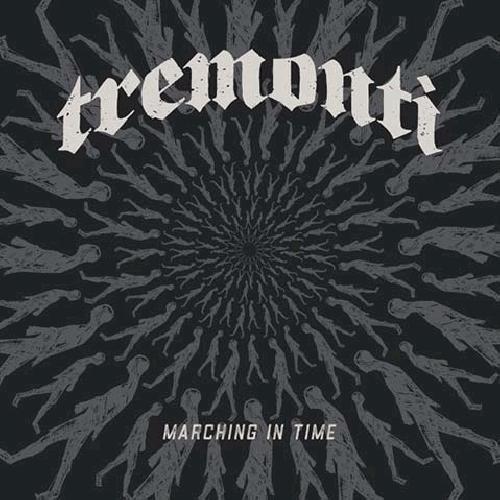
Review Summary: Time marches on, and everything slowly changes
After his conceptual album,
A Dying Machine, Mark Tremonti decided to take a breather, and on the new release from his eponymous project, he returned to a simpler and more traditional structure. Once again, each of the tracks on
Marching in Time stands on its own, without any attempt to weave an overarching narrative.
Those familiar with Tremonti’s output know that Mark prefers systematic, incremental progress on every LP to abrupt stylistic jumps.
Marching in Time is another prime example of that philosophy. The signature elements that serve as the backbone of the band’s sound are all still there: clean and melodic vocals, sweeping and emotional choruses, and heavy, aggressive riffs that evoke thrash and speed metal.
All of this is apparent from the first seconds of the opening track,
A World Away. A dark opening riff is soon followed by a faster one reminiscent of
Metallica, leading us straight into a classic Tremonti cut similar to the
Cauterize/
Dust era.
However, on
Now and Forever, we begin to sense slight changes and shifts in accents and sound. The main riff feels a bit simpler, replacing strict melody with a pulsation more typical of groove and nu-metal – and this really refreshes the overall feel. What’s even more interesting is that toward the end of the song, the heavy riff takes over the obligatory solo entirely, drawing all the attention and leading the track to its close.
We see this same groove, paired with a touch of dissonance, on
Thrown Further and
Under the Sun. The latter also demonstrates some intriguing dynamic shifts. The penultimate track,
Would You Kill, fits right into this group, opening with a riff that recalls Tremonti’s debut album,
All I Was, before taking a slight left turn into a groove-laden, unexpectedly nervous rhythm. Meanwhile,
Bleak feels rawer, evoking comparisons to the dirty sound of
Nirvana’s
In Utero.
The Last One of Us is also worth mentioning. On one hand, it is a typical Tremonti ballad, but its arrangement gives off a more minimalistic vibe, and the closing solo creates an impression of careless improvisation. Compared to the surgical precision we usually hear on Tremonti albums, it comes as a pleasant surprise.
And it is impossible to miss the title track, which closes the record. Mark has flirted with a more progressive sound a couple times before – with the monumental, epic
Fortress from
Alter Bridge’s 2013 release immediately coming to mind, alongside
A Dying Machine from the previous Tremonti album. Now,
Marching in Time stands proudly among his best works in this vein. It is an impressive musical canvas that unfolds over seven minutes, grabbing the listener from the very first seconds and refusing to let go until the final notes. Bravo – quite an achievement, Mark!
Summing up, Mark Tremonti continues to consistently please his fans.
Marching in Time, while continuing to employ many of its staple elements, mixes in fresh touches that provide a wonderful sense of vitality. It should also be noted that the album demonstrates Tremonti’s maturation as both a songwriter and a vocalist. And even though
Marching in Time may not br viewed as earth-shattering or revolutionary, its numerous other achievements allow us to simply sit back and enjoy what it delivers in spades.