Review Summary: Sundown on the human heart
It feels like the world of music in 2021 has seen more than its share of artists creating ambitious albums, with egregious runtimes (sometimes upwards to two hours in duration) frequently being cited as evidence of this scope of intent. While
From Dreams To Dust doesn’t quite hit the fifty-five minute mark, I’d argue that in terms of sheer ambition, just quantified in a different way, it may be the most grandiose record I’ve heard all year. There, I said it!
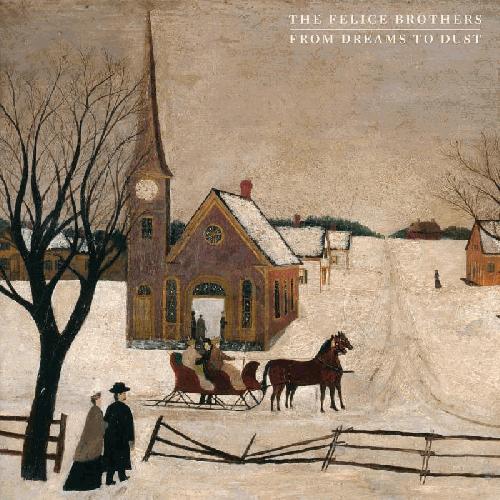
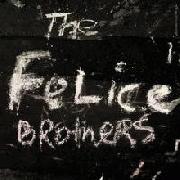
Featuring ruminations of environmental disaster, impending fascism, and post-modern angst over a collection of folky and old-timey backdrops more appropriate to the Currier & Ives or Norman Rockwell-evoking scene on the album art, The Felice Brothers take the listener on a vastly wide-ranging journey, one that might produce skepticism but is overwhelmingly successful. Even at its weakest moments, the album aims for admirable heights, and the band hits the mark far more often than not.
While the instrumentation throughout the album is quite engaging, mixing stripped-down folk with periodic strings and jazzy swells, this is undoubtedly a release for which the singing and, especially, lyrics take center stage. The vocals are perhaps a bit of an acquired taste, with their mix of near spoken-word and more traditional folk/Americana stylings. Lyrically,
From Dreams To Dust is a sublimely-crafted mixture of off-kilter humor, apocalyptic imagery, and deeply heartfelt sentiments. Anything from Hegel to Jean-Claude Van Damme to AC/DC are referenced literately, while heavy subjects are explored in a way that might make you grin or even chuckle one moment, and struggle to hold back tears the next. This sort of ability to provide a wide range of emotion through music isn’t unprecedented, but it’s quite rare, and while I’m not well-acquainted with The Felice Brothers’ back-catalog, this album’s quality puts their ability adjacent to the legendary talents of John Prine and David Berman (some damn fine company).
It’s not all that easy to discuss individual songs from this release, as the overwhelming sense when writing about the album is to wax on about the grandeur of the whole thing. Nonetheless, opener “Jazz On The Autobahn” gets the party started with its upbeat music and thoughtful takes on Armageddon, while the mid-album three song stretch of “Be At Rest”, “Valium”, and “Inferno” is as good as music gets. “Be At Rest” deserves a nod, a brief little piece gently mocking “ordinary” people who’ve presumably passed on, and ultimately ends up being a very touching tune. “Valium” sees The Felice Brothers’ moving closest to Americana tropes, and it’s an utterly irresistible song. “Inferno” is funny and sad in equal measures, and I’m willing to bet it will make you feel something. Finally, “We Shall Live Again”, the closer, is a modern classic which will likely go down as the best song of 2021. In a runtime of over eight minutes, the band balances bleakness and heart and perfectly encapsulates the predominant themes of the album through the story of a narrator on a train (indeed, no better vehicle for a record which explores the existential questions of the present through the lens of art forms more prevalent in the past).
All told,
From Dreams To Dust will elicit strong reactions from listeners. It’s likely not everyone who hears this album will relate to the vision The Felice Brothers are aiming for, but many will also find this album to be revelatory. The album’s nostalgic soul should appeal to fans who revere the folk legends of the past, and the lyrics and emotional content hold up well even to those high standards. At the same time, this is a collection of songs which address the peculiar concerns of the present day, even as it seeks a sort of comfort in the ages. Below the ironic hipster poses and depressive vibes that The Felice Brothers give us on
From Dreams To Dust , there’s an ill-concealed love for the world and for humanity that gives this album its character. It all comes to fruition in the repeated refrain of “we shall live again” in the closing track, after a series of vignettes which wink at the coming end of it all. Is it an expression of genuine conviction or a portrayal of "hope springs eternal" delusion? I’m not sure that I’ll ever know, but I’ll keep on listening to find out.